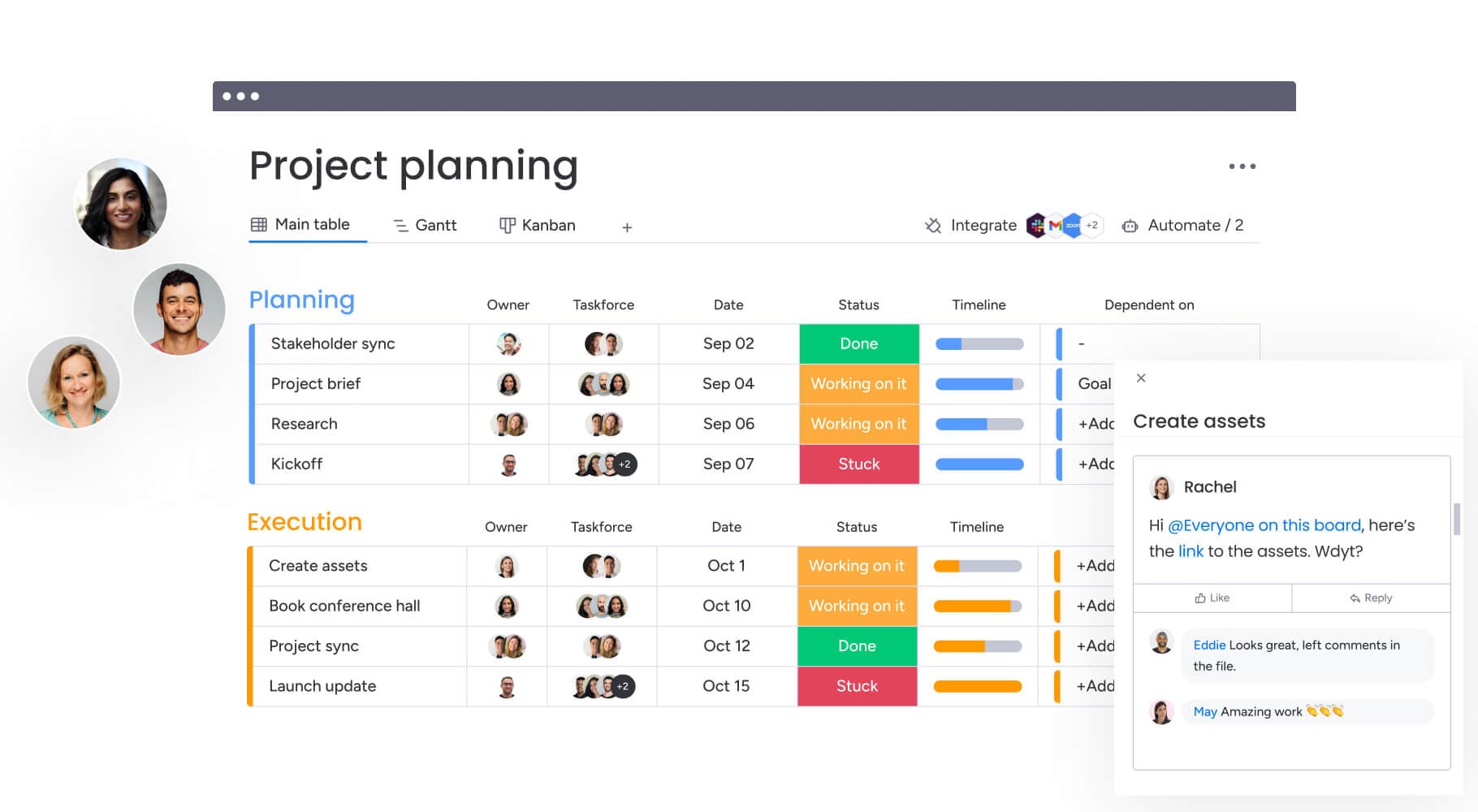
Monday.com guide shows how sprint planning links backlog work to business goals
Sprint planning becomes a credibility tool when it ties backlog work to a realistic commitment, not a wish list.

Sprint planning is where credibility gets built
A good sprint plan is not a ticket-picking exercise. It is the point where backlog work gets translated into a realistic promise about what your team will deliver, and that promise is what protects engineering, product, and sales from the drag of scope creep and last-minute churn.

That is why monday.com frames sprint planning as a collaborative Scrum event rather than a private exercise for a manager or a product owner. The product owner, Scrum master, and development team are meant to decide what gets done in the next sprint and how it will be delivered, with the work tied to business goals instead of floating as disconnected tasks. For teams that want to be seen as predictable, that distinction matters more than cranking through more meetings.
The meeting has to produce a usable commitment
Scrum.org is blunt about the structure: Sprint Planning is timeboxed to a maximum of eight hours for a one-month Sprint, and shorter Sprints usually have shorter planning sessions. The point is not to fill the calendar, but to force focus. When teams keep the meeting disciplined, they leave with a Sprint Goal, selected Product Backlog items, and a delivery plan that together become the Sprint Backlog.
That combination matters because it turns discussion into something the team can actually execute against. If the goal is vague or the backlog items are overloaded, the sprint starts with hidden risk. If the goal is clear and the work is sized against actual capacity, the team has something managers, customers, and adjacent functions can trust.
Predictability starts with capacity, not optimism
monday.com’s sprint-planning materials push the same logic in a practical direction: plan around sustainable capacity, not wishful thinking. The company’s guidance uses about 80% of available capacity as the planning baseline and recommends timeboxing planning sessions to roughly two hours for each sprint week.
That detail matters because overcommitment is often the real reason teams miss dates, not lack of effort. When the plan is built around a realistic capacity buffer, the team has room for review, support work, and the unexpected tasks that always surface mid-sprint. The result is less spillover, fewer apologies at the end of the cycle, and a clearer signal to stakeholders about what will actually ship.
The seven-step agenda gives the meeting a spine
One of the strongest parts of monday.com’s guide is that it breaks sprint planning into a seven-step agenda, from setting the sprint goal to confirming acceptance criteria. That structure makes the meeting easier to run and easier to trust because every step has a job to do. Instead of drifting into a status meeting, the team moves through a sequence that connects purpose, scope, estimates, dependencies, and readiness.
The discipline pays off in the daily work that follows. Engineers get fewer mid-sprint pivots because the plan has already been pressure-tested. Product managers get a cleaner path from customer needs and priorities to actionable work. Sales teams, especially in a company that sells collaboration software to other teams, can use that same logic when explaining why delivery dates depend on planning quality, not just pressure or headcount.
What Scrum says should happen during the sprint itself
The 2020 Scrum Guide adds an important layer to the story: during a Sprint, the Scrum Team should create an Increment of value and inspect results with stakeholders so the next sprint can be adjusted. That means sprint planning is not a one-time ritual that ends when the meeting closes. It is the front end of a feedback loop.
This is where some teams get the discipline wrong. They treat planning as a formality, then wonder why the sprint keeps changing shape after it starts. Scrum’s official guide warns that changing or omitting core Scrum elements can reduce the benefits of the framework, which is another way of saying the process only works when the team respects the guardrails. If you want faster delivery, the answer is usually not to weaken the system that keeps work coherent.
monday.com’s tools are built for visibility, not guesswork
The company’s own sprint-management features show how that thinking becomes operational. monday.com points to velocity charts and planned-vs.-unplanned charts as tools for forecasting performance and measuring planning accuracy over time. Those views matter because they reveal whether the sprint plan was realistic or whether the team is repeatedly making up for bad assumptions.
That is especially useful in a product environment where priorities shift and work crosses functions. AI automation, dashboards, and integrated workflows can reduce manual tracking, but they also make planning more transparent. If the team can see what was planned, what was added later, and how output compares with historical velocity, then sprint planning stops being a debate and becomes an evidence-based management habit.
For monday.com, this is also about how the company wants to operate
The broader company context makes the lesson sharper. monday.com says it became a publicly traded company on Nasdaq on June 10, 2021, and its investor relations page says more than 250,000 customers worldwide use the platform. That scale creates pressure for consistency: customers buy not just features, but the confidence that teams can deliver on a cadence they can build around.
For engineers and product managers inside monday.com, sprint planning is therefore a career skill as much as a process skill. It shows whether you can turn backlog noise into an execution plan tied to business outcomes. For sales, it is a language for setting expectations honestly. And for a company that sells work management as a product, the internal standard has to be visible in how its own teams plan, commit, and deliver.
Know something we missed? Have a correction or additional information?
Submit a Tip