monday.com pitches customizable CRM as fit, not features, wins sales teams
monday.com is selling CRM as a process fit problem: the best system mirrors how teams already sell, not the one that forces a reset.
The real CRM advantage is not another row in a feature matrix. monday.com is arguing that sales teams win when the software bends to their actual stages, approvals, handoffs, and follow-up motions, not when reps are forced to adapt to rigid vendor assumptions. That pitch matters because adoption, forecasting, and productivity all rise or fall on whether the system matches the way work already happens.
Fit beats feature depth
monday.com’s core argument is straightforward: most CRMs make the team change its process to fit the tool, while a customizable CRM lets the team shape the tool around the process. That sounds like a subtle distinction, but in practice it determines whether reps use the system every day or quietly rebuild it in spreadsheets and side channels. For product teams inside monday.com, that is the company’s broader Work OS thesis in CRM form: software should mirror real work, not flatten it.
The company is also tying that idea to measurable business outcomes. Its CRM operations content says well-designed workflows can help teams target 80%+ adoption, sub-four-hour response times, and 15% to 25% shorter sales cycles. Those are company-published benchmarks, not universal laws, but they show the kind of operational payoff monday.com wants customers to imagine when they think about customization.
Why no-code matters more than ever
The mechanics behind the pitch are no-code flexibility, automation, and AI. monday.com says monday CRM is an AI-first CRM built on code-free automations and intelligent workflows, which means teams can reshape pipelines, dashboards, and follow-up paths without waiting on engineering for every tweak. In a sales organization where routing rules, approval steps, and territory structures change often, that matters as much as any marquee feature.
The company says AI sales agents can source, qualify, prioritize, and book meetings, which turns CRM from a static database into an active operating layer. That is a meaningful shift for a sales team at monday.com, because it aligns with the product’s broader identity as a platform for work orchestration rather than a standalone contact repository. It also gives product managers a useful boundary line to think about: customization is valuable when it reduces friction, but it becomes a problem if every team has to manage a miniature software project.
The business case is adoption, not just administration
monday.com’s CRM story repeatedly returns to total cost of ownership. The company’s argument is that flexible systems lower long-term costs because teams spend less time on workarounds and custom code, and more time inside a system that already fits how they sell. That matters in a category where the hidden tax is often not license spend, but all the patchwork built around the software when the software itself does not fit.
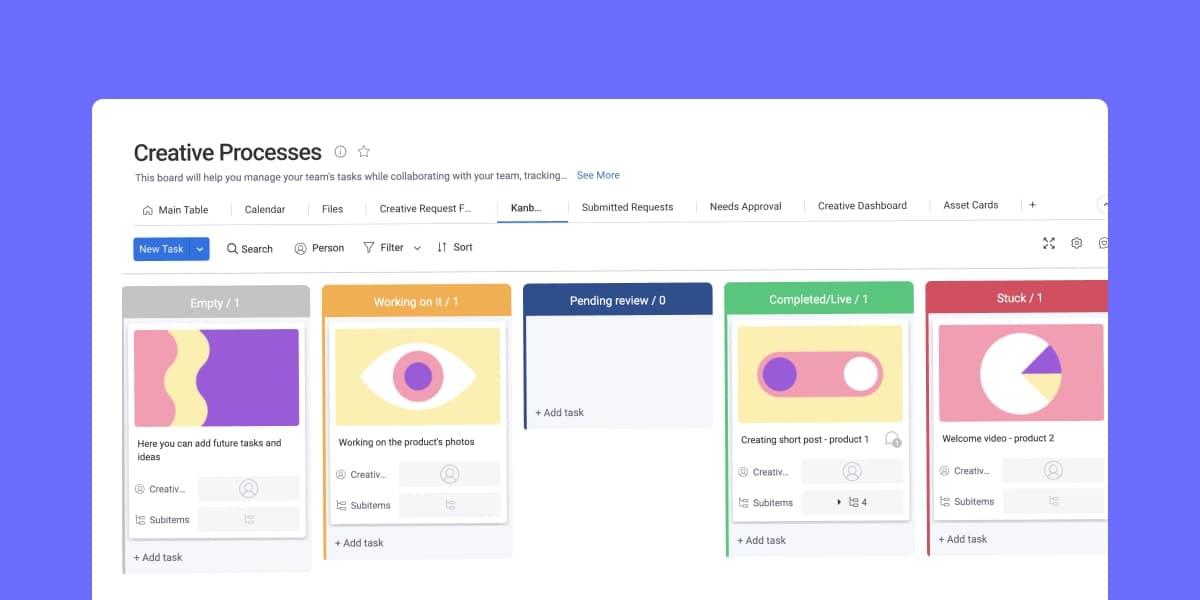
That is also why the customization pitch resonates with sales leaders. A pipeline built around vendor defaults can look polished at launch and still fail when the business starts adding stages, changing approval thresholds, or segmenting by territory. A customizable CRM is supposed to absorb those shifts with less drag, which is why monday.com keeps emphasizing visual pipelines, real-time sync, simple automations, and integrations that do not require heavy IT involvement.
What monday.com has been adding to the CRM stack
The customization story is not theoretical. In its Elevate 2024 update, monday.com said it had focused on giving sales teams more tools across the deal lifecycle, including data enrichment, engagement analytics, email sequences, and quotes & invoices. Those additions matter because they move the product closer to the full rhythm of selling, from first contact to closing paperwork.
The company later launched monday campaigns as a new AI-powered product within the monday CRM suite and expanded enterprise-grade capabilities. Its support documentation also points to CRM-specific features such as quotes & invoices, duplicate management, and conditional status changes on certain tiers. Taken together, those changes show a product strategy built around adaptability at each step of the pipeline, not just more fields on a lead record.
Why the market positioning matters inside monday.com
For monday.com employees, this is bigger than one CRM page. The company says more than 250,000 customers worldwide use monday.com across work management, CRM, service, and dev, and it says monday CRM itself is trusted by 250,000+ customers worldwide. That scale makes CRM not just an add-on, but part of the company’s platform identity, especially as it leans into AI across the stack.
The commercial stakes are rising too. In its FY2025 results, monday.com said revenue grew 27%, monday vibe became the fastest product to surpass $1 million in ARR in company history, and customers with more than $50,000 in ARR now represent 41% of total ARR. That combination suggests the company is pushing harder upmarket, where workflow orchestration, data quality, and flexible process design matter as much as contact storage ever did.
A good CRM reflects the business, not the template
The clearest example of monday.com’s pitch comes from an older customer story about Entrepreneur, which wanted a CRM that could track a sales pipeline with filters by year, month, salesperson, or territory. That is the kind of detail that sounds small until a team has to run its actual business inside the system. When a CRM cannot reflect the reporting structure or sales motion, the team ends up forcing the business to fit the software instead.
That is why monday.com’s customizable CRM message lands best as a process story, not a feature comparison. The company is not just selling more knobs and switches. It is selling the idea that the right CRM is the one that matches how a team sells today, and can change as the team changes tomorrow. In a market crowded with tools that promise more functionality, that may be the most practical advantage of all.
This article was produced by Prism’s automated news system from verified source data, official records, and press releases, then run through automated quality and moderation checks before publishing. The system is built and supervised by the people who set the standards it runs under. Read our full AI policy.
Did this article answer your question?