Monday.com pushes citizen development as low-code adoption grows
Monday.com’s citizen-development push is really a governance test: business teams can build faster, but only if permissions, AI controls, and IT guardrails stay tight.
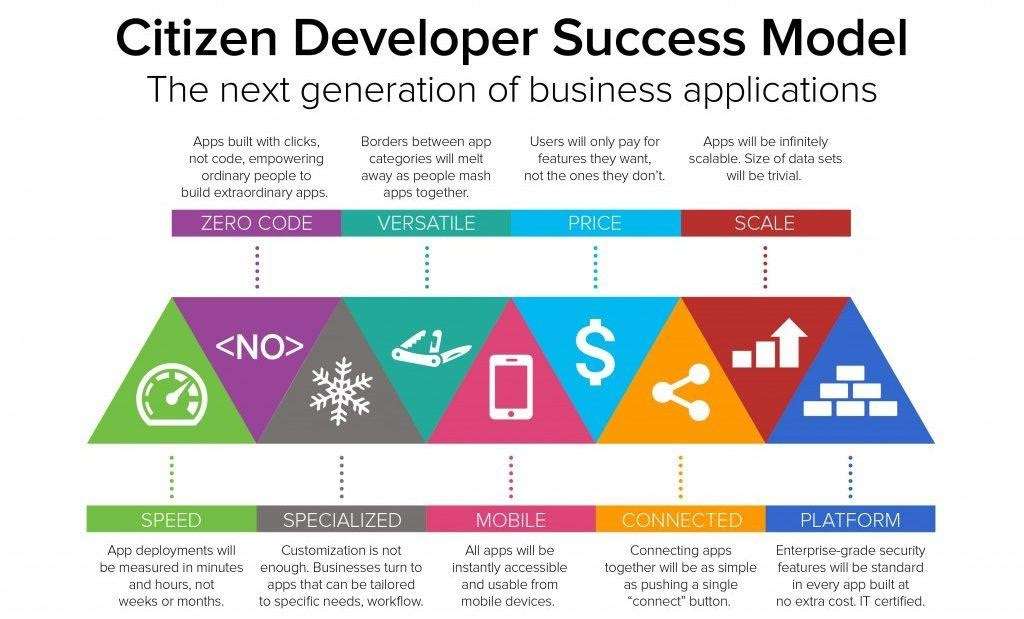
Business teams want to ship their own tools faster, and that is turning low-code and no-code into a governance issue, not just a productivity trend. Project Management Institute frames citizen development as a way for people without software expertise to build applications faster and at lower cost, but only with shared principles, training, and oversight that keep self-service from becoming shadow IT.
Citizen development only scales with guardrails
PMI’s description is useful because it draws a line between speed and sprawl. Low-code and no-code, in PMI’s materials, means building with visual, drag-and-drop, or point-and-click interfaces instead of complex code, which helps explain why business teams are drawn to it when IT backlogs slow down delivery. PMI links that model to innovation gains, operational cost savings, and better project-team satisfaction, but the message is not “let everyone build anything.” It is that organizations need a structured system around who can build, what they can change, and how those apps stay secure and compliant.
Gartner made the same point in two 2025 research pieces. Its April 17, 2025 analysis says low-code and no-code platforms speed development, but citizen developers need support and governance if they are going to build applications quickly and securely. Its April 22, 2025 market guide goes further, calling citizen application development platforms an accelerator for digital initiatives because they enable self-service app development outside IT. That is the important shift: citizen development is no longer treated as a side experiment, but as an enterprise platform category with real operational consequences.
Why monday.com sits in the middle of this shift
monday.com is positioned directly in the tension between speed and control. The company describes itself as a no-code and low-code platform, and its investor relations page now calls it an AI work platform that brings people, workflows, and AI agents together on one flexible system. That same page says more than 250,000 customers worldwide use monday.com, which tells you this is not a niche tool for tech-forward teams alone.
The practical appeal shows up in the use cases monday.com highlights across its own public materials: marketing, CRM and sales, operations, recruitment, procurement, legal, finance, product roadmapping, OKR tracking, and risk management. That breadth matters for a work-OS business because the more functions build on the same platform, the more the company has to solve for governance, handoffs, and long-term maintainability. A tool that starts as a fast internal fix can become part of core operating infrastructure very quickly.
The controls that keep self-service from turning into debt
That is where monday.com’s permissions model matters. Its support documentation says permissions control who can see and change work across an account, and its enterprise board-permissions system lets owners assign roles such as Owner, Editor, Contributor, Assigned contributor, and Viewer with granular settings. In other words, the company is not selling self-service as an anything-goes environment. It is selling a way for teams to work quickly while keeping content, structure, and access under explicit control.
The same logic carries into monday.com’s AI workflow builder. The company says the builder is for complex, multi-step processes and can automate repetitive tasks while connecting tools in one place. It is available on Pro and Enterprise plans, which signals that monday.com sees automation as something that should sit inside a governed commercial tier rather than as an open-ended add-on for every user. Its support docs also say admins can manage AI permissions and monitor usage through an AI governance section, a detail that matters because AI-backed workflow building raises the stakes on access, data handling, and change control.
For product teams, that creates a clear design problem: make building easy enough that business users do not bottleneck on engineering, but structured enough that every new workflow does not become bespoke technical debt. For engineers, the challenge is to define extension patterns, permission boundaries, and ownership rules that let teams customize without fragmenting the product. For sales, the language needs to move beyond “anyone can build” and toward “business users can build the right things quickly, while the platform keeps the enterprise in control.”
What the customer story says about scale
monday.com’s own customer stories give that argument some texture. In one example, RMI’s communications and marketing department was the first to adopt the platform, and the organization handles approximately 1,000 projects annually. That is the kind of number that makes citizen development real: once a shared platform reaches that volume, the question is no longer whether a team can create a workflow. It is whether the workflow can be governed, reused, and audited without creating a pile of disconnected one-off fixes.
That is why this topic matters inside monday.com as a product company and a workplace. Citizen development is not just a feature story or a buyer persona exercise. It is a test of whether a SaaS platform can give non-engineers enough freedom to move fast, while still giving the enterprise enough control to stay secure, compliant, and maintainable.
This article was produced by Prism’s automated news system from verified source data, official records, and press releases, then run through automated quality and moderation checks before publishing. The system is built and supervised by the people who set the standards it runs under. Read our full AI policy.
Did this article answer your question?