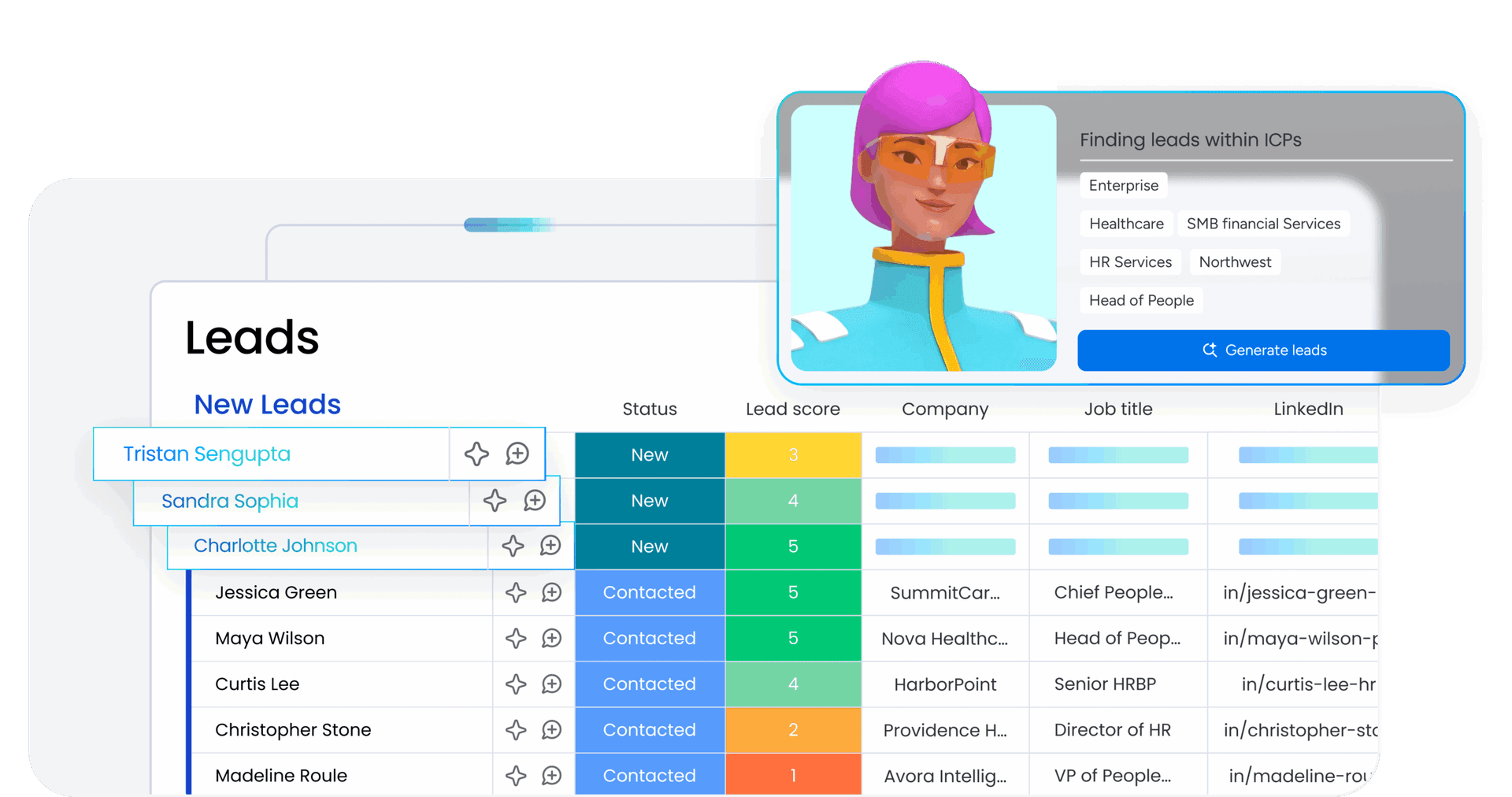
Monday.com says AI and full-funnel marketing now drive revenue growth
Marketing's bottleneck is now operational, not just creative. monday.com says AI, clean workflows, and full-funnel tracking now determine whether campaigns become pipeline.

Creativity is no longer the only constraint
More campaigns do not automatically mean more revenue. monday.com’s marketing trends guide argues that the real constraint has shifted to how well teams execute, measure, and connect their work, with AI now sitting at the center of that system. The company’s view is blunt: if marketing activity is not tied to pipeline and conversion, it is just output, not growth.
That is a meaningful shift for any SaaS team, especially inside a company that sells work management itself. It means the best marketing organizations are not just producing assets faster. They are building a tighter operating model where planning, collaboration, automation, and measurement move together instead of living in separate tools and separate teams.
AI has moved from experiment to proof point
The guide points to one number that explains why the mood has changed: 66% of respondents whose organizations used generative AI in marketing and sales said revenue increased in that function over the prior twelve months. That is the kind of stat that pushes AI out of the experimentation bucket and into the business case conversation.
For product managers and engineers, the implication is simple. AI is not just about content generation or flashy demos. It is becoming part of how work gets routed, personalized, measured, and improved. When AI starts affecting revenue outcomes, the quality of the workflow around it matters as much as the model itself.
For sales teams, the same point lands differently. If marketing is using AI to improve relevance and speed, then weak handoffs become easier to spot. A campaign that reaches more people but does not create qualified opportunities is not a marketing win. It is a coordination problem.
Marketing ops is now part of the growth engine
monday.com’s guide makes marketing operations sound less like back-office hygiene and more like a core business function. That is because consistency and scale do not come from simply producing more content. They come from a system that keeps campaigns organized, timelines visible, approvals clear, and performance easy to track.
A centralized platform matters because it reduces the hidden cost of switching between disconnected tools and silos. When planning, collaboration, and reporting all live in one flow, teams spend less time reconciling versions and more time improving results. That is especially important in a company like monday.com, where the promise of the product is to make work visible enough that teams can actually manage it.
A useful internal question for any team reading the guide is whether marketing is still being run like a sequence of one-off projects or like an operating system.
Where automation belongs
Automation should be doing the repetitive, rules-based work that slows people down and introduces avoidable errors. That includes moving tasks through campaign stages, routing work to the right owner, keeping data consistent, and making performance updates visible without manual chasing.
The point is not to automate judgment. The point is to automate the parts of execution that create drag, so people can focus on message, targeting, and strategy. If a process still depends on someone remembering to notify three other people, it is probably a candidate for automation.
Where handoffs break
The most common failures are not usually in the creative itself. They show up between planning and execution, between marketing and sales, and between launch and measurement. If a campaign is built without a clean path from audience segmentation to activation to follow-up, the work may look complete while the funnel quietly leaks.
That is why full-funnel thinking matters. monday.com’s guide treats every touchpoint as part of the revenue process, not just the top of the funnel. For teams, that means the handoff from marketing to pipeline cannot be an afterthought.
Which metrics expose the truth
The guide’s revenue framing is a reminder that reach alone is not enough. Teams need to know whether campaigns are moving people toward conversion and whether the business can connect marketing activity to pipeline. The most revealing metrics are usually the ones that show progression, not vanity.
- Did the campaign create qualified demand, not just clicks?
- Did pipeline move after launch, or did the lift stop at engagement?
- Were handoffs timely enough for sales to act on the signal?
- Did the team learn anything that improves the next campaign?
A strong dashboard should help answer a few basic questions:
If a team cannot answer those questions quickly, the problem is probably not a lack of ideas. It is a lack of visibility.
Personalization and AI search are changing how customers respond
The guide also highlights personalization and AI search as forces reshaping customer engagement. That matters because customers now expect messages that feel relevant without requiring a huge amount of manual segmentation and one-off campaign work. The bar is higher, but so is the opportunity for teams that can use data and automation well.
For go-to-market teams, this is where product marketing becomes more than packaging features. The stronger narrative is about how the product helps teams work faster, measure what matters, and reduce the coordination costs that slow execution. In other words, the message itself has to reflect the operating discipline the product promises.
That is especially relevant for a platform company. If monday.com is telling the market that modern marketing depends on better workflow visibility and tighter collaboration, then its own product story has to show those same mechanics in action. The best SaaS narratives do not just describe capability. They explain how the work gets easier.
The bigger lesson for monday.com employees
The real takeaway is that marketing in this environment is no longer just a creative function with a budget. It is an operational discipline where AI, marketing ops, and revenue alignment decide whether campaigns produce pipeline. That changes how product teams should think about workflow design, how engineers should think about data cleanliness, and how sales should think about the quality of the signal coming from marketing.
If monday.com can connect planning, execution, and measurement in one flow, its marketing stops being a set of disconnected activities and becomes a growth engine. That is the standard now: not more noise, but a tighter system that turns work into revenue.
Know something we missed? Have a correction or additional information?
Submit a Tip