Monday.com urges sales teams to automate tasks, track activity, boost performance
monday.com’s sales playbook argues that the best revenue engine is disciplined process: cleaner pipelines, clearer ownership, and AI that cuts prep time.

The fastest way to lift sales is not to ask reps to hustle harder. It is to make the work around them so disciplined that effort turns into pipeline.
That is the core argument in monday.com’s new sales team management guide, which treats process rigor as a revenue lever. The message is blunt and practical: if managers cannot see where time goes, who owns what, and which deals are actually moving, they are managing by instinct instead of operating system. In a business like monday.com, where marketing, SDRs, AEs, sales engineering, and customer success all touch the same customer journey, weak habits do not stay local. They quietly slow everything down.
Start with the time audit
The guide begins with a deceptively simple move: audit how reps spend their hours. That matters because most sales teams think they have an effort problem when they really have an allocation problem. Once managers separate work into revenue-generating, administrative, and strategic buckets, the bottlenecks become visible in a way weekly quota talk never can.
That distinction is useful inside monday.com’s own sales motion, and for any customer-facing team using the product. A rep who is buried in admin cannot spend enough time on conversations that actually shape deals. A manager who only looks at closed revenue learns too late that the real drag was scattered follow-up, duplicate outreach, or a badly maintained CRM. The guide’s point is that performance starts with seeing the work honestly.
Automate the repetitive parts before they become habits
From there, the playbook moves to automation. The guide recommends automating repetitive tasks such as lead assignment and follow-up creation, because manual handoffs are where momentum dies. If the next step is always left to memory, the sales process becomes dependent on the most organized person in the room rather than the system itself.
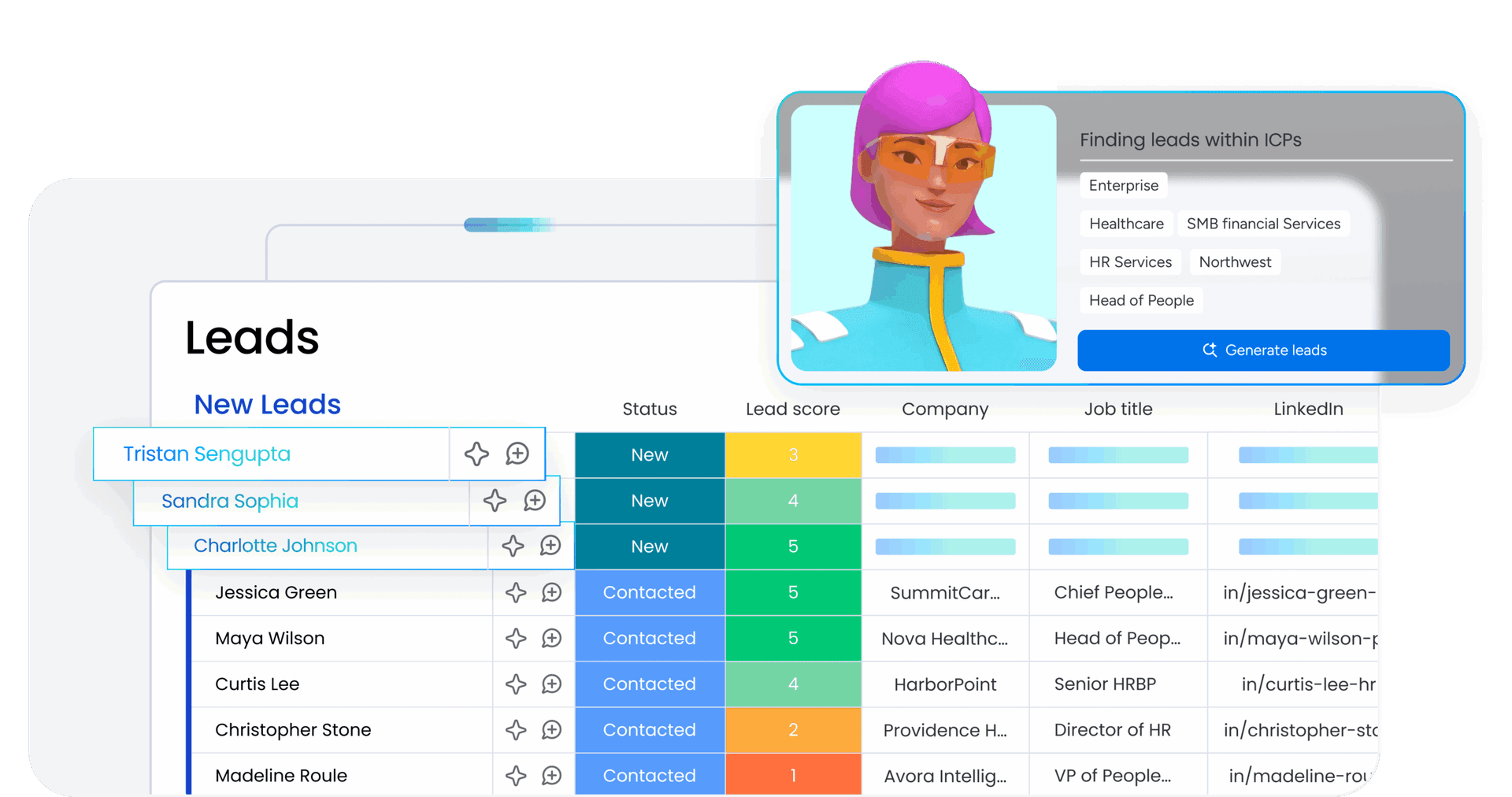
That is where monday.com’s own CRM design reinforces the argument. Its support docs say AI-generated Emails & Activities summaries are logged on the CRM timeline, giving teams a faster way to catch up on lead and customer interactions. The same docs say the Activities timeline column helps teams track engagement, identify follow-up gaps, and maintain momentum without bouncing between tools. In practice, that means less time reconstructing a conversation and more time moving the account forward.
Pipeline hygiene is not admin, it is revenue protection
The guide also puts unusual weight on ownership rules and pipeline hygiene. Explicit account ownership prevents the familiar sales-team trap where multiple people assume someone else is taking care of the same lead. In hybrid and distributed teams, that ambiguity gets expensive fast. It creates duplicate outreach, missed next steps, and internal friction that rarely shows up in a forecast deck until the number is already off.
For monday.com, that matters because its software is built around turning work into visible workflows. Its Deals board automations can organize boards by column values, set due dates, and notify teammates. That is not just convenience. It is a way to prevent soft failure modes, the kind that do not look dramatic in the moment but slowly erode conversion rates and deal velocity over time.
Track leading indicators, not just the quarter
One of the most useful parts of the guide is its insistence on leading indicators. Managers are told to track activity volume and deal velocity, not just lagging revenue totals. That is a healthier way to coach because it tells leaders where performance is breaking before the quarter closes.
Live dashboards are central to that approach. They let managers make day-to-day decisions instead of waiting for a monthly review to discover that a pipeline stage has stalled or that follow-up volume has slipped. For product teams inside monday.com, this is a reminder that dashboards are not just reporting surfaces. They are management tools. For sales leaders, the point is even sharper: if you want better outcomes, you need better visibility into the inputs that shape them.
Use AI to shorten prep time, not replace judgment
The guide’s most modern recommendation is also one of the most practical: use automated information extraction and timeline summaries to prepare for meetings quickly. The promise is not that AI replaces the rep. It is that AI can remove the boring, error-prone work of reconstructing what happened last week so the rep can spend more time on the conversation that matters now.
That is especially relevant for teams juggling a lot of account motion. When AI summarizes emails and activities, the rep gets a fast read on what changed, what is missing, and where the next conversation should go. When timeline views expose engagement gaps, managers can coach earlier and more concretely. In other words, the best AI use case here is not drama. It is better preparation.
Why monday.com is leaning into this message now
The timing fits monday.com’s own growth story. In March 2025, the company said it filed its 2024 annual report with the Securities and Exchange Commission. Around that period it reported full-year 2024 revenue of $972.4 million, with fourth-quarter revenue of $268.0 million and net dollar retention of 112%. By the first quarter of 2025, revenue had reached $282.3 million, up 30% year over year. In the second quarter, monday CRM crossed $100 million in annual recurring revenue, which suggests the sales product is no longer a side bet.
The scale matters. monday.com said in 2024 that it had reached $1 billion in annual recurring revenue, a milestone that came roughly a decade after the company launched its Work OS and eight years after it reached $1 million in ARR. Its 2025 disclosure said it had nearly 245,000 customers and that the top 100 customers accounted for less than 10% of revenue, a sign of broad adoption rather than narrow dependence. By early 2026, the company said more than 250,000 customers worldwide use the platform, and its fourth-quarter 2025 results showed revenue of $333.9 million, up 25% year over year, with customers above $50,000 in ARR representing 41% of total ARR.
That backdrop explains the content strategy. As monday.com sells into larger, more sophisticated accounts, it is speaking more directly to the operational discipline that enterprise buyers care about. The company is not just pitching software features. It is arguing that modern sales organizations need a management system, one that makes ownership clear, surfaces activity early, and turns AI into a force multiplier rather than a distraction.
For monday.com employees, and especially for the people building or selling CRM and work-management tools, the lesson is straightforward. Revenue quality is process quality. The best rep still matters, but the system around that rep decides whether talent turns into repeatable growth.
Know something we missed? Have a correction or additional information?
Submit a Tip