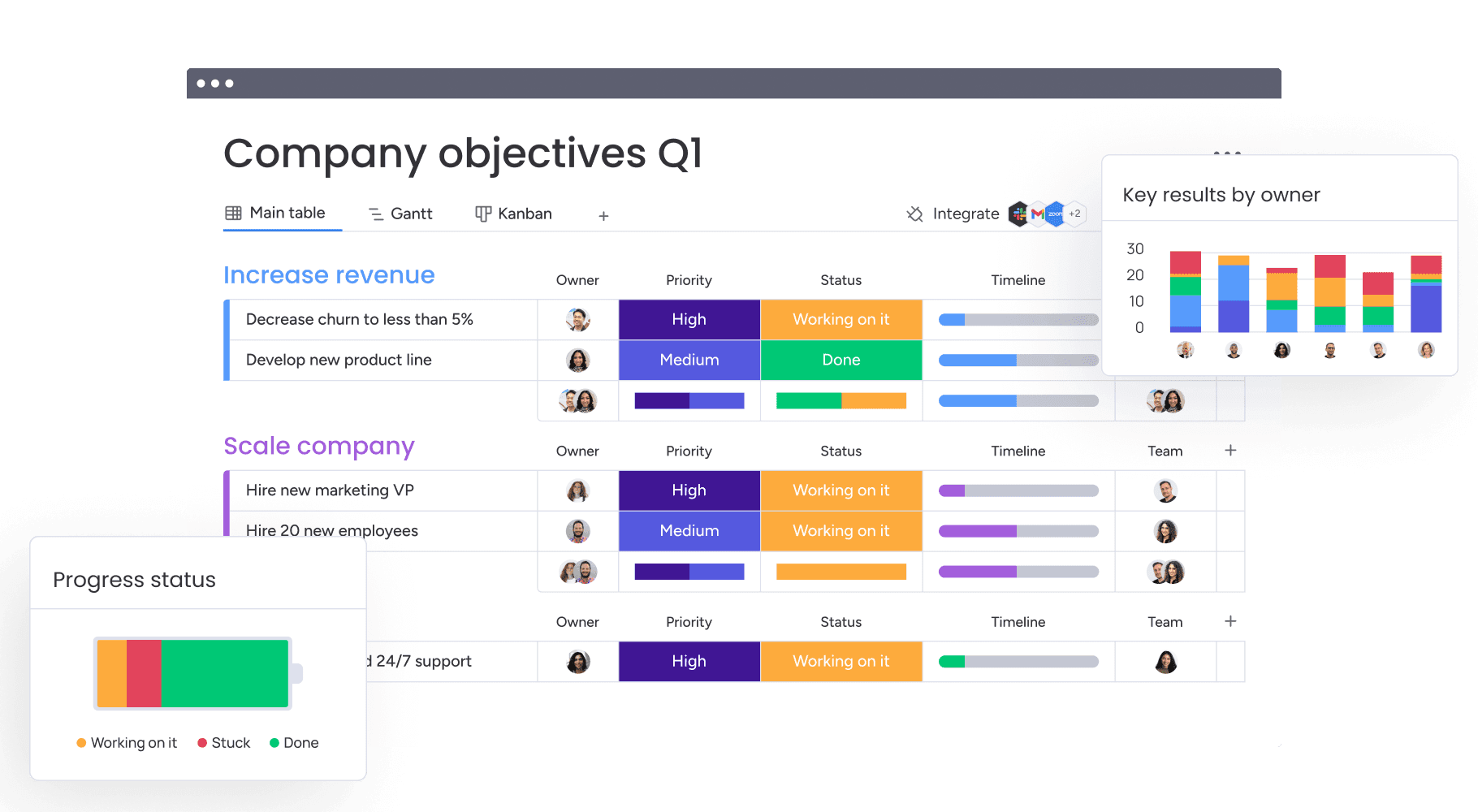
monday.com says AI tools should connect engineering, product and leadership
monday.com is reframing AI as a shared workflow layer that speeds delivery, cuts handoffs, and keeps engineering, product and leadership aligned.
AI at monday.com is being sold as a coordination tool, not just a coding shortcut
The clearest takeaway from monday.com’s latest AI messaging is that speed only matters if it moves the whole company together. The company is arguing that the best developer tools do more than generate code, they help engineering, product, and leadership work from the same source of truth, with fewer handoff delays and less time lost to clarification.

That framing fits monday.com’s own business model. A work-OS platform only creates value when work stays visible, decisions stay connected to execution, and teams do not have to rebuild context every time a project moves from one group to another. For monday.com employees, that means the real question is not whether AI can type faster, but whether it can make delivery more predictable.
What monday.com says modern AI should do
In its developer-focused guide, monday.com says the strongest AI tools absorb repetitive work such as boilerplate generation, bug finding, and documentation. But the company puts even more emphasis on what happens after those tasks are automated: the team gets better visibility, tighter alignment, and a shared operating picture.
That matters in a SaaS company where no developer tool lives in isolation. When AI is integrated well, it can help product managers write clearer requirements, help engineers catch issues earlier, and help business teams understand what is shipping without chasing updates. The result is not just faster typing, it is faster delivery with fewer misfires.
monday.com’s broader AI position matches that logic. On February 10, 2025, the company said its AI vision for 2025 would be built around three pillars: AI Blocks, Product Power-ups, and the Digital Workforce. It also said AI would be embedded across the product suite rather than added as a standalone layer, which signals that the company wants AI to sit inside the workflow, not beside it.
Inside monday AI: context, connection and action
monday.com’s support documentation describes monday AI as context-aware and deeply connected to boards, docs, workflows, and apps. That is an important detail because it shows the company is treating AI less like a chatbot and more like an operating layer that can respond to what is happening in the workspace.
- AI blocks
- AI-powered automations and columns
- AI workflows
- AI Board Suggestions
- monday sidekick
- AI templates
- agent factory digital workforce
The company lists a broad set of capabilities inside monday AI, including:
Taken together, those features point to a system designed to help people think, create, and take action without leaving the platform. For workers inside monday.com, the implication is straightforward: if AI lives inside the same environment as the work itself, there is less need to copy context between tools, fewer chances for a requirement to get lost, and more room for faster decisions.
That also explains why the company keeps returning to integration and flexibility. In a modern SaaS environment, teams rarely work in a straight line. Engineering, product, customer-facing teams, and leadership all need the same data, but they need it at different moments and in different formats. monday.com’s AI story is built around reducing that friction.
monday dev is the clearest example of the strategy
The strongest proof point in this story is monday dev, which monday.com describes as an end-to-end development execution platform for engineering, product, and cross-functional teams. The company says the product helps teams plan, build, ship, and measure software in one connected workspace, which makes the platform less about isolated developer productivity and more about shared delivery.
Its listed capabilities show that intent clearly. monday dev includes shareable roadmaps, collaborative documents, centralized metrics, AI bug categorization, and PRD summarization. Those are not just engineering conveniences. They are the kinds of features that reduce the translation work between functions, especially when product managers, engineers, and business teams need to agree on what is being built and why.
That is why the guide’s argument lands as more than a generic AI trend story. The practical payoff comes when a PRD does not sit in one silo, a bug does not require three different explanations, and a roadmap can be shared without a separate slide deck. In that kind of workflow, AI is not replacing coordination. It is removing the drag that slows coordination down.
The company is tying this directly to its 2025 and 2026 strategy
The timing makes the message more significant. In its fiscal year 2025 results, monday.com said revenue reached $1.232 billion, up 27% year over year. The company also said it saw strong adoption of its AI products and record net adds of customers with more than $100,000 in annual recurring revenue.
Co-CEOs Roy Mann and Eran Zinman also said larger customers were standardizing on the platform for mission-critical workflows. That matters because it suggests monday.com’s AI push is not just a feature story, it is part of a broader growth strategy aimed at making the platform stickier inside larger organizations. The more a company uses monday.com across planning, development, service, and CRM, the more valuable a shared AI layer becomes.
By 2026, that strategy had widened again. monday.com said its platform runs on a shared AI layer across work management, CRM, service, and dev. The company also said its AI agents draw on live data across departments, workflows, and priorities to plan, coordinate, and execute. That is a notable shift from AI as a helper for one team to AI as a connective tissue across the company.
Why this matters for workers inside monday.com
For engineers, the message is that AI should shorten the path from idea to shipped software, not create another disconnected tool to manage. For product managers, it means clearer requirements, better visibility into execution, and faster alignment when priorities change. For sales and other client-facing teams, it means roadmaps and delivery status can stay tied to real work instead of lagging behind it.
That is also why monday.com’s AI story is useful beyond its own product launches. The company is making a broader argument about how modern SaaS teams should work: the best AI systems do not just speed up one task, they improve how teams coordinate around that task. In a company built around connected work, that may be the most important productivity gain of all.
This article was produced by Prism’s automated news system from verified source data, official records, and press releases, then run through automated quality and moderation checks before publishing. The system is built and supervised by the people who set the standards it runs under. Read our full AI policy.
Know something we missed? Have a correction or additional information?
Submit a Tip