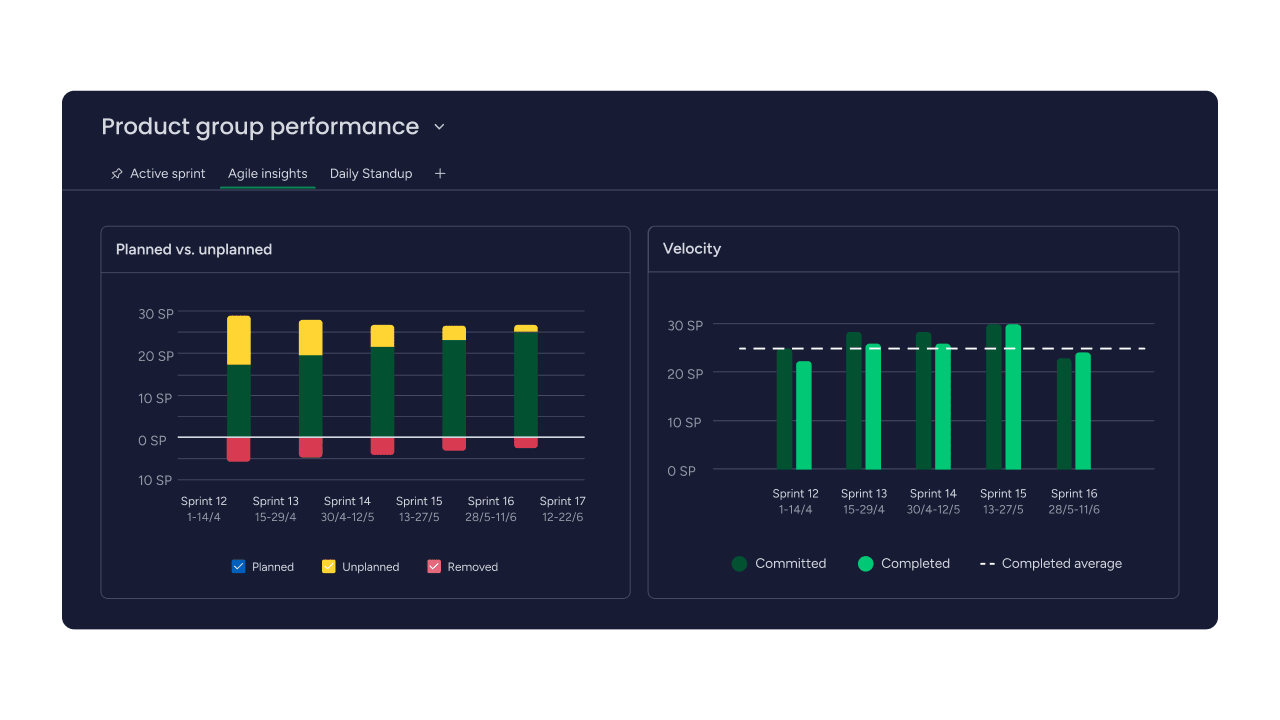
monday.com says cross-team collaboration should be measured by cycle time
monday.com is reframing collaboration as a systems problem, and its newest guide says the best proof is faster cycle time from idea to launch.

monday.com’s new guide makes a blunt argument that many companies miss: collaboration usually breaks because teams are organized to move in parallel, not together. When priorities compete, work overlaps, and no one has a clean view of progress, even a strong strategy can unravel into rework, delays, and a fragmented customer experience.
That framing matters inside monday.com as much as it does for any customer using the platform. The company is not treating collaboration as a soft skill or a motivational slogan. It is treating it as the operating logic of work itself, which is exactly the kind of problem its engineers, product managers, and sales teams are expected to solve every day.
Why cycle time is the metric that matters
The guide’s most practical idea is also its most demanding: measure collaboration success by cycle time reduction. In other words, the question is not whether teams feel aligned in a vague cultural sense, but how quickly an idea moves from concept to launch.
That is a useful lens for any internal organization because it forces a sharper diagnosis. If collaboration is slowing delivery, the issue may be unclear ownership, weak handoffs, or too many hidden dependencies, not a lack of effort. Cycle time gives leaders a way to see whether coordination is helping work move or quietly turning into another layer of friction.
What strong collaboration looks like in practice
The guide argues that shared visibility into priorities and progress is what lets teams anticipate dependencies earlier. That reduces the kind of late-stage scrambling that usually shows up as missed deadlines, repeated reviews, and duplicated work.
For a company like monday.com, that has direct product meaning. The platform is built around making work visible across functions, and the collaboration guide is essentially describing the same operating principle at the organizational level. For product teams, that can mean surfacing roadmap dependencies sooner; for sales, it can mean making handoffs explicit; for customer success, it can mean catching onboarding issues before they become churn risks.

Shared ownership beats parallel effort
A recurring failure mode in cross-functional companies is that each department optimizes its own queue while the customer experiences one continuous process. The guide pushes against that model by encouraging shared visibility and clearer ownership, so work does not stall between teams or get re-decided at every stage.
That is especially relevant at monday.com, which said it had 3,155 employees at the end of 2025 and serves more than 250,000 customers worldwide. At that scale, a small handoff problem becomes a systems problem fast. If product, engineering, sales, and customer-facing teams are not aligned on who owns what, then launches slow down and the customer sees the seams.
Start small, then scale the operating model
The guide also recommends starting with pilot programs before rolling a new collaboration model out across the organization. That advice is important because cross-team coordination is hard to fix all at once; large companies usually need a controlled environment where they can test new handoff rules, visibility practices, and escalation paths before expanding them.
For workers inside monday.com, that means the smartest collaboration changes are likely to come from a few well-defined workflows rather than a company-wide mandate on day one. A pilot can show whether a new process actually shortens cycle time, or whether it simply adds more meetings and more dashboards without changing how work moves.
Why the company’s own growth makes the message louder
monday.com’s collaboration message lands differently because it sits inside a fast-growing public company with real scale pressure. The company was founded in 2012 by Roy Mann, Eran Kampf, and Eran Zinman, launched its product in 2014, and went public on Nasdaq on June 10, 2021. It is now pushing into bigger enterprise accounts, which means more stakeholders, more approvals, and more opportunity for work to get stuck.
That pressure shows up in the numbers. monday.com said first-quarter 2026 revenue was $351.3 million, up 24% year over year, and it reported record GAAP and non-GAAP operating income. It also said enterprise customers, defined as those with more than $50,000 in annual recurring revenue, grew from 3,201 at the end of 2024 to 4,281 at the end of 2025. Growth like that usually comes with more complexity, not less, so the company’s emphasis on collaboration is as much an operational necessity as a product message.
The earlier handoff lesson still applies
This is not the first time monday.com has focused on cross-team alignment. Its earlier collaboration guidance centered on sales-to-customer-success handoffs, arguing that poor onboarding can damage trust and increase churn. That older point still matters because it shows how collaboration failures often begin at the boundary between teams, not inside a single department.
The new guide broadens that lesson into a company-wide model. Instead of treating collaboration as a personality trait, it treats it as a chain of handoffs that can be designed, measured, and improved. That is a more useful standard for anyone trying to ship product, close revenue, or support customers without letting work pile up between teams.
What monday.com is really saying
The external validation matters too. In October 2025, Gartner named monday.com a Leader in the Magic Quadrant for Collaborative Work Management for the third consecutive year, and monday.com said it was placed furthest for both Completeness of Vision and Ability to Execute among evaluated vendors. That positions the company in a category where coordination is not a side feature but the core product promise.
Taken together, the message is clear: collaboration is not about getting people to try harder. It is about building a system with shared goals, clear ownership, standard handoffs, and escalation rules that make work move faster. For a company like monday.com, that is both a customer story and an internal operating rule, and cycle time is the metric that reveals whether it is actually working.
This article was produced by Prism’s automated news system from verified source data, official records, and press releases, then run through automated quality and moderation checks before publishing. The system is built and supervised by the people who set the standards it runs under. Read our full AI policy.
Did this article answer your question?