Monday.com Says Effective Leaders Keep Teams Aligned, AI Helps Execution
The strongest leaders in AI-heavy workplaces are the ones who create clarity. At monday.com, that means fewer duplicates, faster decisions, and smarter AI use without losing trust.

Leadership is becoming a clarity test
The managers who matter most at monday.com are not the loudest people in the room. They are the ones who can keep work legible when priorities shift, teams move across locations, and decisions have to happen fast without creating confusion. That is the core of the company’s leadership message: effectiveness is measured less by title or charisma and more by whether a team can actually execute.
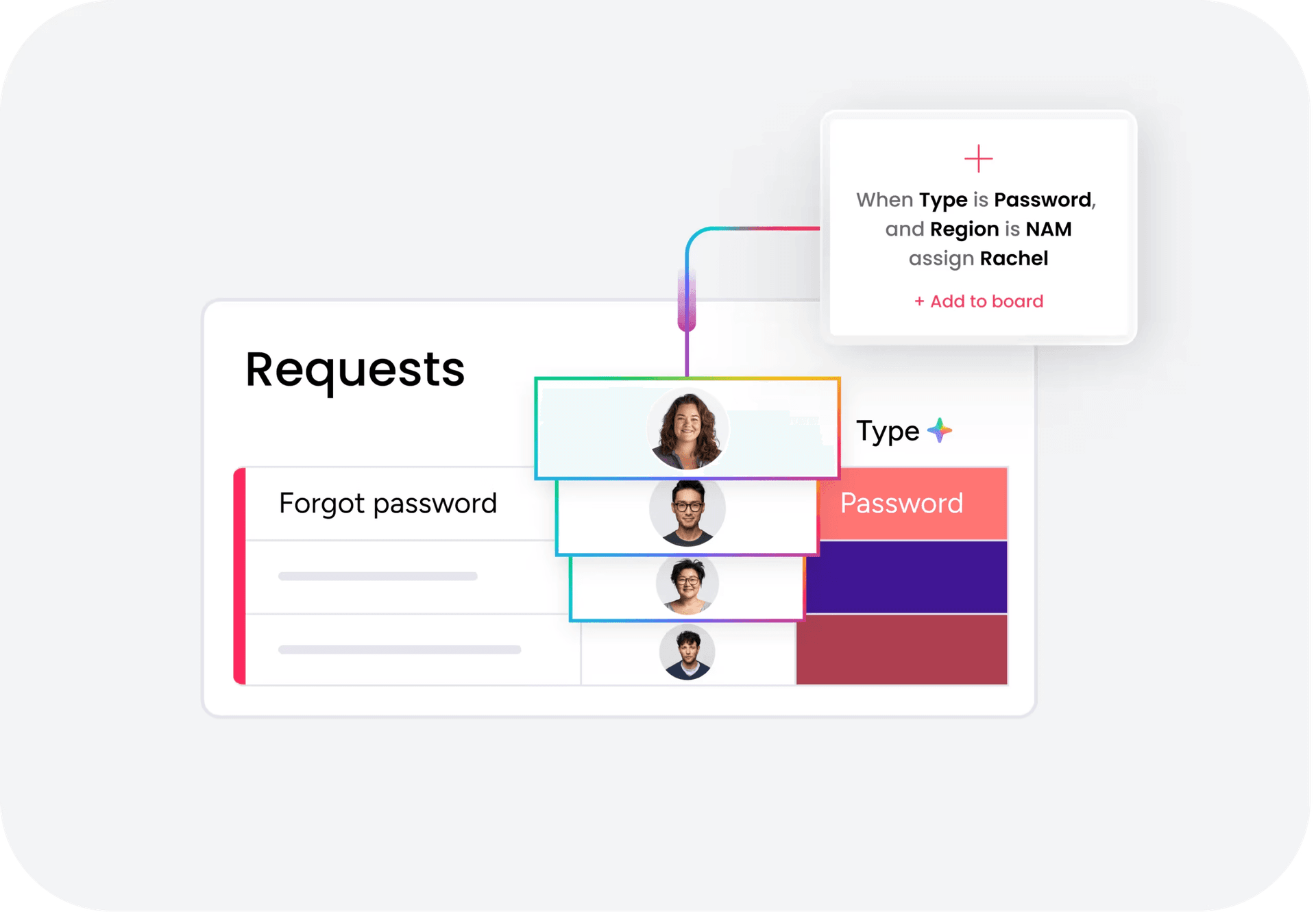
For a company built around work orchestration, that is not an abstract management philosophy. monday.com says more than 250,000 customers worldwide use its platform, its press kit says it has roughly 2,900 employees, and about 2 million board actions happen every day across more than 200 countries and territories. When a business runs at that scale, leadership is not just a people issue. It is part of the operating system.
What good leadership looks like inside monday.com
The company’s own framing of leadership centers on the basics that often get lost in high-growth SaaS: decision-making, ownership, alignment, and follow-through. Product leaders need teams to know exactly what problem they are solving and why. Engineering managers need ownership to be clear enough that work does not disappear into vague collaboration. Sales leaders need to balance speed with coaching so reps do not simply move faster, but move in the right direction.
That is where leadership shows up in practice. It is visible in how feedback is delivered, how priorities are communicated, and whether everyone knows what good looks like. In a product company like monday.com, the difference between a strong manager and a weak one is often not a grand strategic memo. It is whether a team launches on time, avoids duplicated work, and can explain its choices without confusion.
AI helps execution, but it does not replace judgment
monday.com’s message is not that AI solves leadership. It is that AI can support it. The company treats AI as a practical layer that can surface information faster, reduce administrative friction, and improve visibility, while leadership still depends on judgment, trust, and consistent follow-through. That matters because in fast-changing workplaces, the temptation is to treat AI as a shortcut around management discipline. monday.com is arguing the opposite: AI works best when leadership habits are already strong.
That framing fits the way many teams are actually using AI right now. In monday.com’s AI at work report, produced with Nielsen, the company surveyed 500 directors in the United States and United Kingdom and analyzed millions of AI-driven workflows inside its platform. The report found that 76% of directors switch between multiple AI tools daily, which is a warning sign as much as a productivity stat. When people are bouncing between tools, leadership has to create standards, or the organization starts to lose coherence.
The same report shows why clarity matters. Speed was the top motivator for AI adoption for 59% of directors, while 56% cited accuracy and 53% cited productivity. But 40% also named data privacy as a top concern. That combination tells you the real leadership challenge in AI-heavy work: people want faster output, but they still need confidence that the output is accurate, safe, and aligned with company policy.
Why AI governance is now a management skill
The report also found that 83% of external-only AI users are building internal tools, which suggests employees are not waiting for formal product teams to solve every workflow problem. They are improvising. That can be useful, but it also raises the risk of hidden systems, uneven standards, and local workarounds that never get shared across the company.
Another finding sharpens the point further: directors at large companies were 2 times more likely to experience “AI guilt.” That is a useful shorthand for the pressure many managers already feel. They know AI can make teams faster, but they also know it can create mistrust if employees are not sure how it is being used, what data is feeding it, or whether judgment is being outsourced too far.

For monday.com, this is not theoretical. A company that sells visibility and coordination has to practice both internally. The leadership standard is no longer just “move quickly.” It is “move quickly without making the work invisible.”
The product strategy is now part of the leadership story
monday.com has tied that idea directly to product development. On July 10, 2025, the company introduced monday magic, monday vibe, and monday sidekick, describing the shift as a move from work management toward work execution. The pitch was not just that AI would be available, but that it would be accessible without technical expertise and built to boost productivity in everyday workflows.
That matters because product strategy and management culture are now converging. In February 2026, monday.com said monday vibe was the fastest product in company history to surpass $1 million in ARR. That is a strong signal that the company’s AI bet is not a side experiment. It is a central part of how monday.com plans to grow, win customers, and shape how work gets done.
A September 2025 release pushed the same direction, with monday.com expanding AI-powered agents, CRM suite capabilities, and enterprise-grade features. The emphasis was on deeper project visibility, stronger governance, and better coordination across global operations. In other words, the company is not selling AI as a novelty. It is selling AI as a way to keep complex work manageable.
The growth numbers make leadership discipline more important, not less
The business case behind all of this is hard to miss. monday.com reported fourth-quarter 2025 revenue of $333.9 million, up 25% year over year, and full-year 2025 revenue of $1.232 billion, up 27%. It also said 41% of total ARR came from customers with more than $50,000 in ARR, which points to deeper enterprise adoption and more mission-critical usage.
That kind of growth changes what leaders inside the company have to do. The old startup instinct is improvisation. The current requirement is repeatable execution at scale. monday.com was founded in 2012 by Roy Mann and Eran Zinman and first launched in 2013 from Tel Aviv, later opening its first global office in New York in 2017. The arc from a small launch to a global platform helps explain why leadership expectations have shifted so much. Early-stage scrappiness is not enough when the business depends on standardized workflows, larger customers, and AI-enabled execution.
What effective leadership now requires
In monday.com’s world, the best leaders are not simply inspirational. They make the work clearer.
- They define one owner, not three people half-owning the same task.
- They explain priorities so teams understand what is changing and what is not.
- They use AI to remove friction, not to hide accountability.
- They create trust by making standards visible, especially when tools multiply.
- They measure progress by fewer duplicated efforts, faster decisions, and cleaner execution.
That is the real shift in 2026 leadership. The job is less about projecting confidence and more about building an environment where teams can stay aligned while AI speeds up the pace of work. For monday.com, that is not just a management theory. It is the difference between a platform that helps teams coordinate and a company that can prove it knows how to run itself.
This article was produced by Prism’s automated news system from verified source data, official records, and press releases, then run through automated quality and moderation checks before publishing. The system is built and supervised by the people who set the standards it runs under. Read our full AI policy.
Know something we missed? Have a correction or additional information?
Submit a Tip