monday.com says Great Place to Work award reflects its culture
monday.com is using its Great Place To Work score as proof that culture is a business system, not a slogan, and public-market scrutiny raises the stakes.

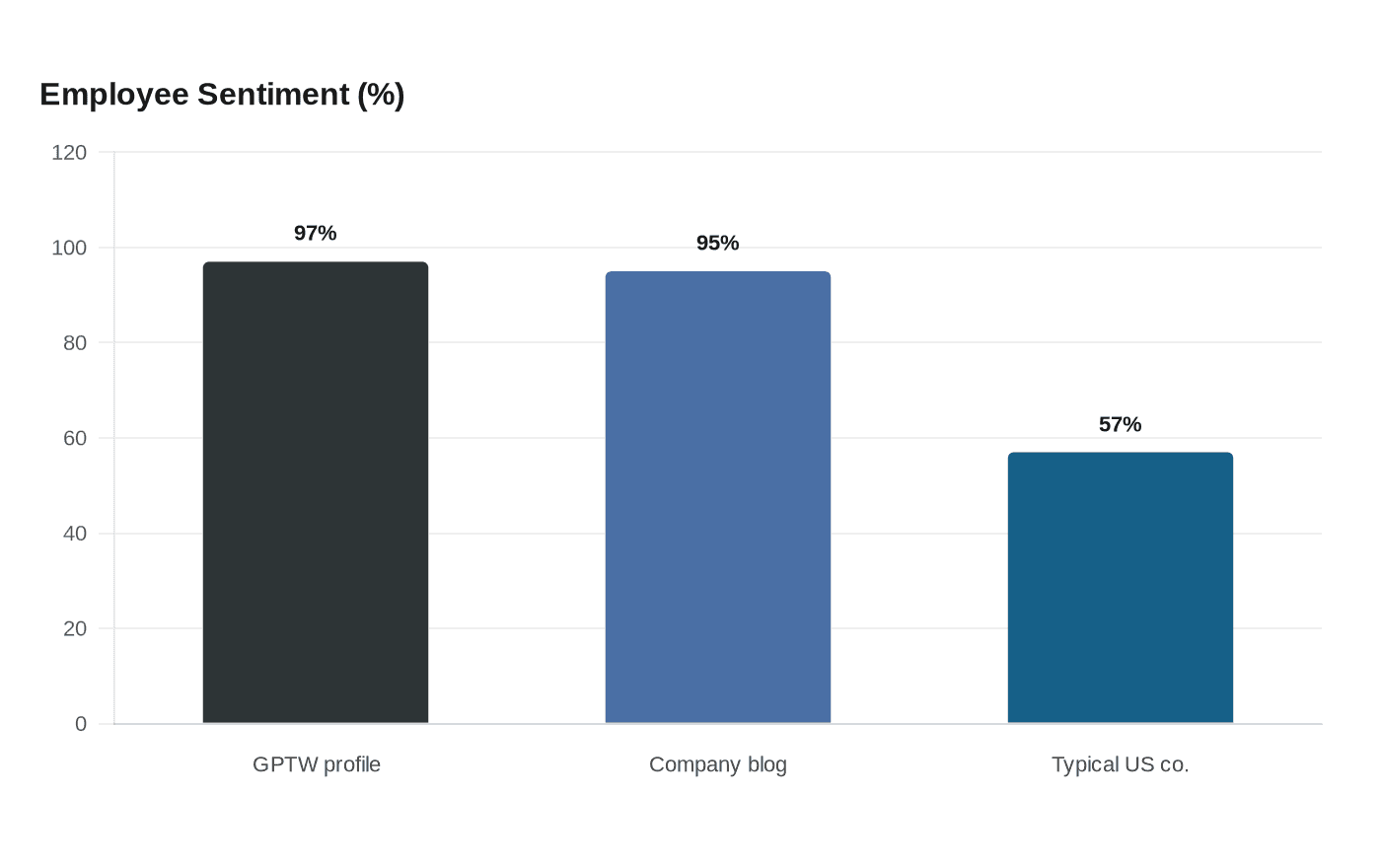
Great Place To Work’s profile shows 97% of monday.com employees say it is a “great place to work,” compared with 57% at a typical U.S.-based company. monday.com wants that recognition to read as more than a plaque on the wall. The company is presenting the result as evidence that employees experience the workplace as something built to support transparency, collaboration, and growth in a SaaS business where speed can quickly outrun habits.
Culture as a measurable part of the business
The company’s own blog framed the certification around a clear internal signal: 95% of employees said monday.com is a “great place to work.”
The certification is based on employee survey results and on Great Place To Work’s benchmark that roughly 7 in 10 employees are having a consistently positive experience at work. For monday.com, a company built around work management software, the culture claim only holds if the internal environment looks organized, responsive, and usable in practice.
The company has drawn that line openly. In the blog post announcing the certification, monday.com wrote, “We’re huge proponents of the idea that the customer experience is a direct reflection of the employee experience.” The company framed employee experience as shaping the quality of the product story it sells to customers every day.
Why the public-company era changes the meaning
Founded in 2014, monday.com still describes its mission as making work easier, simpler, faster, and more intuitive. Once the company went public on June 10, 2021, when its shares began trading on Nasdaq under the ticker MNDY, culture stopped being only an internal conversation. It became part of how investors, job candidates, and customers judge whether the company can scale without losing the habits that made it attractive in the first place.
That public-market visibility raises the burden on any employer-brand claim. A private startup can lean on charisma and speed; a listed software company has to show that the same culture can survive hiring growth, product pressure, and the scrutiny that comes with quarterly expectations.
For engineers and product managers, that means the award is really a signal about operating conditions. If the company is serious about being a place where people want to stay and build, then decisions about roadmap tradeoffs, cross-functional communication, and internal transparency matter just as much as external feature launches. For sales teams, it also gives the company a cleaner story to tell prospects who ask whether monday.com uses the same disciplined, collaborative approach it sells.
What the recognition tells candidates and current employees
The most useful part of this recognition for candidates is the proof point. monday.com is not asking job seekers to take its culture on faith; it is putting a percentage on employee sentiment and tying that score to a third-party benchmark. That score is stronger than a generic claim that the company has “great culture,” because it gives applicants a concrete number to compare against other employers.
For current employees, the message is different. The recognition suggests that leadership wants culture understood as part of the operating system, not a recruiting slogan that disappears after onboarding. In a fast-moving SaaS company, the usual failure mode is easy to recognize: teams get bigger, communication gets noisier, and the day-to-day work becomes harder to coordinate. monday.com keeps returning to survey results and workplace certification as measures to preserve employee experience.
The practical test is whether the internal experience stays aligned with the product pitch. monday.com sells work management software that promises structure, clarity, and smoother collaboration. If the company wants those claims to land, it has to show those same behaviors internally, especially as product development, customer demands, and sales pressure compete for attention.
A culture story the company keeps extending
monday.com has continued to fold workplace recognition into its broader identity. A 2023 Great Place To Work and Fortune announcement named the company No. 16 on the Best Workplaces in New York list and marked the third time monday.com had been included. The company described itself as dedicated to an inclusive, collaborative, and transparent culture, language that matches the themes in its own Great Place To Work messaging.
The company was also certified by Great Place To Work and ranked high on Dun’s 100 Best Places to Work in Israel. monday.com is presenting itself in Tel Aviv, New York, and the broader U.S. SaaS market with the same culture language.
This article was produced by Prism’s automated news system from verified source data, official records, and press releases, then run through automated quality and moderation checks before publishing. The system is built and supervised by the people who set the standards it runs under. Read our full AI policy.
Did this article answer your question?