Monday.com teams can avoid scope creep by defining boundaries early
Scope creep turns launches into burnout. monday.com teams can protect capacity by locking boundaries, approvals, and change rules before the work starts.
Why clear boundaries prevent the late-night version of work
A product rollout gets ugly fast when one more asset, one more approval, and one more stakeholder slip into the plan. What starts as a normal launch can turn into late-night revisions, missed handoffs, and the kind of resentment that builds when the same people keep absorbing “small” extras that were never in the deal.
That is why scope is not a dry planning exercise at monday.com. Asana defines project scope as the goals, deadlines, and deliverables a team will work toward, plus the work that falls outside those boundaries. In practice, that means a project is only manageable when everyone can see not just what is included, but what is not. Depending on complexity, that scope statement can live inside a project plan, a brief, or a standalone document, but the point is the same: clarity up front keeps a team from paying for confusion later.
A launch only stays sane when kickoff settles the hard questions
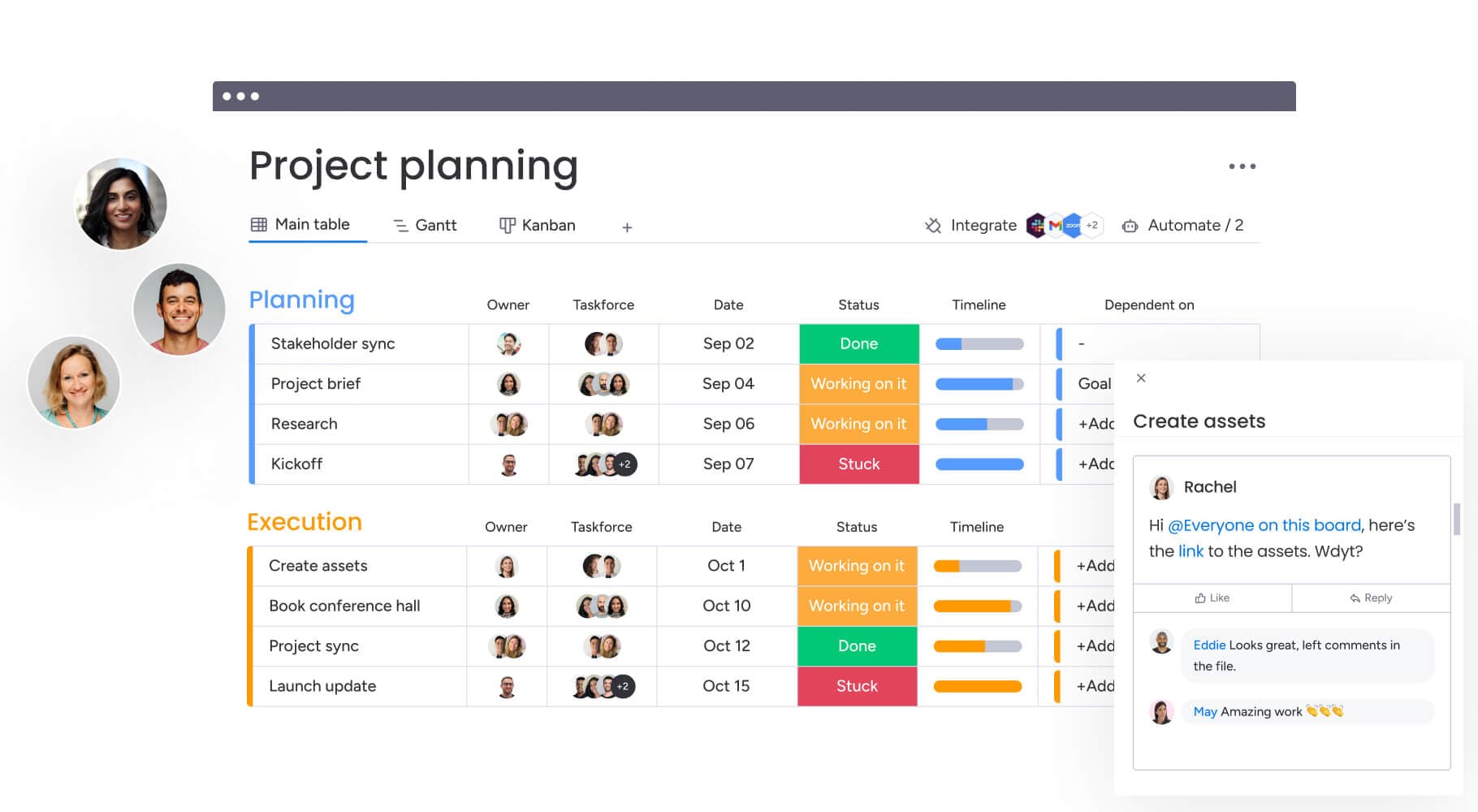
The easiest place to see this is a campaign launch or product rollout. If marketing is preparing a launch, the team needs to decide at kickoff how many assets are being created, which channels are in play, who signs off on copy and design, and whether localization, legal review, or customer enablement materials are part of the job. If those decisions stay vague, a stakeholder can add extra assets midway through the launch and quietly turn a controlled project into a scramble.
monday.com’s own project-management guidance makes the same point in plainer language: document exactly what a project includes and excludes upfront. That is not bureaucracy for its own sake. It is the difference between a launch that protects capacity and a launch that eats evenings, forces rushed decisions, and lowers quality because the team keeps rebuilding work that should have been closed out.
For engineers, that boundary protects technical quality. For product managers, it keeps launches on track. For sales teams, it prevents overpromising work that later lands on product, services, or customer-facing teams with no extra time or budget attached. In a fast-moving SaaS company, even one loose request can become a cascade of add-ons when customers, leadership, and adjacent teams all want just one more thing.
Scope creep is not the same as a real change request
The most useful part of monday.com’s framing is its distinction between scope creep and deliberate scope change. Not every added request is bad. A new feature, an expanded section, or an extra deliverable can be the right call if the team adjusts time, budget, and resources to match. The danger comes when changes arrive informally, without a reset of the plan.
That is why the project baseline matters. monday.com treats the baseline as a decision-making filter for later requests, which is exactly how healthy teams avoid drift. If a request does not fit the original agreement, it should trigger a clear conversation: does the deadline move, does the budget change, or does something else get removed to make room?
The warning signs are usually ordinary phrases that sound harmless in the moment: “just one more feature,” “expand this section,” “can we add one more asset?” Those words are where hidden overtime begins. They make the work look small even when the cumulative effect is anything but small.
Why this matters even more at monday.com’s scale
The stakes are larger at monday.com because the company is no longer a small startup with a narrow set of projects. It says more than 250,000 customers worldwide use its platform, and it became publicly traded on Nasdaq on June 10, 2021. Its 2025 annual report lists 3,155 employees and about $1.232 billion in revenue for 2025, figures that show how quickly small process failures can compound across product, sales, customer success, and services.
That scale matters for a company whose core product is built around helping teams coordinate work, workflows, and AI agents on one platform. When the company’s own customers are managing cross-functional launches and service teams of their own, its guidance on scope is doing double duty: it is both internal operating advice and a product philosophy. If monday.com expects users to manage work cleanly inside the platform, then the company’s own teams have to model that discipline in the way they plan, ship, and support new work.
This is also why scope clarity should not be treated as a minor administrative skill. It is one of the cheapest forms of productivity leverage a team has. A clear scope statement protects schedules, budgets, quality, and team health at the same time. At scale, that kind of discipline is not optional.
What teams should lock at kickoff
The most effective kickoff conversations are the ones that make hidden assumptions visible before anyone starts building. The goal is not to slow work down. The goal is to keep work from expanding in the dark.
- the project goal and how success will be measured
- the exact deliverables, plus what is explicitly out of scope
- the deadline, launch window, or delivery sequence
- who approves changes and who can request them
- what resources are available, including design, engineering, services, or operations support
- how changes will be handled if new requests appear later
A strong kickoff should settle:
That kind of boundary setting does two things at once. It protects people from carrying invisible work, and it gives leaders a cleaner way to say yes or no when the work starts to drift. If a change is real, it can be managed. If it is just a vague add-on, it can be challenged before it becomes unpaid overtime.
The broader lesson is about burnout, not just process
PMI’s 2018 Pulse of the Profession found that 52% of projects completed in the prior 12 months experienced scope creep, up from 43% five years earlier. PMI also argues that stronger organizational agility and standardized risk-management practices are associated with less scope creep. That puts a hard number behind what many teams already feel: scope drift is a persistent workplace problem, not a one-off annoyance.
For monday.com teams, the lesson is simple. Scope clarity is an early-warning system for burnout. When the boundaries are clear, teams can ship with focus. When they are vague, the same people end up doing invisible extra work, and the organization pays for it in morale, quality, and turnover risk.
The healthiest launches, the cleanest rollouts, and the best cross-functional projects all start the same way: with a hard conversation about what is in, what is out, and who gets to change the answer.
This article was produced by Prism’s automated news system from verified source data, official records, and press releases, then run through automated quality and moderation checks before publishing. The system is built and supervised by the people who set the standards it runs under. Read our full AI policy.
Did this article answer your question?