Monday.com teams can cut rework with better requirements gathering
Strong operators catch missing requirements before launch, saving teams from rework, budget drift, and avoidable churn across product, legal, and customer work.

Why requirements gathering is the quiet skill that keeps projects from wobbling
The smoothest launches usually come from the least glamorous habit: asking the awkward questions before anyone starts building. Requirements gathering is the process of identifying, documenting, and managing everything a project needs to succeed, and that work begins early, then keeps going as the project evolves.
That matters at monday.com because the company sells confidence in how work moves. More than 250,000 customers worldwide use its platform, and monday.com now describes itself as an AI work platform with a shared AI layer across work management, CRM, service, and dev. At that scale, a vague brief does not stay vague for long. It turns into rework, customer confusion, and slower delivery.
What goes wrong when the right teams are left out
The biggest failures are rarely dramatic at the start. They show up later, when engineering has built to an assumption, finance has not weighed in on budget constraints, legal has not reviewed risk, security has not seen the data flow, or customer-facing teams have not explained what clients actually need. That is when projects run out of resources, go over budget, or miss their timelines.
For monday.com employees, this is not abstract process talk. Engineers can use requirements gathering to avoid building against assumptions. Product managers can use it to define acceptance criteria and dependencies with less ambiguity. Sales teams can use it to understand what a customer truly needs before promising an outcome. In a company that sells workflow clarity, bad requirements are expensive because they create downstream rework across product, support, and customer success.
Asana’s requirements-gathering guide makes the larger point clearly: the job is not just collecting information, but answering the core questions about schedule, involvement, and risk before they become problems. The payoff is better stakeholder satisfaction and a higher chance that the final output matches the original need.
The hidden cost of missing stakeholders
The difference between a clean launch and a messy one often comes down to whether the relevant stakeholders were identified early. Monday.com’s own stakeholder-engagement guidance defines the work as identifying, involving, and aligning the key people who influence or are affected by the project. That includes the people who can block execution, not just the people who cheer it on.
The company’s business requirements document guide pushes that logic into a concrete process. Its six-step framework starts with stakeholder discovery, moves to SMART objectives, maps the current and future state, documents requirements with acceptance criteria, validates through reviews, and then adds formal approval workflows. That sequence matters because it forces teams to surface hidden assumptions before they turn into expensive surprises.
A customer-facing team may know the request will sound simple to a prospect. Legal may know the same request carries compliance exposure. Finance may know the scope does not fit the margin model. Security may know the technical approach creates unnecessary risk. If those voices are missing up front, the project may still ship, but it will often ship twice.
A practical sequence before work lands on a monday.com board
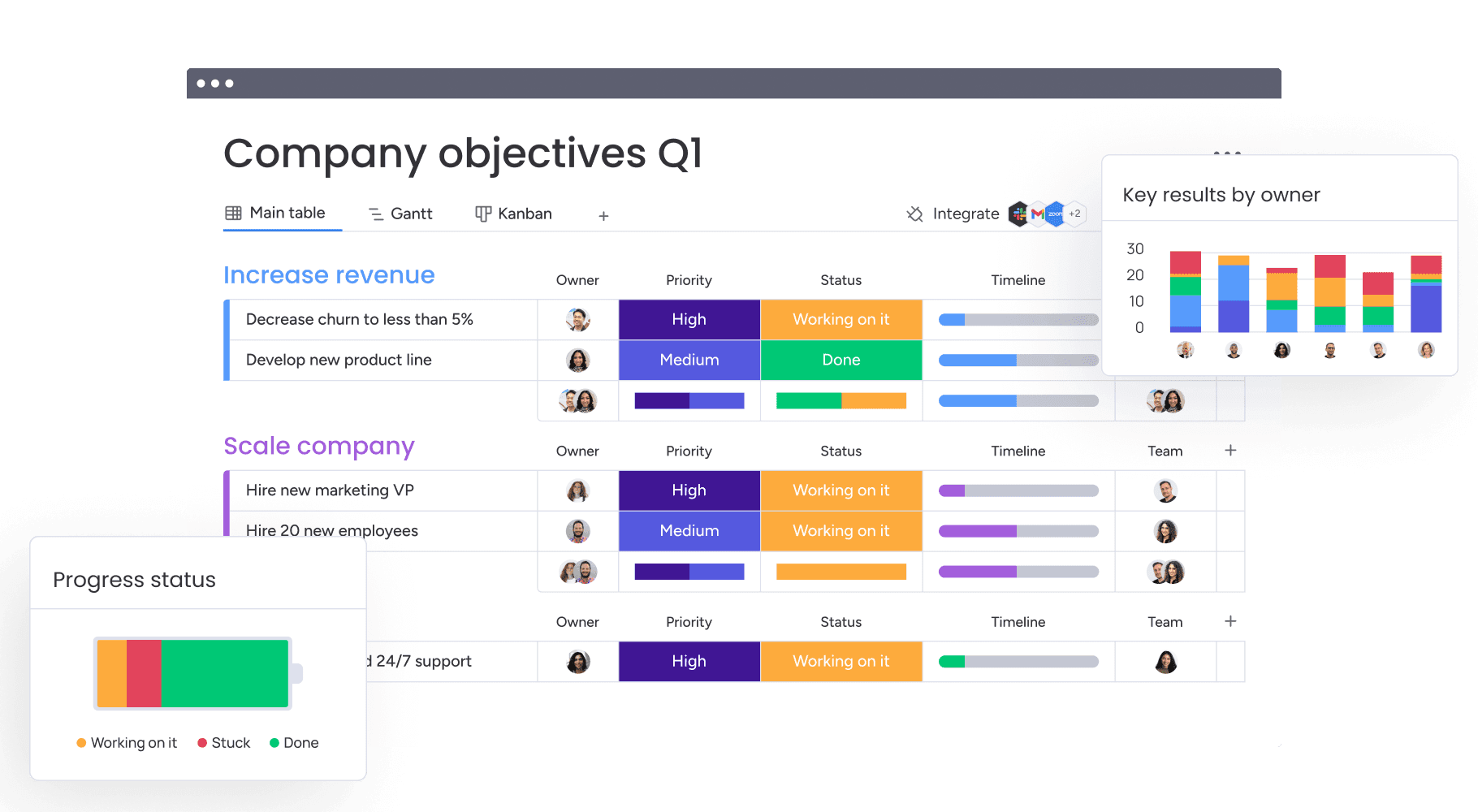
Requirements gathering works best when it is treated as a disciplined handoff, not a one-time meeting. Monday.com’s own template says requirements should be captured from the initial idea through final delivery, then kept visible and easy to update as the work changes. That is the operating standard to aim for before a project gets its own board.
A practical sequence looks like this:
1. Identify the stakeholders.
Start with everyone who can shape the outcome or absorb the consequences. That usually includes the request owner, the execution team, legal, finance, security, and any customer-facing group that will explain or support the result.
2. Define the business objective in plain language.
Monday.com’s BRD guide recommends SMART objectives for a reason. If the goal is vague, the work will be too. A clear objective forces the team to decide what success looks like and what is out of scope.
3. Map the current state and the future state.
This step reveals where friction lives today and what the project is actually meant to change. It also helps teams see whether they are fixing a workflow problem, a data problem, or a customer expectation problem.
4. Write down acceptance criteria.
This is where many projects either gain clarity or drift. Acceptance criteria make the finish line visible, which gives engineers, PMs, and reviewers the same standard for saying yes.
5. Validate the plan through review.
Reviews are not bureaucracy when they catch mismatched assumptions. They are the point where legal, finance, security, and customer teams can spot what the initial ask missed.
6. Lock in formal approval workflows.
Approval is not just permission to proceed. It is a record that the right people saw the scope, understood the constraints, and accepted the tradeoffs.
Used this way, a monday.com board becomes more than a place to track tasks. It becomes the visible output of a decision process that was already tested for holes.
Why this matters even more at monday.com
The scale of monday.com’s business makes requirements quality a product issue, not just an internal habit. The company reported fourth-quarter 2025 revenue of $333.9 million, full-year 2025 revenue growth of 27%, and said customers with more than $50,000 in ARR represented 41% of total ARR. It also added a record number of customers with more than $100,000 in ARR, which shows how much of the business now depends on complex, multi-stakeholder accounts.
That is where disciplined discovery becomes strategic. Monday.com was founded in 2012 and first issued shares to the public on June 10, 2021. Since then, it has evolved into a multi-product company, with its North American headquarters at 225 Park Avenue South in New York City. At that size, one unclear requirement can ripple across product, support, service, and go-to-market teams.
The company’s own product direction reinforces the point. Monday.com says its requirements-gathering template helps teams organize everything a project needs from initial idea to final delivery, and its current positioning around AI work suggests that the next phase of work management will depend even more on clean inputs. Monday vibe becoming the fastest product in the company’s history to surpass $1 million in ARR is a reminder that speed only helps if the underlying work is defined well enough to carry forward.
The real career advantage here is not having the loudest voice in the room. It is catching the missing requirement before anyone else sees the bug, the blocker, or the blown timeline. In a company built around making work move faster, that is the operator skill that keeps velocity from turning into chaos.
This article was produced by Prism’s automated news system from verified source data, official records, and press releases, then run through automated quality and moderation checks before publishing. The system is built and supervised by the people who set the standards it runs under. Read our full AI policy.
Know something we missed? Have a correction or additional information?
Submit a Tip