monday.com updates mind map guide for cross-functional project planning
monday.com is casting mind maps as the fastest route to kickoff alignment, giving teams a clearer way to scope work, assign owners, and spot gaps before execution starts.

Why monday.com is leaning on mind maps now
The fastest way to slow down a cross-functional project is to let kickoff meetings turn into a pile of half-formed assumptions. monday.com’s updated mind map guide, refreshed on May 19, 2026, takes aim at that problem by showing teams how to see the shape of work before they start assigning tasks. The opening scenario is telling: a major initiative that cuts across three departments and two time zones, which is exactly the kind of mess that can produce status-meeting sprawl if the first conversation is too linear.
That framing matters for monday.com because the company’s own users live in that overlap between product, engineering, sales, customer success, and marketing. The guide is not treating mind maps as personal note-taking or creative doodling. It is pitching them as a way to turn early ambiguity into a shared picture that people can actually act on.
What the guide says a work-ready mind map should do
At its core, the guide sticks to a simple model: put the central idea in the middle, then branch outward so the team can see relationships, dependencies, and gaps. monday.com says the format works because it uses branches, keywords, color, images, and spatial arrangement to help people scan information faster and remember it better. That is a practical point, not a decorative one. In a workplace where projects are usually discussed in Slack threads, meeting notes, and separate board views, visual structure can reveal what text-heavy planning hides.
The company also points to 2025 research showing that mind mapping improves knowledge retention, supports deeper cognitive processing, and strengthens team collaboration. That is the key workplace argument: the point is not just to make ideas look organized, but to help teams hold more of the plan in their heads at once. For managers, that can mean fewer surprises later. For individual contributors, it can mean fewer rounds of clarifying what was actually agreed on.
Where the immediate value shows up
The most useful part of the guide is how easily the format maps to real monday.com work. In project scoping, a mind map makes it easier to decide what belongs in the project and what does not. That sounds basic, but in practice it is where teams lose days: one function assumes a launch includes a certain asset, another assumes a dependency has already been covered, and nobody notices the mismatch until the deadline gets close.
Project scoping
A mind map gives project leads a faster way to sort scope, owners, dependencies, and open questions before anyone starts building the board. Instead of arguing over task order too early, the team can agree on the shape of the work first. That means quicker decisions about what needs approval, what can move in parallel, and where the handoffs will break if nobody owns them.
Campaign planning
Campaign teams get a similar benefit. A mind map can show the relationship between the audience, the offer, the creative assets, the channels, and the launch timing, which makes it easier to decide whether the campaign is ready or still missing a critical piece. For marketers inside monday.com, that is the difference between a plan that merely looks busy and a plan that can actually be executed without endless revision cycles.
Product handoffs
Product handoffs are where the approach becomes especially valuable. When product, engineering, customer success, and sales all need to align, a mind map can surface who needs to know what, what dependency has to land first, and where a launch will stall if the transition is vague. It gives teams a fast answer to the question that matters most in handoffs: what has to be true before the next group can do its job?
How monday.com connects brainstorming to execution
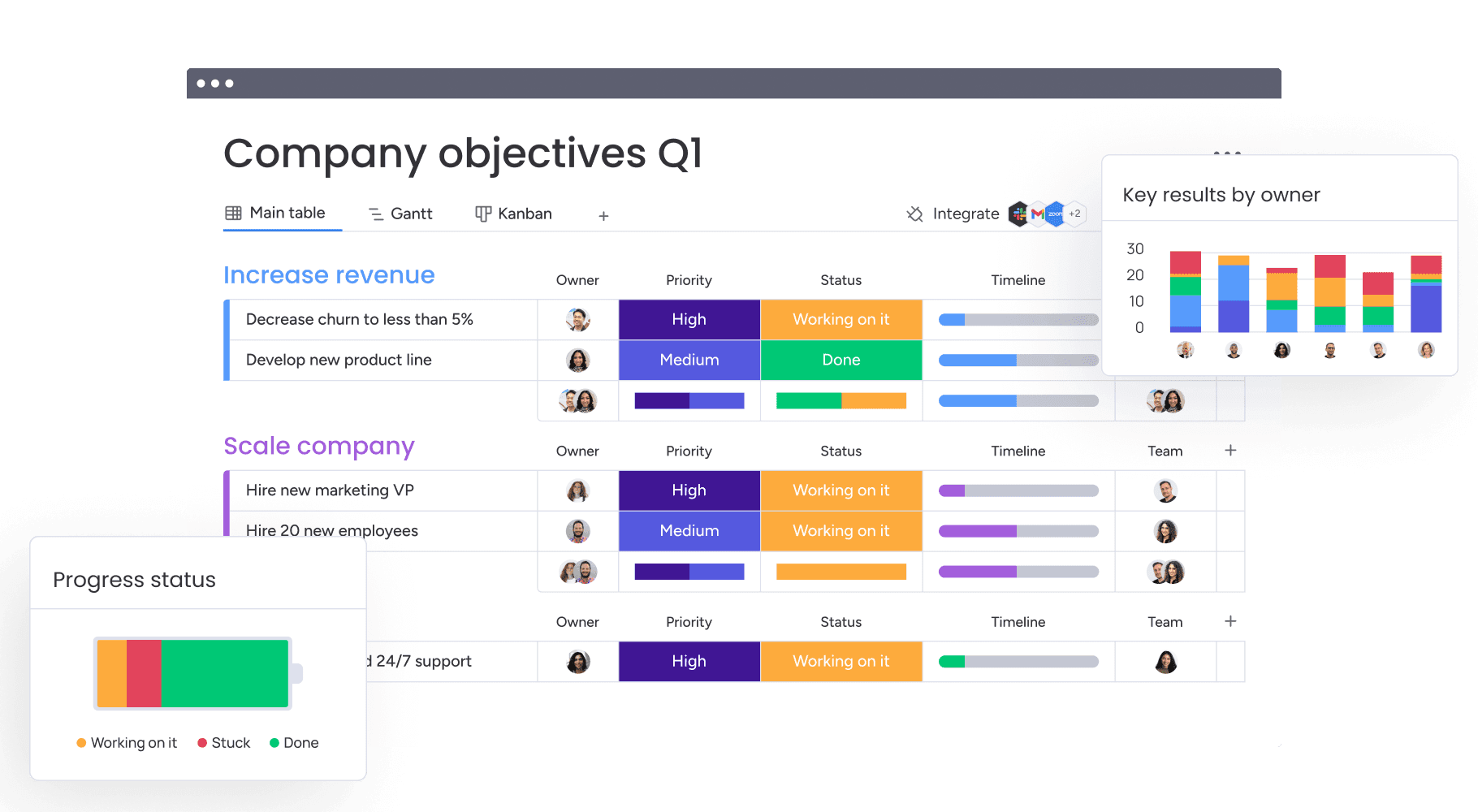
The guide goes beyond the visual itself and ties mind maps directly to monday.com’s AI Work Platform. According to the company, mind map ideas can be turned into workflows using workdocs, multiple board views, automations, and real-time dashboards. That is the real product story here: human brainstorming first, structured execution second.
monday.com’s support materials reinforce that pattern. Workdocs are described as a central place to collaborate, brainstorm, and execute work, while also connecting to boards, dashboards, automations, and integrations. Dashboards, meanwhile, provide a high-level view across multiple boards and can surface summaries and reports. Put together, the message is clear: a mind map should not live as a pretty planning artifact that dies after kickoff. It should become the start of a trackable workflow.
For employees, that is a useful internal signal about how the company wants its product used. A PM sketching a product launch, a seller mapping an account plan, or a customer success manager planning a rollout can all use the same motion: visualize first, operationalize second. That sequence helps expose missing owners early, before the project gets absorbed into board clutter and meeting cadence.
Why the scale of the company makes this more than a small feature story
This is not a niche tool update from a company serving a handful of design teams. monday.com says more than 250,000 customers worldwide use its platform. As of March 31, 2026, it said it had 4,547 customers with more than $50,000 in annual recurring revenue and 3,211 employees. Those numbers explain why a planning guide like this matters inside the company. When a platform is used at that scale, the line between “nice collaboration feature” and “operational infrastructure” gets thin fast.
The company’s fiscal 2025 results push that point further. monday.com reported $1.232 billion in revenue, up 27% year over year, and said customers with more than $50,000 in ARR represented 41% of total ARR. Co-founders and co-CEOs Roy Mann and Eran Zinman said adoption of the company’s AI products was strong, while CFO Eliran Glazer said the business continued to see momentum with larger customers. Read together, the mind map update fits a broader shift toward tools that help bigger teams coordinate work, not just collect it.
The Tony Buzan lineage still matters
monday.com also anchors the guide in Tony Buzan’s idea of “radiant thinking,” the intellectual basis of modern mind mapping. That matters because it keeps the piece from sounding like another generic productivity post dressed up in product language. Tony Buzan’s organization describes him as the inventor of mind maps and says he died in 2019, which gives the technique a long paper trail and a recognizable origin story.
That history is part of why the format still resonates in enterprise software. The basic promise has not changed: place one idea at the center, branch out, and make the relationships visible. What has changed is the setting. In monday.com’s world, that visual map is not just a way to think. It is a faster way to align teams, decide what work actually exists, and move from kickoff confusion to execution with fewer lost steps.
This article was produced by Prism’s automated news system from verified source data, official records, and press releases, then run through automated quality and moderation checks before publishing. The system is built and supervised by the people who set the standards it runs under. Read our full AI policy.
Know something we missed? Have a correction or additional information?
Submit a Tip