Monday.com weighs in as buyers compare ClickUp and Asana
ClickUp and Asana now signal different buying philosophies, and monday.com is pitching itself as the easier, AI-native middle. That choice is reshaping how teams decide what work software should be.
monday.com is pitching itself as “the third option” for teams weighing ClickUp and Asana. The split is over whether work software should be a broad operating system, a focused project tool, or something in between. monday.com is using that divide to position itself as the middle ground.
A buyer decision, not a feature contest
The cleanest way to read the ClickUp versus Asana debate is as a choice between breadth and focus. ClickUp leans into the all-in-one workspace idea, while Asana is framed more as a streamlined project management platform. It reflects whether a buyer wants one system that can absorb many workflows, or a more disciplined tool that keeps the team anchored to execution.
That framing shows that buyers are not only comparing what a product can do, but also how much structure it imposes. A feature-rich system can look powerful to one team and exhausting to another, which is why the conversation keeps coming back to adoption friction, simplicity, and how quickly a team can turn setup into actual usage.
How monday.com is pitching the middle
On its comparison page, monday.com pitches top-rated ease of use with AI-powered work management rather than forcing customers to choose between a heavy all-in-one stack and a narrower task tool.
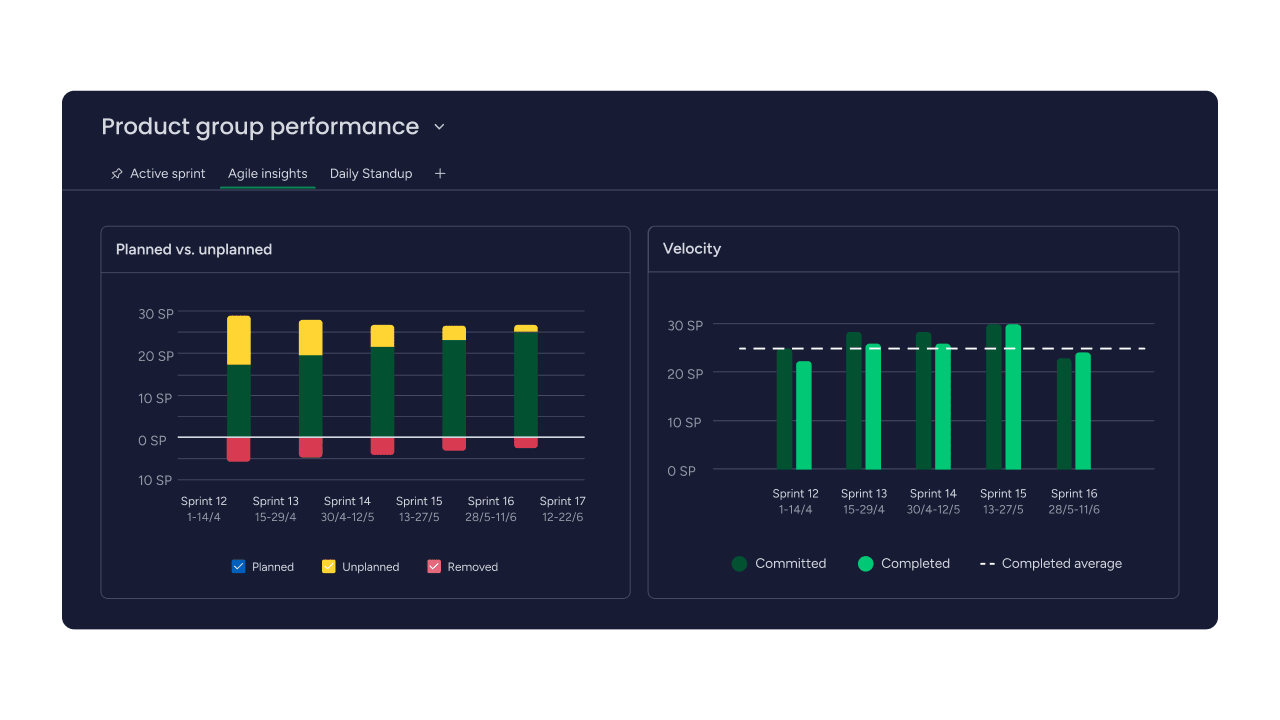
The company’s comparison page lists plans starting at $7 per user per month, and it highlights more than 200 integrations alongside monday sidekick, monday agents, monday vibe, monday MCP, and AI Blocks. In the same comparison, monday.com points to ClickUp Brain and lists ClickUp at more than 1,000 integrations. ClickUp is the breadth-and-extensibility pitch; monday.com is arguing that usability and orchestration can matter just as much as raw depth.
What sales teams need to hear in the first call
This is where the sales motion changes. The old checklist conversation, where every product gets measured against a column of overlapping features, is less useful than understanding how a team actually wants to run. Buyers care about whether the software behaves like a platform, a task manager, or a coordination layer for the whole organization, and they care just as much about how much effort it will take to bring the team along.
AI pricing and free-plan structure are part of that decision from the start. If the entry point is too opaque, too expensive, or too tied to a bigger rollout than the buyer is ready for, the pilot dies before anyone gets to workflow design. Integration depth and adoption friction keep showing up in discovery calls because they are the terms on which software gets a real chance to live inside a company.
What product and engineering teams should take from it
For product managers, the comparison is a reminder that positioning is part of product strategy. The same capability can feel like an advantage or a burden depending on whether the customer is looking for simplicity or breadth. When monday.com describes itself as the “third option,” it is declaring the operating model it wants customers to adopt.
For engineers, the lesson is even sharper. Both monday.com and ClickUp are investing heavily in AI assistants and workflow depth, which means the challenge is not simply to add features, but to make them feel native. A tool like monday sidekick or monday vibe only matters if automation and AI show up where work already happens, rather than as extra layers that make the product harder to understand.
monday.com now frames itself in investor language as an “AI work platform that turns strategy into execution, at scale.” That is a more expansive claim than project tracking, and it signals where the product is headed: toward orchestration, not just organization.
The market is getting louder, not simpler
The broader category has become more competitive at the same time. Forrester’s Q2 2025 Collaborative Work Management Wave, announced on July 23, 2025, described collaborative work management platforms as rapidly evolving to meet the needs of modern enterprises. Gartner’s Collaborative Work Management Magic Quadrant, published on October 28, 2025, highlighted AI-powered automation, contextual collaboration, and real-time insights as key market trends.
Those signals line up with what buyers are already sorting through. Gartner Peer Insights shows monday.com with a 4.5-star rating from 270 reviews in its ClickUp versus monday.com comparison, while ClickUp has a 4.4-star rating from 28 reviews. The review gap does not settle the debate, but it does suggest that monday.com has reached a broader base of users and that many teams see it as a workable balance between capability and usability.
monday.com’s own numbers
In its Q4 and full-year 2025 results, monday.com said revenue grew 27% year over year. The company said customers with more than $50,000 in annual recurring revenue represented 41% of total ARR at year-end 2025. It also said monday vibe was the fastest product to surpass $1 million in ARR in its history.
This article was produced by Prism’s automated news system from verified source data, official records, and press releases, then run through automated quality and moderation checks before publishing. The system is built and supervised by the people who set the standards it runs under. Read our full AI policy.
Did this article answer your question?