Monday.com’s AI shift makes SaaS pricing a product decision
monday.com is turning AI pricing into a roadmap choice, not a finance afterthought. Seats, credits, and usage now shape how the platform is built, sold, and scaled.
The biggest pricing question inside monday.com is whether AI should live inside a seat or be metered as consumption. Once a workflow assistant can create tasks, draft updates, and trigger actions, the price tag starts shaping what product teams build, what sales reps can promise, and how customer success explains value.
Pricing is now product strategy
Stripe’s framework for SaaS pricing is useful here because it separates subscription pricing, usage-based pricing, and value-based pricing, then makes one bigger point: the best model is the one customers feel matches the value they receive. That matters at monday.com because the company is no longer selling a single work management app. It now describes itself as an AI work platform, says more than 250,000 customers worldwide use it, and spans work management, CRM, service, dev, and AI orchestration.
That breadth creates pressure on the pricing model. Seat-based plans still work well for access to the core platform, but AI features change the economics. When software starts doing the work, not just organizing it, the cleanest monetization may be a hybrid: seats for people, usage for machine work, and perhaps eventually pricing tied to business outcomes. Stripe’s warning is that pricing affects retention and conversion as much as feature quality does, and monday.com is now living that trade-off in public.
What monday.com’s new model actually changes
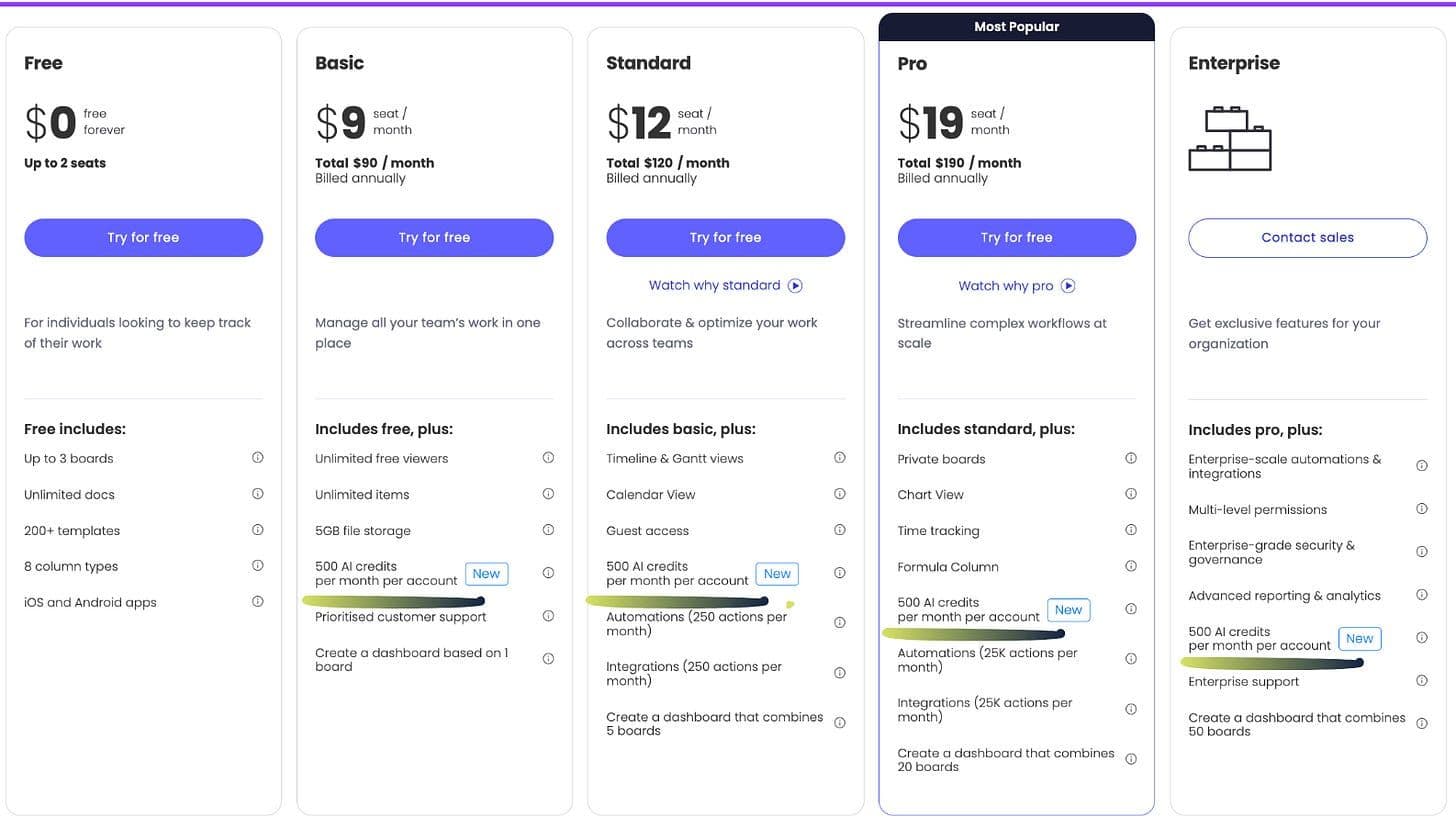
monday.com’s pricing materials show the shift clearly. For customers who joined on or after May 6, 2026, the monday AI portfolio uses a shared model powered by AI credits. The company says those credits cost $0.01 each, and that they are consumed differently depending on the feature, including per action, per message, or based on task complexity.
That is a meaningful break from the older software logic of “buy a seat, get access.” Core products still show monthly per-seat pricing across work management, CRM, dev, and service, with a free tier for work management. But AI is becoming its own meter. monday.com also says monday agents’ credit consumption starts on June 8, 2026, and that the amount used will vary by task depth and complexity. One part of the AI stack, monday sidekick, does not consume credits yet, but the company says it will be monetized in the future.
For workers inside monday.com, that means pricing is not just packaging. It is a product decision about where the company draws the line between standard software access and paid AI execution. The more the company leans into automation, the more every new feature forces a question: is this a seat feature, a metered feature, or an outcome feature?
Why engineers should care about pricing
Once AI usage gets billed, engineering has to treat metering as part of the product architecture. Every action that can burn a credit needs telemetry, logging, and guardrails. That means connectors, APIs, permissions, and task orchestration are no longer just backend concerns. They become the infrastructure that keeps billing accurate and customer trust intact.
A platform like monday.com also has to think carefully about cloud bottlenecks and agent tooling. If an agent can execute real work across a customer’s system, the company has to know how often it runs, how heavy the task is, what permissions it used, and whether the output was worth the credit cost. In practice, pricing pushes engineering to define what counts as one action, what counts as a message, and what counts as a complex workflow. That is why SaaS monetization and software design are inseparable once AI agents enter the stack.

What product managers have to decide next
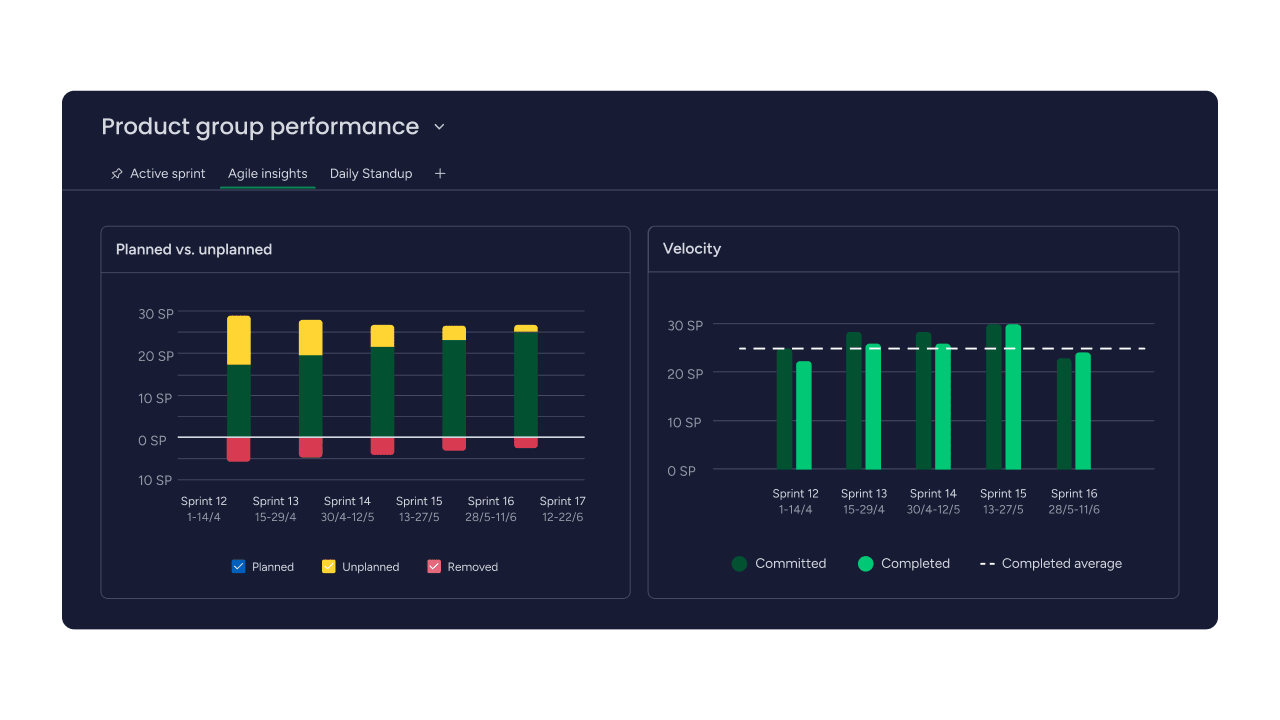
monday.com’s AI strategy, announced on February 10, 2025, centered on three pillars: AI Blocks, Product Power-ups, and the Digital Workforce. By July 2025, the company said monday magic, monday vibe, and monday sidekick were fully available. That sequence shows a company moving from AI features as add-ons to AI as a core part of the product story.
For product managers, the key question is what should be bundled, what should be metered, and what should remain anchored to the seat. A customer who buys monday.com for project visibility may accept a few AI actions as part of the package, but an AI layer that actually executes work needs a value story that feels predictable. If the pricing feels like a tax on productivity, adoption will slow. If it feels like a direct exchange of credits for time saved, the roadmap can support faster expansion.
monday.com’s own AI pitch is built around that logic. The company says the AI approach is meant to help SMBs and mid-market companies scale without adding resources and help enterprise customers speed up processes that are often slowed by scale. That means product teams are not just shipping features. They are defining which kinds of scale the company is selling, and how customers will pay for it.
Why sales and customer success will feel the shift first
Sales conversations change fast when the model moves from access to usage. A seat-based deal is easy to explain. A hybrid deal with credits forces a deeper procurement discussion about capacity, expected consumption, and expansion. That can be an advantage if the customer wants to pay for value delivered, but it also raises the burden on reps and customer success teams to explain what is included and what happens when usage rises.
The numbers suggest monday.com is already moving into that next phase of selling. In the second quarter of 2025, revenue reached $299.0 million, up 27% year over year. By August 2025, monday CRM had reached $100 million in ARR. In the third quarter of 2025, paid customers with more than 10 users rose to 63,075, up 7% year over year, and customers with more than $50,000 in ARR reached 3,993, up 37% year over year. For the full year 2025, revenue grew 27% and non-GAAP operating margin reached 14%.
Those figures matter because they show a company already expanding upmarket while keeping retention strong. In that environment, AI pricing becomes part of the expansion motion. It can unlock higher ARPU, but only if customers understand why they are paying more and can see the value in the credits they consume.
The broader lesson for monday.com
For monday.com, pricing is no longer a spreadsheet exercise hidden behind the product. It is part of the roadmap, part of the architecture, and part of the story the company tells to customers who want AI that actually does work. The next competitive edge will not just come from adding more AI. It will come from making the cost of AI intuitive enough that customers trust it, while still protecting margin and rewarding real value delivered.
This article was produced by Prism’s automated news system from verified source data, official records, and press releases, then run through automated quality and moderation checks before publishing. The system is built and supervised by the people who set the standards it runs under. Read our full AI policy.
Did this article answer your question?