OpenAI says agentic AI is shifting work from tasks to execution
OpenAI says agents now handle long-horizon work, and monday.com is already adding permissions, approvals and logs around them. The first change is project coordination, research and ticket handling.
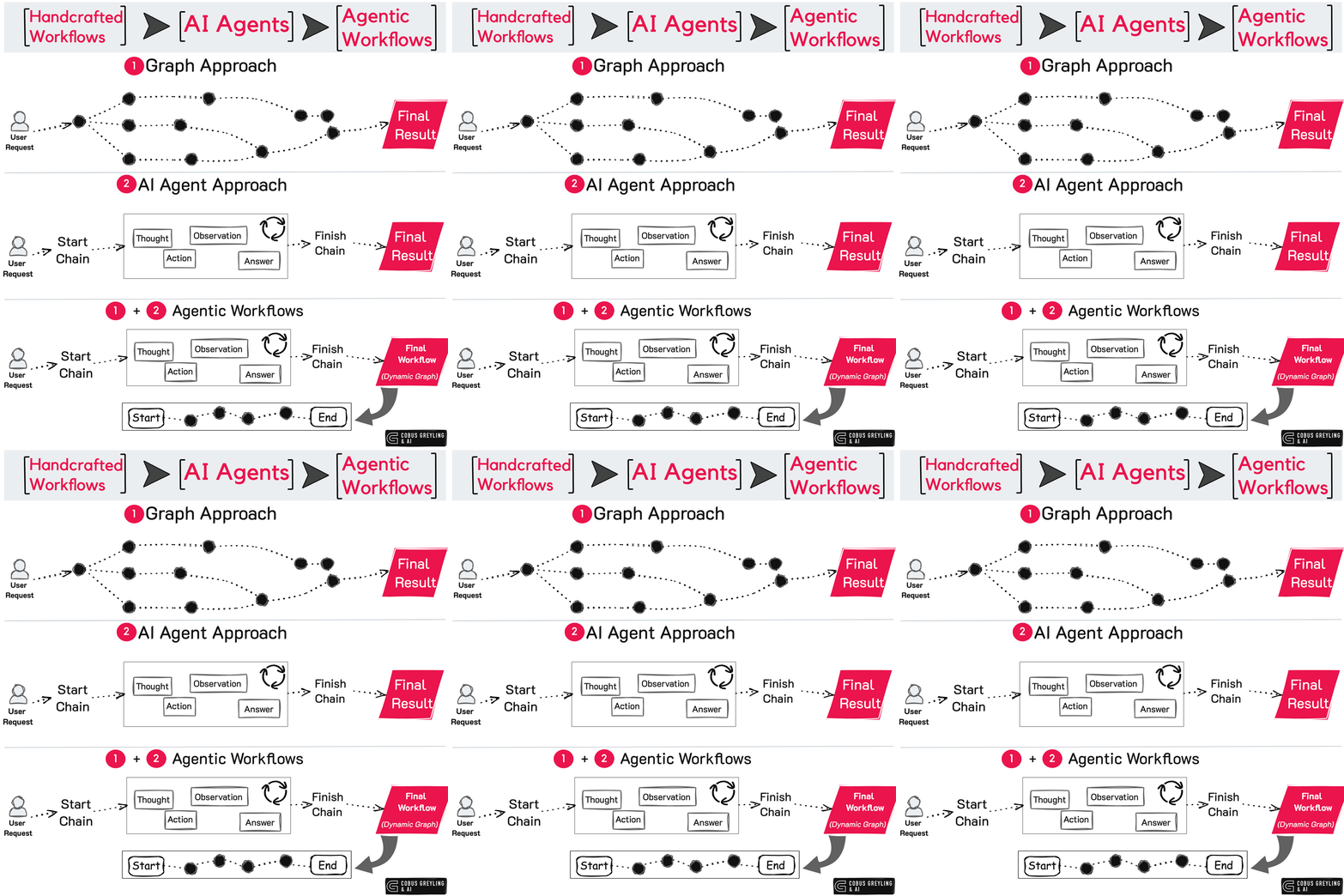
OpenAI’s June 25 paper on how agents are transforming work pushed the clearest version yet of a shift monday.com has been building toward: work is moving from short prompts to delegated execution. The company said agentic AI changes the unit of knowledge work from single interactions to long-horizon tasks, and described agents that can run for minutes or hours while orchestrating tool calls, interacting with environments and iterating toward a result.
That framing matters because OpenAI published the paper as an economic research piece, not a product tease. It points the value conversation toward time saved, tasks completed and workflow throughput, which is a better fit for work-management software than raw prompt volume. OpenAI’s Codex numbers underline the change. On June 2, it said more than 5 million people use Codex every week, about 20% of users are non-developers, and that group is growing more than three times as fast as developers. OpenAI also said knowledge workers are using Codex for research, data analysis, workflow automation and lightweight tools, not just software development.
For monday.com, the first places that change will show up are the least glamorous parts of knowledge work: project coordination, research handoffs, ticket handling and manager oversight. The company said on March 11 that AI agents can sign up, authenticate and operate directly inside its platform, where they can organize projects, update workflows, trigger automations, generate reports and coordinate work across teams. monday.com said those agentic workflows are built around permissions, approval workflows, activity logs and human oversight, which is the difference between a chatbot and something that can safely move real work forward.

monday.com has already been pushing this direction in product and in market positioning. On September 17, 2025, it introduced monday agents, a no-code agent builder, and said it served more than 250,000 customers worldwide. In fiscal 2025, the company reported revenue of $1.232 billion, up 27% year over year, while customers with more than $50,000 in annual recurring revenue represented 41% of total ARR. In the first quarter of 2026, revenue rose 24% to $351.3 million, and the company said it had record net adds of customers with more than $500,000 in ARR.
The revenue mix helps explain why the company is leaning so hard into agents. monday.com said monday vibe was the fastest product in company history to surpass $1 million in ARR, and its 2025 AI strategy centered on AI Blocks, Product Power-ups and a Digital Workforce. At Elevate 2025, monday.com pointed to customers such as Pepsi, which cut low-impact work by 30% while hitting 100% of critical deadlines, and Five9, which reduced time to revenue by 25% through AI-powered workflows. The message is clear: the next contest is no longer over who can generate the best prompt, but who can let an agent carry a workstream from start to finish without losing control.
This article was produced by Prism’s automated news system from verified source data, official records, and press releases, then run through automated quality and moderation checks before publishing. The system is built and supervised by the people who set the standards it runs under. Read our full AI policy.
Did this article answer your question?