OpenAI’s Daybreak shows where enterprise cyber tooling is headed
Daybreak reframes cyber AI around patching, not just detection, and monday.com’s security stack shows why that raises the bar across the pipeline.
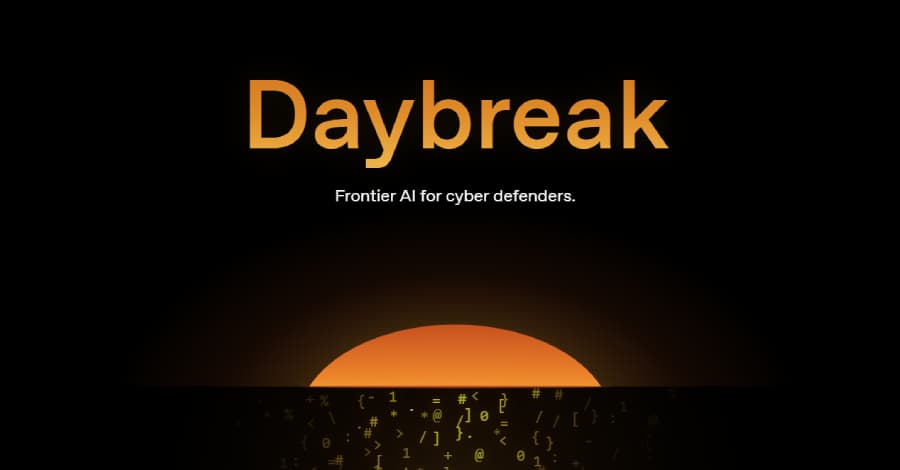
Daybreak bundles frontier cyber models, Codex Security, Patch the Planet, GPT-5.5-Cyber, and the Daybreak Cyber Partner Program. OpenAI built the system around authorization, human judgment, monitoring, safeguards, and collaboration with the security community.
What Daybreak is changing
On June 22, OpenAI said the bottleneck in cybersecurity has moved from finding vulnerabilities to patching them. AI can now navigate large codebases, reason through attack paths, validate hypotheses, and surface issues that might otherwise stay hidden, but “vulnerability reports, on their own, do not protect anyone.” The value sits in validated findings, tested patches, coordinated disclosure, maintainer review, and fixes that actually land.
The sharpest signal is the product packaging around that idea. OpenAI said the full version of GPT-5.5-Cyber reached 85.6% on CyberGym, compared with 81.8% for GPT-5.5, while Codex Security is being updated to accelerate both discovering and patching vulnerabilities and to prevent new ones from reaching production. OpenAI said more than 30 open-source projects have already committed to Patch the Planet.
Why the open-source piece matters to enterprise teams
Patch the Planet makes the remediation-first story concrete. The initiative was built with Trail of Bits to help maintainers strengthen critical open-source software, pairing AI-assisted security research with expert human review to find, validate, and fix vulnerabilities. The initial list includes cURL, Go, Python, Sigstore, and pyca/cryptography, with additional projects such as NATS Server, aiohttp, freenginx, and python.org also in the mix.
If the upstream dependencies in browsers, infrastructure, cryptography, and language tooling are getting more machine-assisted scrutiny, downstream vendors will face tougher questions about how fast they can prove a fix, how they test it, and how they coordinate release. The Patch the Planet workflow starts with maintainers, then moves through validation, patch development, testing, and disclosure.
What this means inside monday.com
monday.com is already organized around a security process that looks closer to this remediation loop than to old-school scan-and-send behavior. Its controlled CI/CD process includes static code analysis, vulnerability assessment, end-to-end testing, unit testing, and periodic security training for developers. Its security model is based on OWASP Top 10 and other standards, and security efforts are guided by a Security Team and a broader Security Forum that includes Infrastructure, R&D, Operations, and IT.
Its Trust Center says it manages data for more than 250,000 customers, and its platform security architecture is built around shared responsibilities, permissions, and tenant isolation. In practice, that means a Daybreak-style workflow is not just a security-team upgrade; it is a cross-functional operating model where engineering, IT, and security all have defined roles when a finding turns into a patch.
The company’s monday code security-scanning feature launched on December 15, 2025. The scan analyzes code during deployment to identify vulnerabilities, affected file paths, and relevant CVEs, and it is informational only, which means it creates visibility without automatically stopping the release. That is useful for speed, but it also makes the human part of the loop more important: somebody still has to decide what gets fixed now, what gets staged, and what can safely ship.
The staffing change hiding inside the tooling change
If Daybreak works the way OpenAI says it should, security teams will spend less time drowning in raw alerts and more time validating issues, prioritizing fixes, and coordinating disclosure. OpenAI said Daybreak returns patch status and reviewer notes to the review and ticketing systems teams already use, while Trusted Access for Cyber adds verification, scope controls, and oversight for higher-risk workflows. That points to a leaner but more disciplined operating model: security triages and validates, engineering writes and tests the fix, and IT or platform teams manage rollout, access, and response.
monday.com’s own developer docs are already moving in that direction. Its MCP security materials describe shared responsibilities, authentication, tenant isolation, and AI-layer risk controls, and the MCP is supported by major AI providers including OpenAI.
This article was produced by Prism’s automated news system from verified source data, official records, and press releases, then run through automated quality and moderation checks before publishing. The system is built and supervised by the people who set the standards it runs under. Read our full AI policy.
Did this article answer your question?