Pregnant Workers Fairness Act gives monday.com employees accommodation rights
Pregnancy-related requests at monday.com are protected work adjustments, not favors. The PWFA can cover breaks, seating, lifting help, pumping time, and schedule changes.
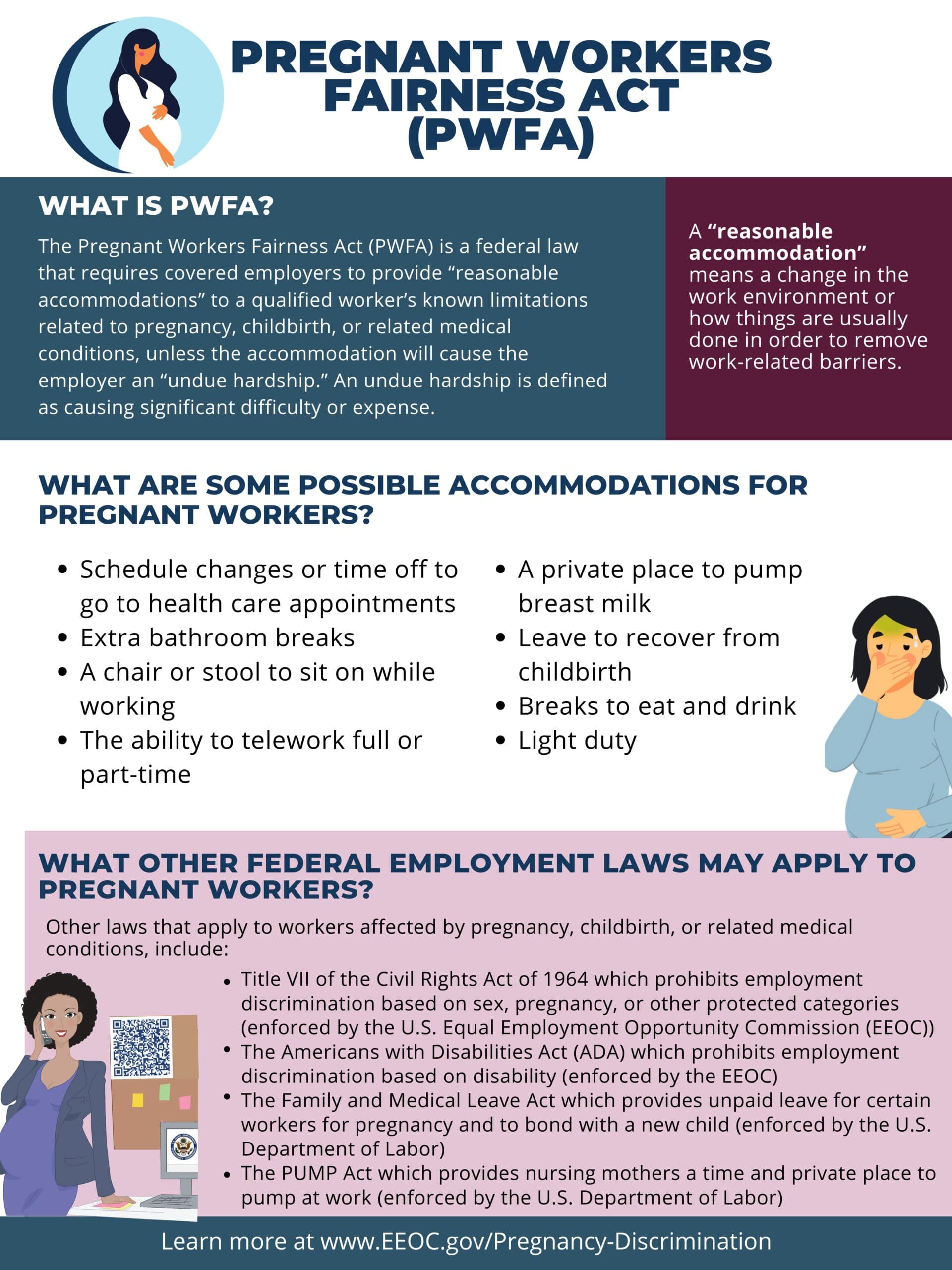
At monday.com, a later start time, a different seat, lighter lifting, a private place to pump, or short breaks can trigger a legal duty. Under the Pregnant Workers Fairness Act, a covered employer generally has to work through a reasonable accommodation when a worker has a known limitation tied to pregnancy, childbirth, or a related medical condition, unless it can show undue hardship.
What the PWFA changes for managers
The law went into effect on June 27, 2023, and the EEOC’s final regulation followed on June 18, 2024. It applies to private employers and public sector employers with 15 or more employees, and it also reaches Congress, federal agencies, employment agencies, and labor organizations.
The PWFA is an accommodation law first. It does not replace other pregnancy discrimination protections, and it sits alongside Title VII, the ADA, and a growing patchwork of state and city rules; the EEOC counts more than 30 states and cities with laws requiring accommodations for pregnant workers.
What accommodation can look like in practice
PWFA accommodations map closely to ordinary office life. A pregnant employee may need more breaks to drink water or use the restroom. A worker recovering from childbirth may need help with lifting. Another employee may need time off for therapy appointments, morning sickness, or a miscarriage, while a postpartum worker may need leave for recovery, time for medical appointments, or a time and place to pump breast milk at work.
The law is not limited to physically demanding jobs. A worker may need to sit while doing the job or avoid exposure to hazardous chemicals. In a product, engineering, or sales organization, the accommodation may be as simple as a shifted meeting schedule, a temporary reassignment of duties, or flexibility around when a worker is expected to be at a desk, on a call, or in a client meeting.
- additional breaks to drink water and use the restroom
- help with lifting after childbirth
- time off for postpartum therapy appointments
- a seat while doing the job
- leave for recovery from childbirth or after a miscarriage
- time and place to pump breast milk at work
How to ask without getting blocked by process
An employee does not have to submit a form, use the words “reasonable accommodation,” or even mention the PWFA by name. The request can be oral, and a worker telling a team leader she is worried about carrying heavy bags because it could harm her pregnancy has already asked for an accommodation. Many PWFA accommodations can be resolved through simple exchanges of information, such as brief conversations or emails.
That is where managers most often misstep. An automatic refusal or an inflexible policy that leaves no room for exceptions may violate the law, and each request has to be reviewed individually because there is no one-size-fits-all accommodation. At monday.com, that means a manager should not wait until the issue becomes urgent, nor should they treat the request as a favor to be negotiated after the fact.
What a compliant manager is actually trying to do
When there are multiple effective accommodations, the employer must choose one that gives the employee an equal opportunity to do the job and, when possible, to enjoy the same benefits and privileges available to coworkers without the limitation. That is a useful management test because it shifts the conversation from “Can we say no?” to “Which option actually solves the problem?” If a worker needs a schedule change, seating, a lifting limit, remote flexibility, or extra break time, the accommodation has to work in real life, not just look tidy on paper.
Employers may not force a worker to take an accommodation, and may not require leave if another accommodation would let the worker stay on the job without undue hardship. That is especially important in a modern SaaS workplace, where calendar pressure can make leave look like the simplest answer, even when a smaller adjustment would keep someone productive and in the workflow.
This article was produced by Prism’s automated news system from verified source data, official records, and press releases, then run through automated quality and moderation checks before publishing. The system is built and supervised by the people who set the standards it runs under. Read our full AI policy.
Did this article answer your question?