Salesforce research shows patients trust specialized AI more than public chatbots
Patients trusted AI in a doctor’s secure portal three times more than a public chatbot, with 89% demanding a clear "escalate to human" path.

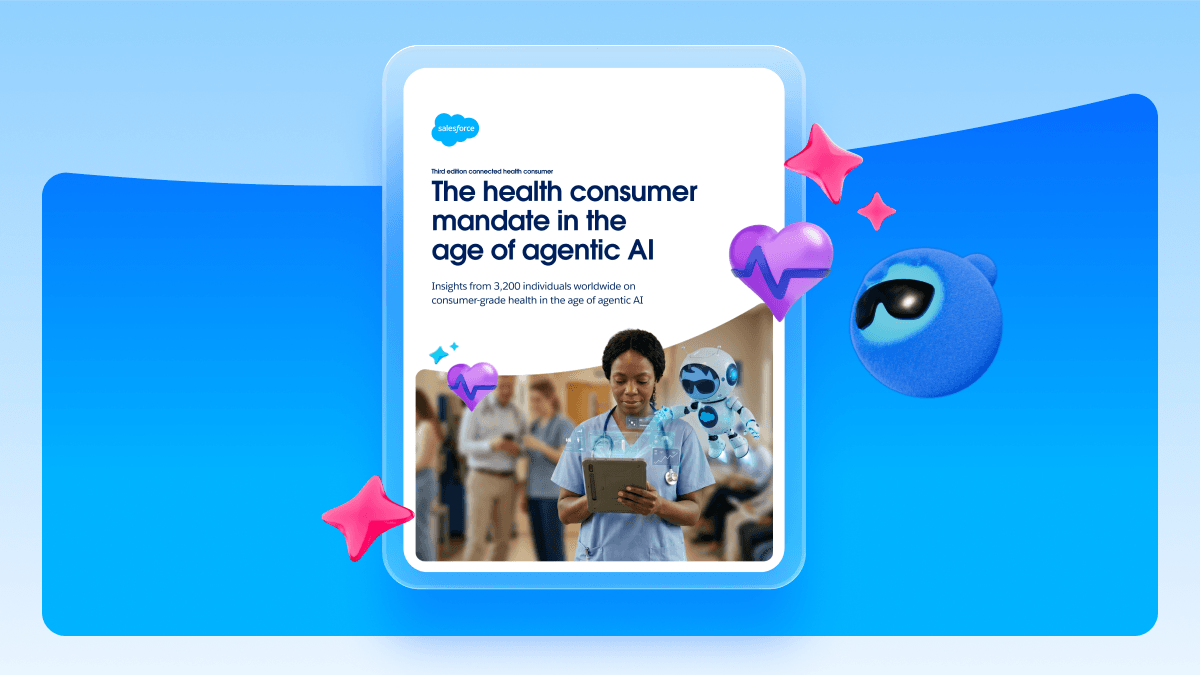
Patients were three times more likely to trust an AI agent built into their doctor’s secure portal than a public chatbot, a Salesforce study released June 24 found. The gap was even sharper around accountability: 89% of patients said a clear “escalate to human” option was essential for AI administrative support, and 90% expected it for AI medical support.
The findings put a hard number on something enterprise software teams talk about constantly but rarely measure cleanly: AI feels credible when it is specific. In Salesforce’s Connected Health Consumer research, the strongest trust signals were not raw model power or conversational polish. They were accuracy, data privacy and a visible path to a human. Privacy was cited by roughly one in three patients, making it a close second behind accuracy among the concerns the survey surfaced.

For monday.com, the message lands squarely in the product layer. The company’s AI materials describe monday agents as working inside the context of your work and operating within permissions and guardrails. Its AI permissions page lets admins enable or disable AI features at the account level, while other AI permission settings are reserved for Enterprise plans. monday.com also says its AI governance tools give administrators a central place to manage AI access, usage limits and AI credits across the account, a design that mirrors the same trust architecture patients wanted in healthcare.
That matters for engineers and product managers building workflow software because “AI” is no longer the selling point on its own. The stronger case is narrower and more operational: the assistant knows the workflow, respects the permissions model, and can hand off cleanly when the task crosses a risk boundary. Salesforce’s broader 2026 enterprise message has been pushing the same direction, tying agent adoption to trusted data, governance and secure workflows as the company tries to get humans and AI agents working together across the enterprise.
For monday.com’s sales teams, that framing is likely more useful than broad claims about automation. Customers wary of generic chatbots are responding to something more concrete: a system that behaves like a specialist, stays inside the right data boundary and makes human escalation obvious. In regulated or high-stakes workflows, that is not just a usability feature. It is the product.
This article was produced by Prism’s automated news system from verified source data, official records, and press releases, then run through automated quality and moderation checks before publishing. The system is built and supervised by the people who set the standards it runs under. Read our full AI policy.
Did this article answer your question?