Samsung labor unrest shows AI boom is reshaping pay and power
Samsung workers rallied 40,000 strong over bonuses and AI profits, a warning that the tech boom is sharpening pay expectations across the industry.
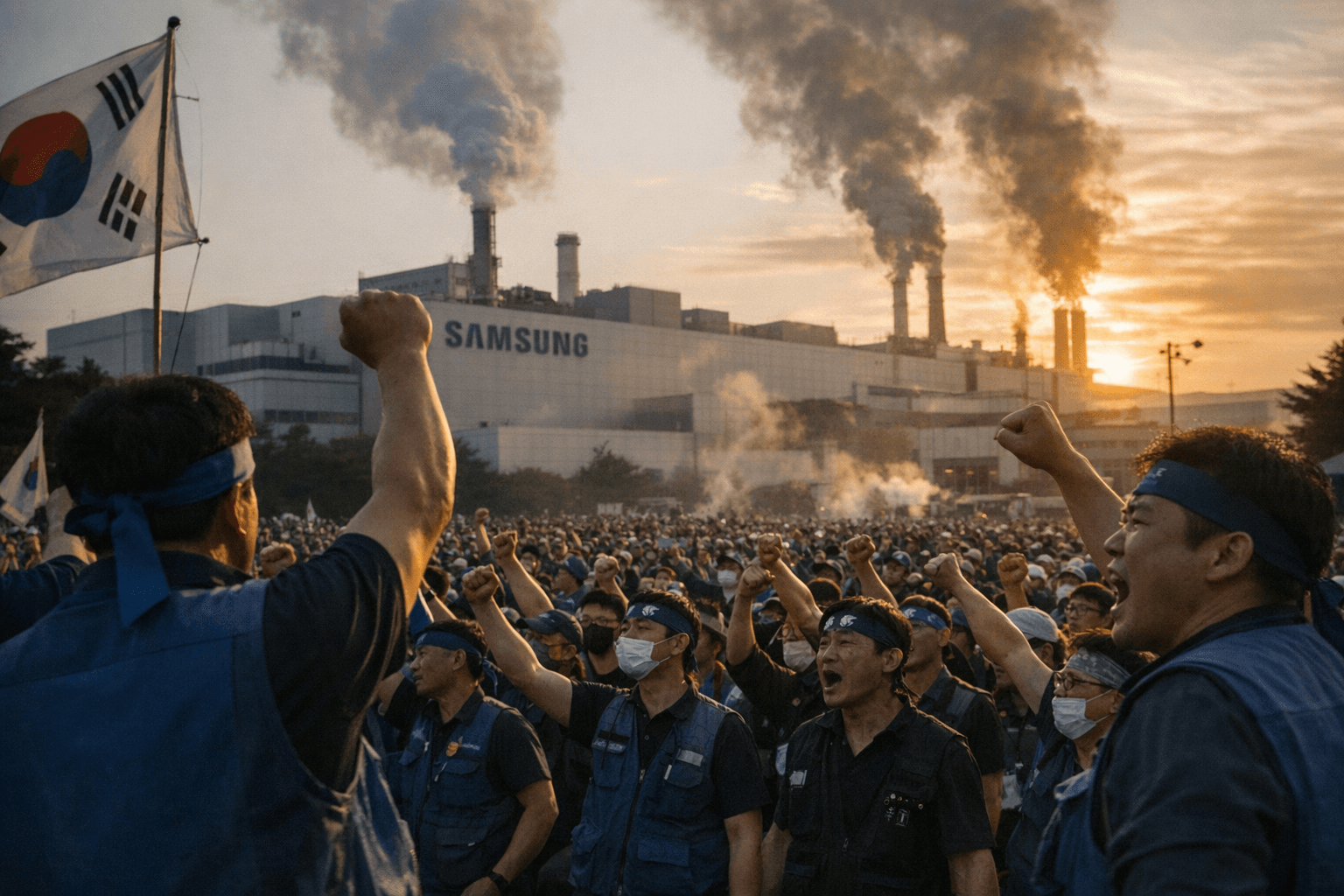
Samsung workers are not waiting quietly for AI to lift all boats. About 40,000 employees rallied at the company’s Pyeongtaek semiconductor complex on April 23, pressing for a bonus-system overhaul and a bigger share of the value created by AI-driven demand.
The protest landed at a sensitive moment for Samsung Electronics, which is already facing a widening compensation gap with SK Hynix. Union organizers said a Samsung chip division employee with a 76 million won base salary would receive 38 million won in bonus pay for 2025, less than a third of what a similarly paid SK Hynix employee could qualify for. Workers also want Samsung to remove the cap on performance bonuses, a demand that goes straight to how management decides who gets rewarded when profits rise.
The pressure was not symbolic. A follow-up report said Samsung’s foundry chip output fell 58% and memory-chip output fell 18% during the overnight shift when unionized workers attended the rally. That kind of disruption is the clearest reminder that labor leverage does not disappear in an AI boom. It often moves to the places where the boom is most valuable, in this case the factories that make the chips powering it.

For monday.com employees, the lesson is not about semiconductors alone. It is about what happens when companies call themselves AI platforms, margins improve, and workers start asking whether the gains are being shared fairly. monday.com now describes itself as an AI work platform, says more than 250,000 customers worldwide use its software, filed its 2025 annual report on March 13, 2026, and plans to report first-quarter 2026 results on May 11, 2026. That puts compensation, retention, and promotion policy closer to the center of the growth story, not off to the side as an HR issue.
Samsung’s dispute also fits a longer pattern. The company’s first-ever strike came on June 7, 2024, after failed wage talks, and a national union later said it represented about 28,000 members, roughly one-fifth of Samsung’s workforce. In September 2025, unions from 13 Samsung affiliates pushed for bonus reform after SK Hynix changed its own compensation rules. In other words, the argument over AI-era pay is no longer whether workers will demand a cut of the upside. It is how hard they will push until management agrees.
Know something we missed? Have a correction or additional information?
Submit a Tip