SAP shows AI hiring stack trend monday.com should watch closely
SAP's hiring stack is a sharper signal for monday.com: AI now has to connect recruiting, data, and mobility, not just screen résumés.
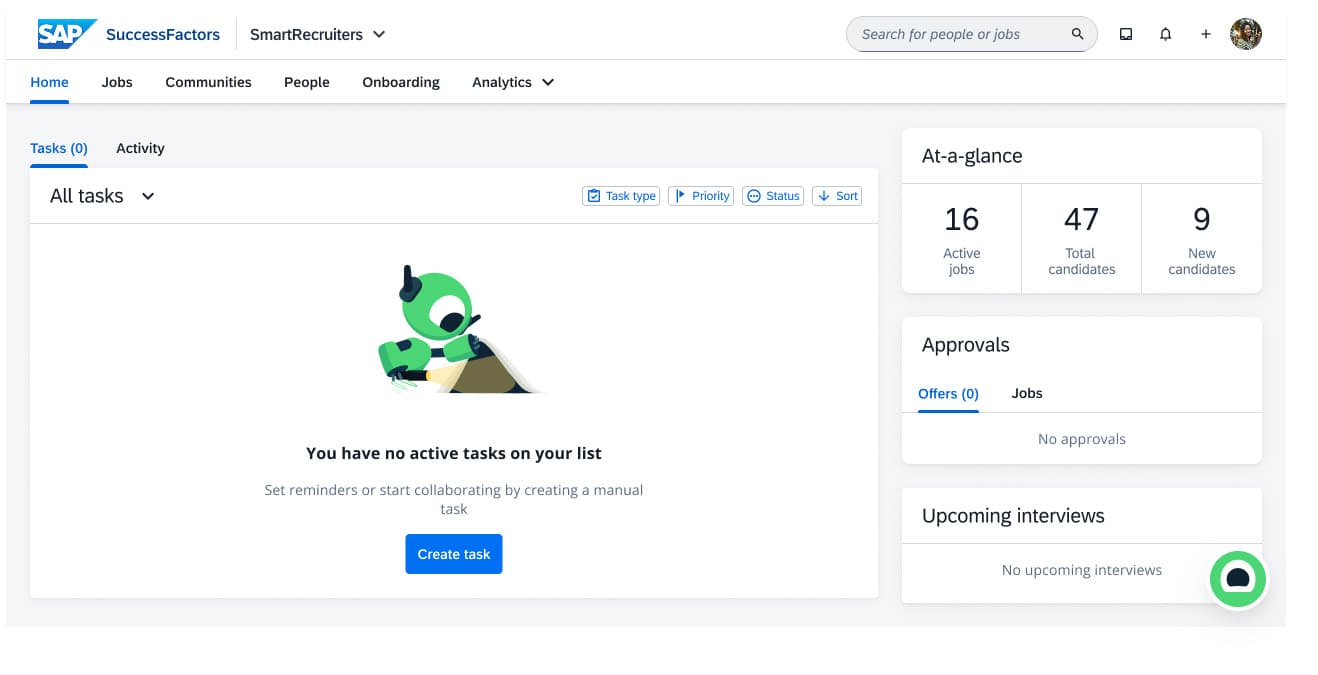
SAP is treating hiring less like a back-office HR function and more like an operating system for growth. For monday.com, that is the real lesson: when a company hires at global scale, the winning stack is the one that keeps sourcing, manager feedback, candidate experience, and onboarding moving through the same workflow without turning the process into a pile of disconnected tools.
SAP's hiring stack is now a workflow story
SAP says it hires 20,000 to 25,000 people a year across 160 countries. That is not a normal recruiting environment, and it helps explain why the company is pushing SmartRecruiters for SAP SuccessFactors as a single hiring layer that runs from sourcing through onboarding with AI-enabled recruiting capabilities. The point is not just speed. It is consistency, visibility, and the ability to keep decisions moving across markets, teams, and time zones.
That matters to monday.com because the company is already living in the same kind of scaling problem, just in a different seat. monday.com describes itself as an AI work platform and a global software company, and its platform serves more than 250,000 customers worldwide. The bigger the company gets, the more hiring begins to look like product design: a system of permissions, handoffs, notifications, data sync, and clear ownership.
SAP's timeline shows how quickly this market is moving. The company announced its intended acquisition of SmartRecruiters on August 1, 2025, then completed the deal on September 11, 2025. By March 4, 2026, SAP said it was already deepening the integration into SuccessFactors with single sign-on, unified navigation, and bidirectional data flow between recruiting and core HR. That is the tell. The value is no longer in an isolated applicant tracking tool. It is in how well recruiting plugs into the rest of the employee system.
Why the candidate and manager experience now rise or fall together
SAP's own message is useful because it rejects a familiar HR trap: improving the candidate experience while making hiring managers work harder, or making managers happy while leaving candidates in the dark. SAP leaders stressed that both experiences need to improve together. That is the right frame for any company trying to hire faster without wrecking the process, because every shortcut in one part of the funnel shows up somewhere else as rework, delay, or a worse candidate impression.
The shift is also bigger than résumé screening. SAP and SmartRecruiters are positioning the combined platform around orchestration, personalization, and continuous interaction. In practice, that means AI is being asked to do more than sort applicants or answer basic questions. It needs to move information between systems, help decide what happens next, and reduce the number of manual check-ins required to keep a requisition alive.
That is exactly where monday.com teams should be paying attention. If hiring data lives in one place, manager feedback in another, and workforce planning in a third, the process starts to break down. The more useful model is one where automation handles routine movement, while humans keep control of judgment calls such as prioritization, final selection, compensation alignment, and team fit. AI can accelerate the lane change; it should not decide the destination.
What this means for monday.com operations, HR, and hiring managers
For monday.com, the most relevant part of SAP's approach is not the vendor stack itself. It is the mindset behind it. Hiring is being rebuilt as a connected workflow problem, and that is a strong match for a company whose own business is built on work management, collaboration, and process visibility.
monday.com has also said it has an internal mobility program, which makes the overlap even more obvious. Recruiting, internal movement, and workforce planning are no longer separate conversations. If a company wants to fill roles faster, it should understand who can move internally, where skills are already present, and which jobs genuinely need external search. That is where the best AI-enabled hiring systems can help: not by removing people from the process, but by making the process smarter before a recruiter has to start from scratch.
The public employee-count data reinforces the scale challenge. monday.com had 1,168 employees in 2023 and 2,508 in 2024. That kind of jump changes the administrative burden quickly. A lean hiring process that works at one size can become a bottleneck at another, especially when growth is spread across product, engineering, sales, and customer-facing teams. monday.com announced its 2025 annual report filing on March 13, 2026, a reminder that the company is now operating with the kind of transparency and complexity that comes with being a scaled public software business.
- Treat recruiting as a shared operating workflow, not a series of individual email threads.
- Make sure candidate data, manager feedback, and HR decisions are visible in the same system.
- Use AI to route work, surface context, and reduce delays, but keep human judgment on role fit and final decisions.
- Connect external hiring with internal mobility so open roles are not the first answer every time.
For people managers, the practical takeaway is straightforward:
The bigger HR-tech signal monday.com should not miss
SAP's move fits a broader market shift in which enterprise buyers expect AI to sit inside end-to-end workflows, not as a chatbot tacked onto the front of a process. The old model was simple: use software to collect applications and maybe automate a few screening steps. The newer model is much closer to orchestration, where AI helps coordinate interactions, keep systems synchronized, and give managers real-time context.
That is why the planned connection between SAP's copilot Joule and SmartRecruiters' AI assistant Winston matters. It signals a future where the recruiting experience is not a static form but a guided flow that can adapt as data changes. If that becomes the norm in HR, monday.com product teams should expect the same expectation from customers elsewhere: AI that removes friction across a whole workflow, not just one task.
For monday.com, the strategic lesson is bigger than hiring. The company competes in a market where customers already understand workflows, automations, and connected data. That means its own internal processes are under a brighter light. If monday.com can show that it runs hiring with the same discipline it sells to customers, it strengthens both its operating model and its product credibility.
The companies that will hire best in the next phase of enterprise software are the ones that stop treating recruiting as a side system. SAP is showing what that looks like at scale. monday.com should read it as a signal that the future of hiring belongs to connected stacks, clearer ownership, and AI that helps people work faster without losing control of the process.
This article was produced by Prism’s automated news system from verified source data, official records, and press releases, then run through automated quality and moderation checks before publishing. The system is built and supervised by the people who set the standards it runs under. Read our full AI policy.
Did this article answer your question?