Slack frames generative AI as everyday workflow infrastructure for teams
Generative AI is moving from demo to default, and Slack’s latest guide shows how teams can use it to cut repetitive work. monday.com’s own AI roadmap points to the same shift.
Generative AI is becoming the quiet layer behind everyday work
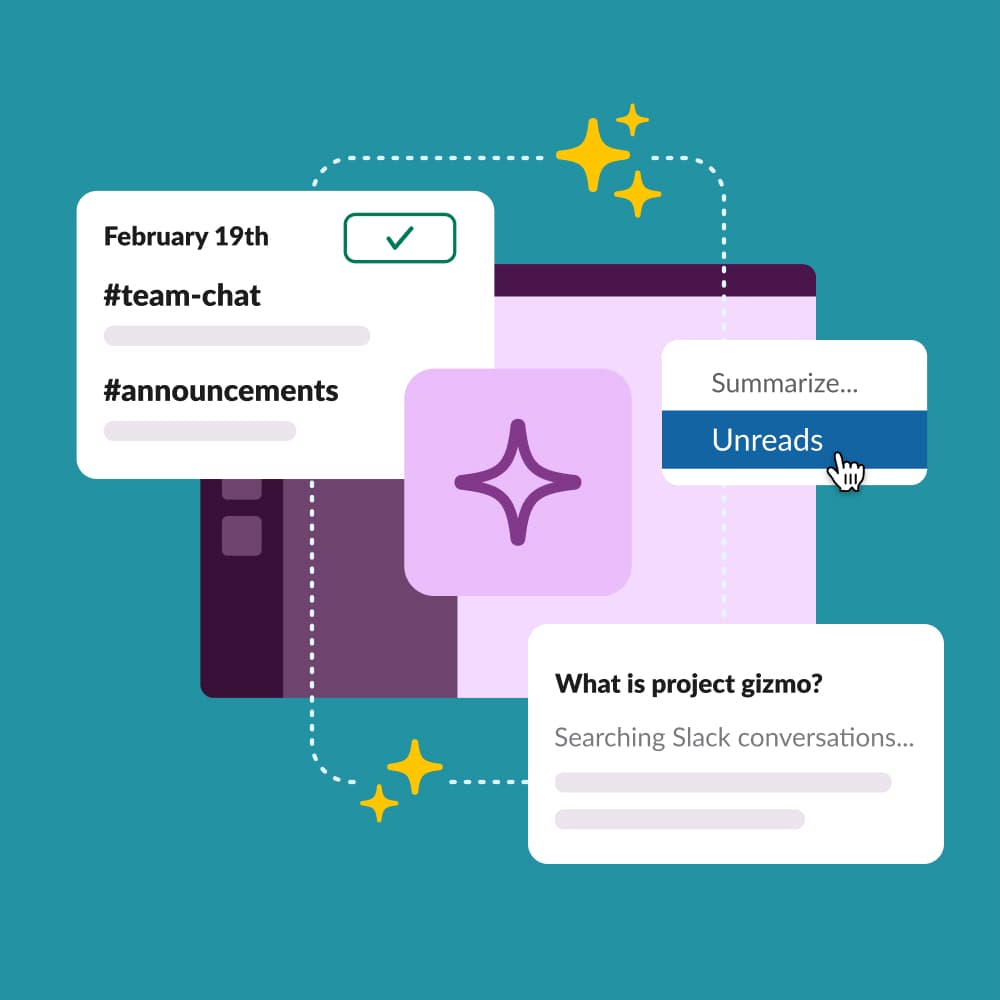
Generative AI is no longer being framed as a novelty that sits outside the workflow. Slack’s practical guide makes the case that it should behave more like infrastructure: something that drafts, summarizes, generates ideas, writes code, and helps people decide what matters next. For teams inside monday.com, that matters because the biggest gains are not in flashy one-off outputs, but in the daily grind of turning messy input into something usable.

The guide also gives a cleaner way to talk about the technology. Slack separates generative AI into model types such as text, image, and code systems, which helps teams understand why one tool may be better for writing customer replies while another is better for design work or software development. That distinction is useful inside a work-OS company like monday.com, where product, engineering, sales, and customer-facing teams all need different kinds of help from the same AI umbrella.

Why Slack is pushing a practical, not theatrical, definition
Slack’s framing is backed by a simple workplace reality: people want relief from repetitive work, not abstract promises. In its February 2024 research, Slack said workplace AI use had risen 24% in the prior quarter, with 1 in 4 desk workers having tried AI tools for work by January 2024, up from 1 in 5 in September 2023. Around 80% of AI users said productivity had improved, while desk workers were still spending 41% of their time on low-value, repetitive, or otherwise non-core tasks.
That is the real backdrop for the April 30 guide. The market is past the point of asking whether AI can produce text. The more relevant question is whether it can remove the “work of work” inside collaboration tools, where employees spend too much time chasing context, rewriting the same messages, and translating scattered information into action.
Slack’s research also shows a change in what users value. Summaries have overtaken research as a top AI use case, alongside writing assistance and workflow automation. That shift matters for any company selling work software because it signals where adoption becomes durable: not in experimentation, but in functions people use every day without thinking about them.
How to tell which tasks are ready for automation
The best test is whether a task is repetitive, reviewable, and low-risk enough to hand off without losing control. That usually means work that starts with existing information and ends with a draft, summary, or structured next step. In practice, that includes first-pass documents, meeting recaps, sales follow-ups, internal knowledge retrieval, and support responses that rely on known policy language.
A useful filter is whether the team already has a clear pattern for the output. If the work follows the same shape each time, AI can likely handle the first version. If the task requires high-stakes judgment, sensitive nuance, or a brand voice that changes with every situation, AI should support the human, not replace the human.
- Strong candidates for automation:
- Drafting repetitive customer replies
- Summarizing long threads or meetings
- Turning notes into structured workflows
- Generating first-pass code or internal documentation
- Retrieving answers from internal knowledge bases
- Better left human-led:
- Final legal, financial, or employment decisions
- Delicate customer escalations
- Strategic messaging to major accounts
- Situations where the right answer depends on context not yet captured in the system
That framework is especially important inside collaboration software, where the goal is not to create more content for its own sake. The goal is to move faster from raw information to coordinated action.
Why this maps closely to monday.com’s AI strategy
monday.com has been moving in the same direction. In February 2025, the company said its AI vision would center on three pillars: AI Blocks, Product Power-ups, and the Digital Workforce. The core idea is not to bolt AI onto the side of the product, but to embed intelligence into tools customers already know and use, across SMB, mid-market, and enterprise accounts.
That strategy became more concrete in July 2025, when monday.com introduced monday magic, monday vibe, and monday sidekick as part of a shift from work management to work execution. Monday magic can generate a complete workflow or board from a plain-language prompt, which is exactly the kind of action-oriented use case Slack’s guide points toward. Monday vibe extends that idea with no-code building for custom business apps, giving teams a way to create internal tools without waiting on a full engineering cycle.
For engineers, product managers, and sales teams at monday.com, the message is straightforward: AI only becomes valuable when it reduces setup time, keeps work moving, and helps people act on information sooner. That means packaging AI around outcomes such as fewer handoffs, cleaner intake, faster drafting, and less time spent reconstructing context from scattered conversations.
Trust, governance, and model choice still shape adoption
Slack’s research also shows why education still matters. In October 2024, nearly 96% of executives said they felt urgency to incorporate AI into business operations, but two-thirds of workers still had never tried AI tools at work and 93% did not fully trust AI outputs for work-related tasks. That gap explains why explainers like Slack’s guide are useful: adoption is no longer blocked only by access, but by confidence in how to use the tools well.
monday.com’s own AI page speaks directly to that concern. The company says it does not use customer data or content to train its AI models, and it says it primarily uses Microsoft Azure OpenAI while also integrating OpenAI GPT models and models available through AWS Bedrock, including Mistral and Anthropic. For buyers and internal teams alike, that signals a platform approach with model flexibility and a clear security story.
The company also says some customers have cut manual work by 50% using its AI capabilities. Whether the task is building a workflow from a prompt or generating a custom app without code, the common thread is the same: AI works best when it sits inside the system where work already happens, not as a separate destination employees have to remember to visit.
The shift now is from curiosity to routine
Slack’s June 2025 research shows how quickly habits can change. Daily AI use was 233% higher than in November 2024, and daily users reported 64% higher productivity, 58% better focus, and 81% greater job satisfaction. That is the strongest sign yet that AI is moving from pilot projects to habitual use.
For monday.com, the takeaway is not just that AI is popular. It is that users now expect workflow software to carry part of the load. Teams do not need more hype about what AI might do someday. They need tools that help them draft faster, summarize better, retrieve knowledge instantly, and turn plain language into working systems. That is the standard Slack’s guide is pushing, and it is the same standard monday.com will be judged against as AI becomes part of everyday execution.
This article was produced by Prism’s automated news system from verified source data, official records, and press releases, then run through automated quality and moderation checks before publishing. The system is built and supervised by the people who set the standards it runs under. Read our full AI policy.
Did this article answer your question?