Snowflake's AI push raises the bar for monday.com's enterprise strategy
Snowflake's governed-context push shows monday.com AI must prove permissions, audit trails, and safe execution inside workflows, not just better prompts.
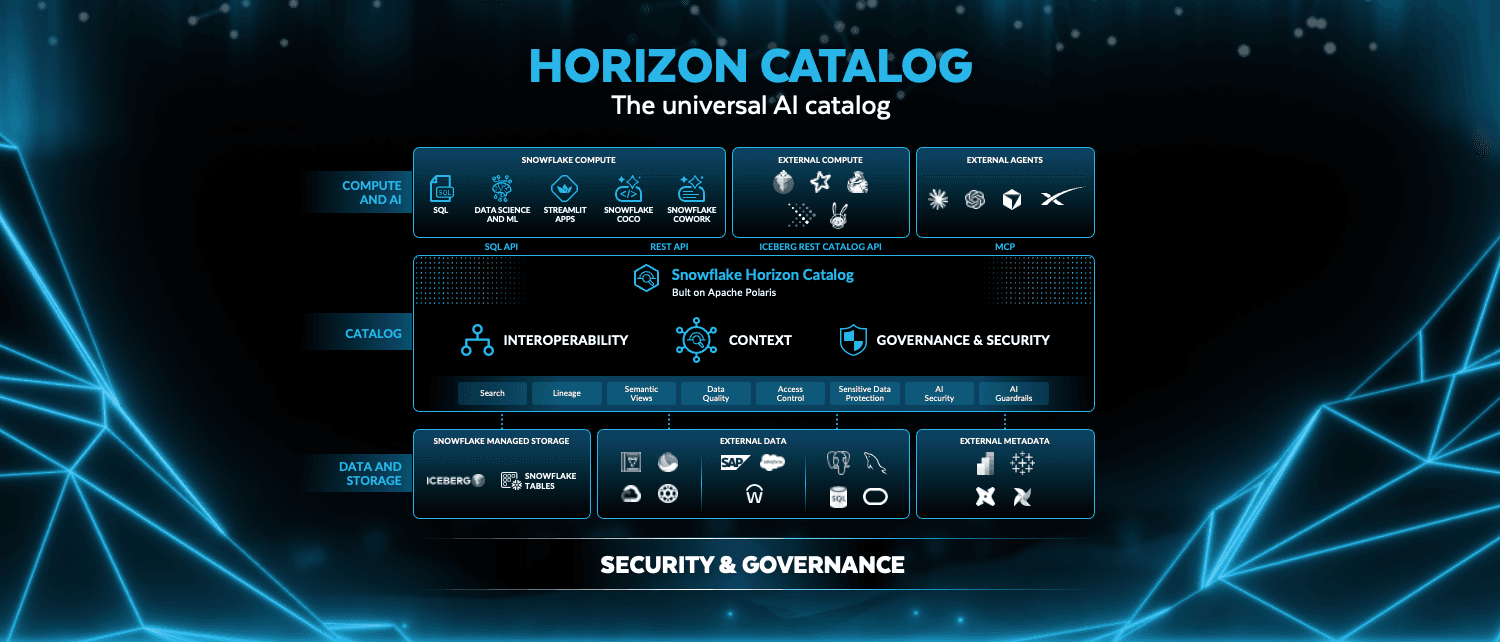
Snowflake's Summit message should read as a warning label for every workplace AI buyer: model access is getting easier to copy, but governed context is becoming the real moat. Its Horizon Catalog expansion, Horizon Context layer, and interoperability framework point to a market where AI only matters if it can share the same business truth across people, tools, and agents. For monday.com, that is not an abstract trend; it is the standard its enterprise push will be judged against.
Why Snowflake changed the benchmark
Snowflake said the latest Horizon Catalog innovations centralize governance, context, and security so organizations can keep one trusted layer underneath AI and BI. At the center of that strategy is Horizon Context, a capability inside Horizon Catalog that Snowflake described as a connected, governed semantic foundation for AI and BI. In plain terms, the company is arguing that the next enterprise AI stack should not depend on every app rebuilding the same definitions in isolation. It should work from a single live governed copy of data, semantics, identity, and permissions.
That shift matters because it changes what enterprise buyers are paying for. A chat interface can be copied quickly. A trusted system that knows who can see what, how information connects, and whether an action is allowed is much harder to reproduce. Snowflake paired that message with CoWork, a personal agent for knowledge workers that is meant to move teams from data to decisions to action faster, which underlines the direction of travel: AI is being measured less by how well it writes and more by whether it can safely do.
The customer examples sharpen the point. Snowflake said BlackRock is using Horizon Context to make sure AI operates on a shared definition of enterprise truth. It also said Thomson Reuters uses Snowflake as an enterprise data foundation across more than 37,500 governed tables and 350 data sources, with more than 1,500 users relying on it every day and some workloads running up to 3.4x faster. That is the enterprise buyer Snowflake is chasing, and it is the buyer monday.com will increasingly face in larger deals: one that wants shared truth, traceability, and low-friction deployment, not just a clever assistant.
What this means for monday.com's AI strategy
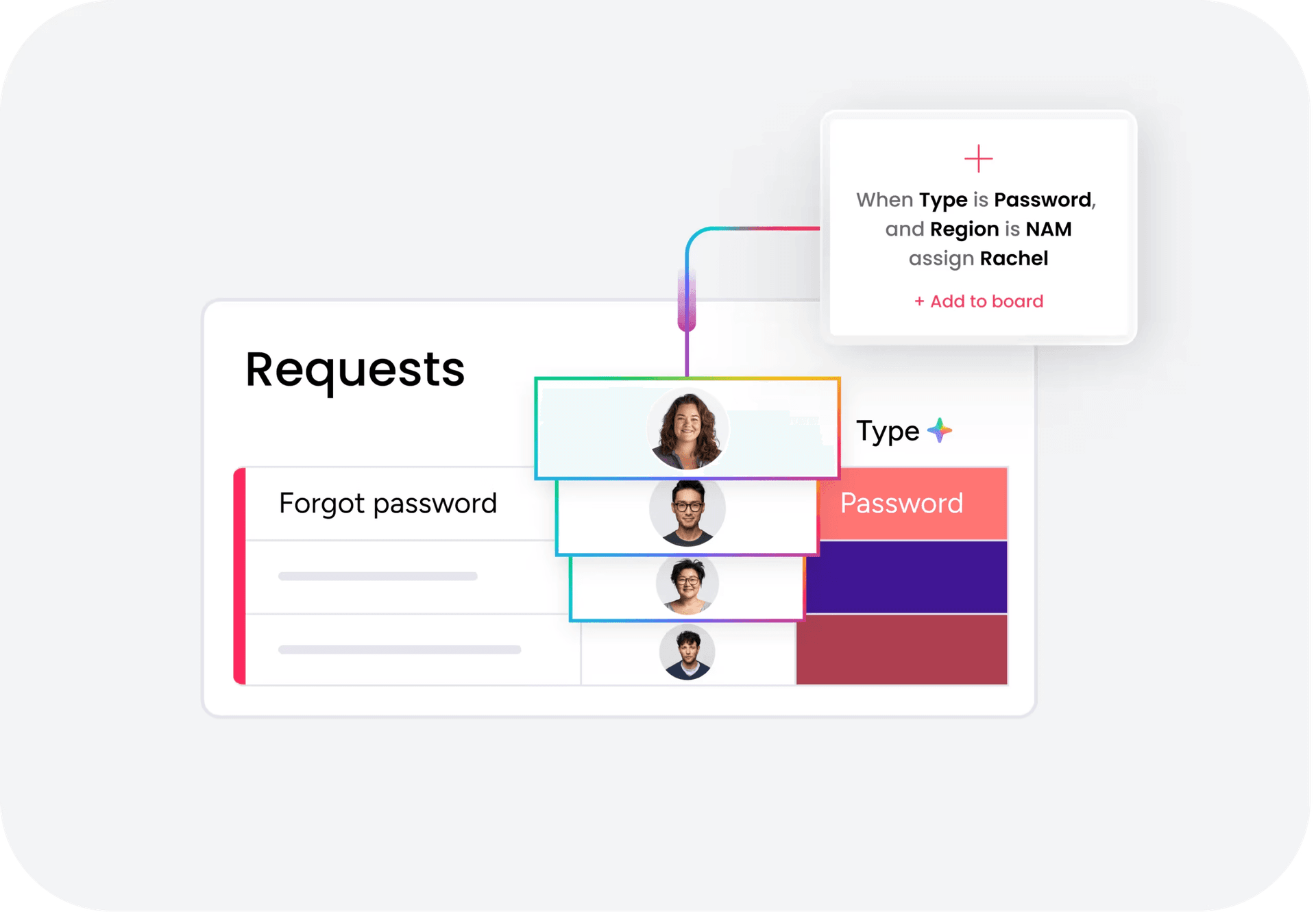
monday.com is already moving in the same direction. On March 11, 2026, it announced AI agents for its platform and said those agents operate under the same governance, security, and permissions standards as the humans they work alongside. By June 5, 2026, its investor relations site described monday.com as an AI work platform used by more than 250,000 customers worldwide. That is a meaningful signal for workers inside the company: the product story is no longer just about better automations or prettier task views. It is about whether AI can operate safely inside actual work.
The support stack backs that up. In its March 31, 2026 documentation, monday.com added AI Permissions and Governance controls so admins can manage who can access AI capabilities and monitor AI usage across the account. The inclusion of a master toggle for external AI agents accessing account data is especially important, because it shows the company is thinking in terms of boundaries, not just features. For enterprise buyers, that kind of control can be the difference between a pilot and a procurement stall.
For product managers, the message is straightforward: packaging AI as a feature will not be enough if the enterprise buyer cannot see the guardrails. For engineers, the hard work is now in context management, permission enforcement, and integration reliability. For sales teams, governance objections are not side issues anymore; they are the deal. If a customer cannot understand how an AI agent is scoped, logged, and constrained, the conversation will drift away from adoption and into risk.
What product, IT, and security teams should evaluate now
The new bar is not whether an AI feature can generate text. It is whether it can work inside a real company without creating a governance mess. monday.com teams should pressure-test four things in every AI workflow:
- Data permissions. AI should inherit the same access model as the human user or service account behind it. monday.com's own governance controls point in this direction, and enterprise buyers will expect admins to know exactly who can use AI and where it can reach.
- Interoperability. Snowflake's open framework and single live governed copy are a reminder that enterprise AI gets weaker when data is duplicated across systems. monday.com will need to show that its AI can connect cleanly to the rest of a customer's stack instead of becoming another isolated layer.
- Auditability. If an agent takes an action, the customer needs a traceable record of what it saw, what it changed, and why. That is what makes AI acceptable in regulated or fast-moving workflows, and it is part of what Snowflake is selling with its governed context story.
- Safe action inside workflows. The valuable AI is not the one that only answers questions. It is the one that can help move work forward without violating permissions or creating hidden side effects. monday.com's AI agents will be judged on whether they can make that leap from assistance to execution.
Why the financials make governance more important, not less
The company’s recent numbers show why this is becoming a core product issue rather than a nice-to-have. monday.com reported first-quarter 2026 revenue of $351.3 million, up 24% year over year. It said customers with more than $500,000 in ARR now make up 6% of ARR, up from 5% a year earlier, while total remaining performance obligations reached $880 million, up from $660 million a year earlier. Net dollar retention for customers with more than $100,000 in ARR was 115%, and the company ended the quarter with 65,016 paid customers with more than 10 users, up 7% year over year.
Those figures tell a clear story: monday.com is getting deeper into larger, more committed accounts. That is exactly where governance becomes part of the buying decision. In February 2026, the company also said 2025 revenue grew 27% and that monday vibe became the fastest product to surpass $1 million in ARR in company history, while customers with more than $50,000 in ARR accounted for 41% of total ARR. The growth path is pointing toward bigger customers and more serious use cases, which makes trust, traceability, and control even more central to the product roadmap.
The enterprise AI race is now about control
Snowflake's Summit push is a useful benchmark because it makes the enterprise buyer's real demand hard to miss. Companies do not just want an AI layer. They want one governed system that knows the business context, respects permissions, and can prove its actions after the fact. That is why Horizon Context and Horizon Catalog matter, and why BlackRock and Thomson Reuters are such telling reference points.
For monday.com, the strategic implication is clear. The next phase of growth will not be won by model access alone. It will be won by the company that can show AI working safely inside workflows, with permissions intact, context shared, and audits available when enterprise buyers ask the hardest question first: can we trust it to act?
This article was produced by Prism’s automated news system from verified source data, official records, and press releases, then run through automated quality and moderation checks before publishing. The system is built and supervised by the people who set the standards it runs under. Read our full AI policy.
Know something we missed? Have a correction or additional information?
Submit a Tip