What monday.com employees should know about 401(k) matches and vesting
monday.com’s 401(k) is a loyalty test as much as a benefit, and the real value comes down to the match, vesting, and how easy the plan is to read.
Why the plan matters
The most revealing part of monday.com’s 401(k) story is not that the plan exists. It is how much of the money employees can actually keep, and how long they have to stay to earn it. The U.S. Department of Labor treats 401(k)s as more than savings accounts: they can build retirement security, attract and keep talent, and deliver tax advantages through pretax contributions or, in some cases, Roth contributions.

For engineers, product managers, and sales teams at a fast-moving SaaS company, that framing matters. A retirement plan is part of total compensation, not a side perk, and its design says a lot about whether the company is investing in long-term trust or simply checking a benefits box. The details also matter because employer contributions can be shaped by vesting, which means the same headline benefit can be worth very different amounts depending on tenure.
What monday.com’s plan suggests
As a Nasdaq-listed company, monday.com already lives in the world of formal disclosure. Its FY2025 annual report lists Shiran Nawi, Adv., as Chief People and Legal Officer and says the company had 51,160,822 ordinary shares outstanding as of December 31, 2025. That puts retirement benefits in the same broad conversation as equity, cash compensation, and retention.
Plan data shows the MONDAY.COM INC. 401(k) RETIREMENT PLAN AND TRUST was established in 2023, had 522 participants and $31.1 million in assets at the end of 2024, and reported $2,469,430 in employer match contributions that year. The plan also uses automatic enrollment and a default investment account, which lowers friction for employees who are busy enough with launches, roadmaps, customers, and quota pressure without having to become retirement experts on day one. The same compensation listing says the plan is managed by ADP.
That scale matters. A plan with hundreds of participants and tens of millions in assets is not a token perk parked on an HR page. It is a real part of the company’s employee value proposition, which means people inside monday.com have a legitimate reason to treat it like they would any other major compensation component.
Match versus company contribution
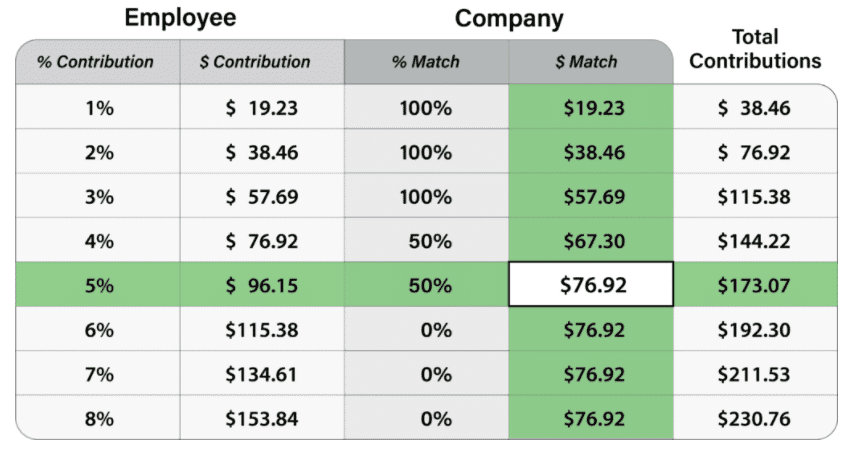
The headline number employees tend to care about is the employer contribution, and monday.com’s picture appears to be stronger than a bare minimum benefit. A compensation listing says the company contributes 3% of an employee’s annual gross pay regardless of whether the employee contributes anything, which makes the plan feel like a floor under compensation rather than a reward only for people who can afford to defer pay.
That distinction matters. A matching formula ties company money to employee behavior, while a flat contribution creates predictable value for every eligible worker. In a company where equity already carries upside and risk, a steady 3% contribution can make the retirement benefit easier to understand and easier to trust. It also gives newer hires a clearer signal that the company is willing to put money into long-term financial security, not just say the right thing in recruiting conversations.
Why vesting is the real retention lever
The Department of Labor guidance makes one point especially important: employer contributions can be subject to vesting schedules. In practice, that means the same promised contribution can be worth very different amounts depending on whether you stay for months, years, or long enough to satisfy the schedule.
That is where retention comes in. If employer money vests immediately, employees can treat it more like guaranteed pay. If it vests over time, the benefit starts to function like a stay bonus, which can be powerful at a public SaaS company where recruiters, rivals, and stock moves all compete for attention. The lesson for monday.com workers is simple: do not stop at the contribution rate, because the vesting schedule decides how much of that value you actually own.
Automatic enrollment adds another layer. It helps employees start saving before they get around to making an active choice, which can matter in a workplace where people are focused on sprint cycles, customer escalations, and pipeline goals rather than retirement paperwork. When that default is paired with a company contribution, the plan becomes part of the company’s retention architecture, not just a payroll setting.
What to read before you count the benefit
The practical move is to read the plan documents the same way you would read a product spec or a deal desk approval. The right questions are direct:
- Is the contribution a match, a flat company contribution, or both?
- Does the money vest immediately or over time?
- Is the plan traditional or safe harbor?
- Are the summary plan descriptions and other required materials easy to find?
- Does automatic enrollment put you in the plan by default, and what investment option does it use?
The Department of Labor’s guidance also points to ERISA’s disclosure rules, which require employees to have access to the right plan information. That is not paperwork for the sake of paperwork. It is the difference between understanding what you earn and guessing what you might lose if you leave before vesting is complete.
Why this is a culture story, not just a finance story
At a company like monday.com, where people are judged on how well they build products, support customers, and hit growth targets, benefits are part of the employee experience that either reinforces trust or quietly erodes it. A plan with a clear contribution, easy enrollment, and transparent vesting says the company is willing to make long-term commitments to the people who make the platform work.
That is why the 401(k) conversation goes beyond retirement math. For monday.com employees, the best plans do more than defer salary into an account. They signal that the company understands that keeping talent is not only about equity upside or promotion cycles, but about whether employees can see a future worth staying for.
This article was produced by Prism’s automated news system from verified source data, official records, and press releases, then run through automated quality and moderation checks before publishing. The system is built and supervised by the people who set the standards it runs under. Read our full AI policy.
Know something we missed? Have a correction or additional information?
Submit a Tip