Why monday.com’s SOC 2 audit matters for enterprise sales
SOC 2 is now a sales gate, and monday.com’s audit posture helps decide whether enterprise buyers see the platform as safe to scale.
monday.com manages data for more than 250,000 customers worldwide, and enterprise buyers want audit-ready proof that a platform can protect data, control access, and keep working when customers start putting core workflows on it. For monday.com, that makes SOC 2 more than a compliance badge: it is a practical lever in enterprise sales, a design constraint for engineers, and a trust signal that shapes how large customers move through procurement.
What SOC 2 means inside monday.com
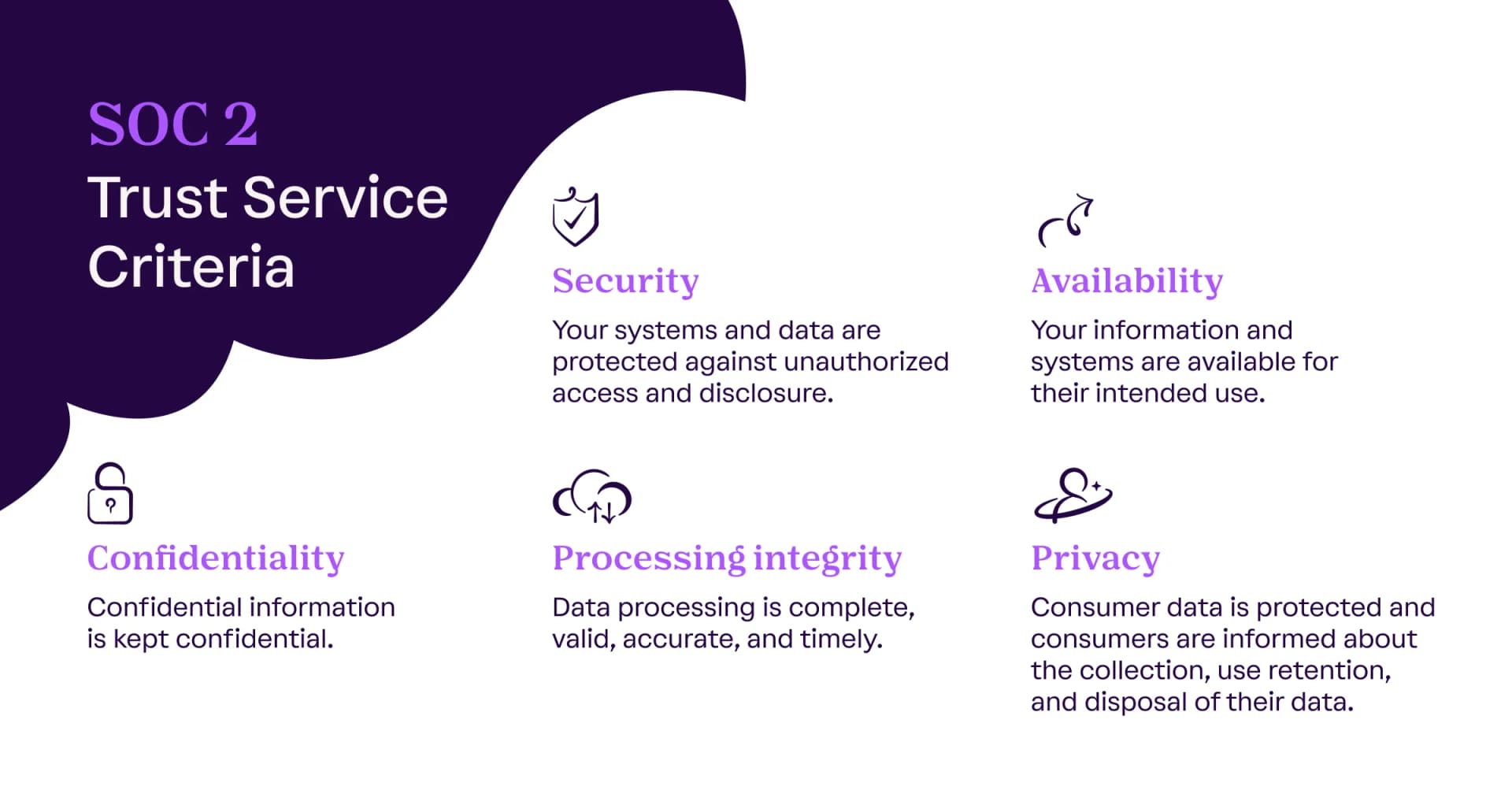
SOC 2 is a compliance framework used to evaluate and validate an organization’s information security practices, and it is widely used across SaaS. monday.com undergoes an annual SOC 2 Type II audit, which verifies that its controls align with the AICPA Trust Services Principles and Criteria. Enterprise reviewers rarely care about the label alone. They care about whether the company can show durable controls around security, availability, and confidentiality.
For teams inside monday.com, SOC 2 touches several functions at once. Sales runs into it early in a deal cycle, often before a customer will even talk about expansion. Engineering gets pulled in when prospects ask how permissions work, how logs are retained, how monitoring is handled, and what happens during an incident. Customer success feels it too, because once a customer is large enough to ask for proof, the answer has to be specific, consistent, and easy to document.
Why the audit changes the sales conversation
A strong SOC 2 posture does not just help a vendor clear a procurement checklist. It shortens evaluation cycles, especially when a buying committee includes security, legal, and procurement alongside the business owner. That is especially important for monday.com because the platform is used for sensitive workflows across large organizations, including accounts that operate in regulated industries or across multiple regions.
monday.com presents security and privacy documentation as part of a centralized trust center.
When a platform can answer security questions early, it reduces friction later. When it cannot, the deal slows down or gets pushed into a longer review cycle.
The security stack behind the promise
monday.com’s security model is based on international standards and industry best practices, including ISO 27001, ISO 27018, and OWASP Top 10. Enterprise buyers rarely evaluate one control in isolation. They look for a layered story: a formal audit, recognized security standards, and technical practices that suggest the product was built with risk in mind.
Its systems run across multiple Amazon Web Services availability zones, with hosting available in the United States, the European Union, and Australia. It maintains a disaster-recovery site in another AWS region.
For monday.com employees, that infrastructure creates a product expectation as much as an operations one. A platform that sells into large accounts has to be ready for questions about where data lives, how it is replicated, and what happens if a region fails.
What enterprise admins actually see
Security proof has to show up inside the product, not just in a slide deck. monday.com’s Audit Log is available to Enterprise admins and gives a detailed report of account-security activity. The log includes last login and logout activity, device information, and IP address details. That is the sort of evidence security teams want when they are deciding whether the platform is observable enough to use at scale.
If an enterprise administrator can trace activity and review security-related events, the platform becomes easier to govern. That lowers the burden on the customer’s internal IT and security teams, and it gives sales a concrete answer when a buyer asks what monitoring looks like after rollout.
Shared responsibility shifts the work to the customer too
Customers are responsible for configuring security controls in their own accounts under a shared-responsibility model. Enterprise deployment is never only about what the vendor has built. It is also about how the customer configures access, governs uploaded data, and sets internal controls.
The trust conversation is partly operational. A customer may buy into monday.com’s security posture, but the customer still has to manage permissions correctly, decide who can see what, and keep its own house in order. The vendor needs to explain not only what it protects, but also where the customer’s responsibilities begin.
For engineers, the shared-responsibility model reinforces design choices that favor least-privilege access, clear observability, and administratively visible controls.
The dated filings that anchor the company’s current scale
monday.com’s filings with the SEC give another set of checkpoints for understanding the company’s operating posture. The company filed its 2024 Annual Report on Form 20-F on March 14, 2025, and its 2025 Annual Report on Form 20-F on March 13, 2026.
This article was produced by Prism’s automated news system from verified source data, official records, and press releases, then run through automated quality and moderation checks before publishing. The system is built and supervised by the people who set the standards it runs under. Read our full AI policy.
Did this article answer your question?