Workday study finds AI boosts productivity, but deepens workplace loneliness
AI is easing burnout for most workers, but Workday’s new index also found loneliness rising, especially among Gen Z employees.

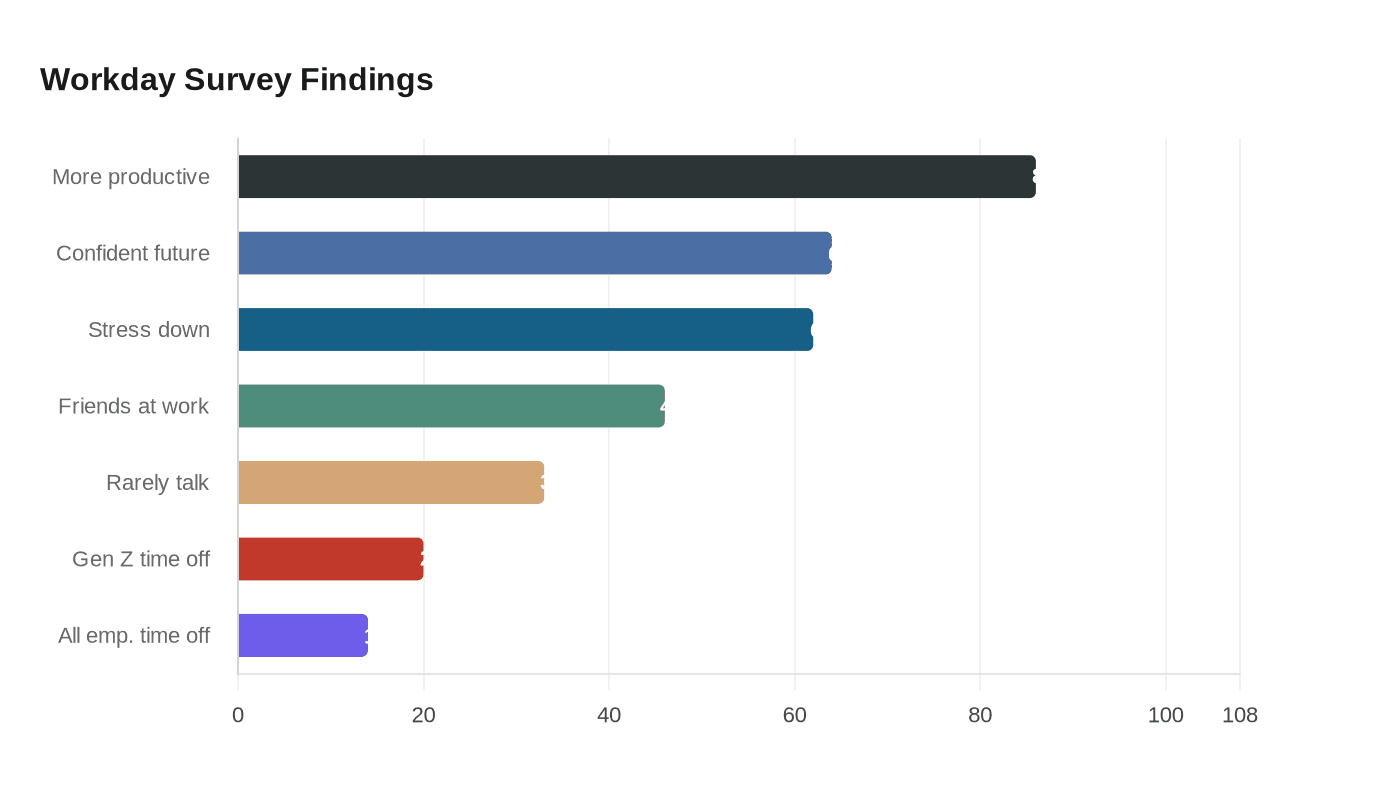
AI is doing what employers hoped it would do, and something they may not have planned for. In Workday’s Human Connection Workplace Index, 62% of 2,150 full-time employees who actively use AI said their stress or burnout risk had fallen, 86% said they were more productive, and 64% felt more confident about succeeding in future roles.
The same survey also points to a quieter problem: connection is fraying. Workday said 20% of Gen Z workers reported taking time off this year because of loneliness or isolation, while 14% of all employees said they took time off in the past year for the same reason. Thirty-three percent said they rarely or never have conversations with colleagues that go beyond transactional work tasks in a typical week, and just 46% said it is easy or somewhat easy to make friends at work.
The findings matter because they came from workers at large organizations, not startups built around informal chat and small teams. The survey was fielded by Hanover Research in March and April 2026 across seven countries, among employees at companies with 3,500 or more workers. Workday published the index on May 27 and paired it with a $500,000 commitment in global microgrants aimed at strengthening human connection.

Workday has been increasingly explicit that AI efficiency has to be matched with management discipline. Chief learning officer Chris Ernst has called people leaders the "linchpin" of culture and argued that time saved by technology should be pushed back into one-on-ones, feedback loops and community. Chief impact officer Carrie Varoquiers has described an ongoing "crisis of loneliness and disconnection," and Workday Foundation has said it is partnering with the U.S. Chamber of Connection to strengthen social connection and community trust.
For monday.com, that tension lands close to home. The company has spent the past year pushing deeper into AI-native work management, including March 11 infrastructure that lets AI agents sign up, authenticate and operate directly inside monday.com on behalf of humans. Its AI can update tasks, trigger automations, generate reports and coordinate work across teams, while support materials describe it as connected to boards, docs, workflows and apps.
That is the promise many enterprise buyers want: less drudgery, faster coordination and fewer repetitive handoffs. But Workday’s data suggests the next question is harder, and more important for product teams, managers and sales leaders alike. If AI removes routine work, leaders still have to design the human system around it, with manager check-ins, team rituals, peer feedback and cross-functional trust, or the gains may come with a more transactional culture.
This article was produced by Prism’s automated news system from verified source data, official records, and press releases, then run through automated quality and moderation checks before publishing. The system is built and supervised by the people who set the standards it runs under. Read our full AI policy.
Did this article answer your question?