Valve prices Steam Controller at $99, underscoring input costs for Nintendo
Valve's $99 Steam Controller lands near Nintendo's own premium pads, putting a price tag on input innovation and the cost of making one controller do more.
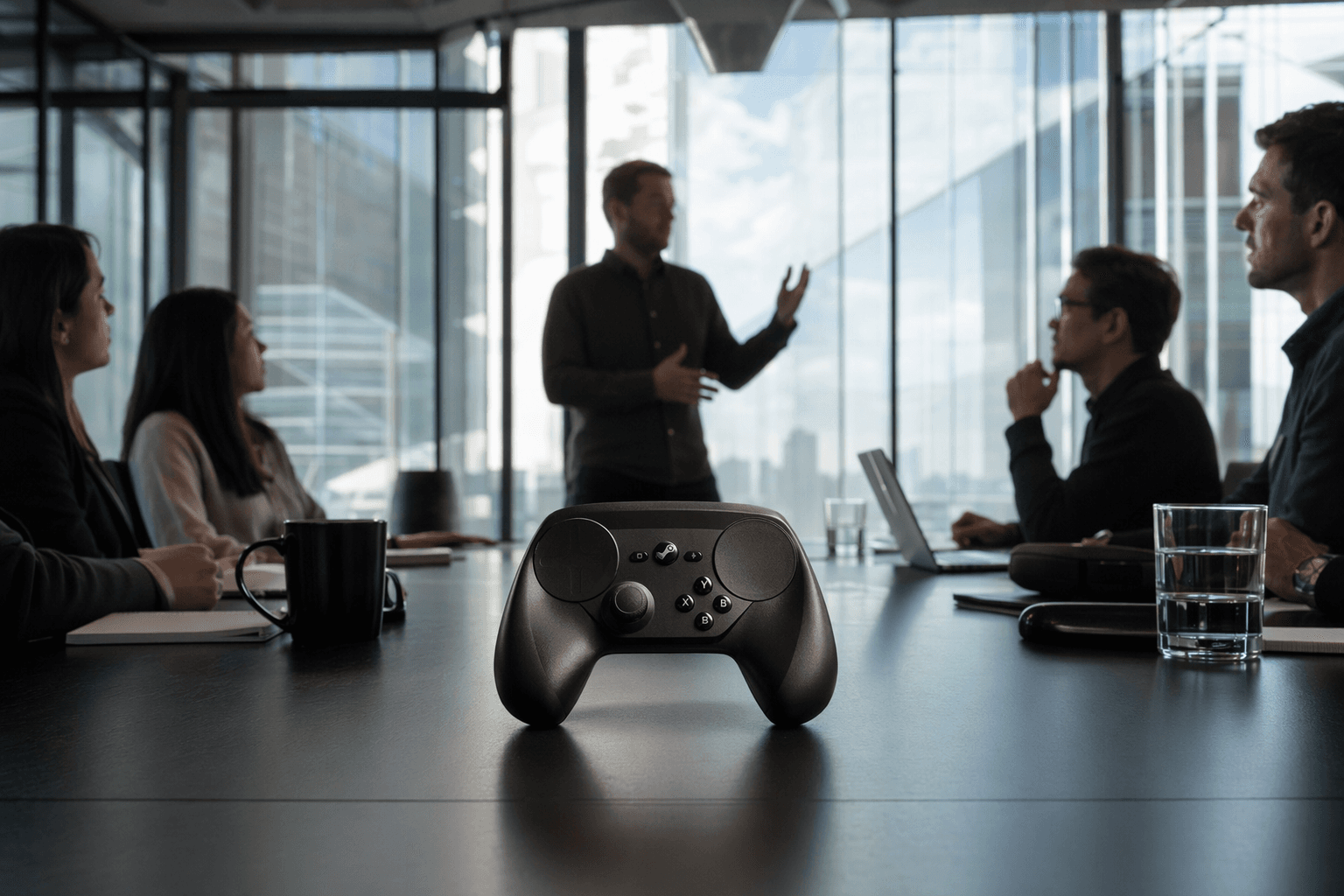
Valve has put a $99 price tag on the Steam Controller in the United States, turning a new gamepad launch into a broader reminder that controller design is also a pricing and positioning decision. Valve says the controller will be available to purchase May 4 at 10 a.m. Pacific, and the company is presenting it as part of a 2026 Steam hardware family that also includes Steam Machine and Steam Frame.
For Nintendo developers, designers and QA teams, the number matters because it sits close to the company’s own premium controller tier. Nintendo’s official store lists the Nintendo Switch Pro Controller at $79.99, the Nintendo Switch 2 Pro Controller at $89.99 and Joy-Con 2 at $99.99 per set. That puts Valve’s new pad in the same conversation as Nintendo’s most expensive input hardware, where the question is not just what the device can do, but how much players will pay for flexibility, comfort and extra capability.
Valve is selling the Steam Controller as a versatile pad, not a simple accessory. The original Steam Controller, released in November 2015, was built to let players use Steam games on a TV, including titles that were never designed with controller support in mind. Its feature set was unusually ambitious for the category: dual trackpads, HD haptic feedback, dual-stage triggers, back grip buttons and fully customizable control schemes. The new version carries that same logic forward, and the $99 price suggests Valve thinks that level of input experimentation still has a market.
That has direct implications for Nintendo’s software teams. If a controller is expected to handle a wider range of genres from day one, default bindings, accessibility options, motion alternatives and compatibility testing all become more important. The work is not only about whether a pad feels good in hand. It is about whether players understand it quickly, whether it works across play styles, and whether it supports the kinds of quality standards that have long defined Nintendo hardware and software together.
Valve’s pricing also underscores a business truth Nintendo knows well: premium input hardware can be a feature, a margin driver and a statement about what kind of play the platform wants to enable. A $99 controller is not just an accessory on a shelf. It is a signal that the company believes control innovation can justify the cost, and that belief can shape expectations for everyone building the next generation of games around it.
Know something we missed? Have a correction or additional information?
Submit a Tip