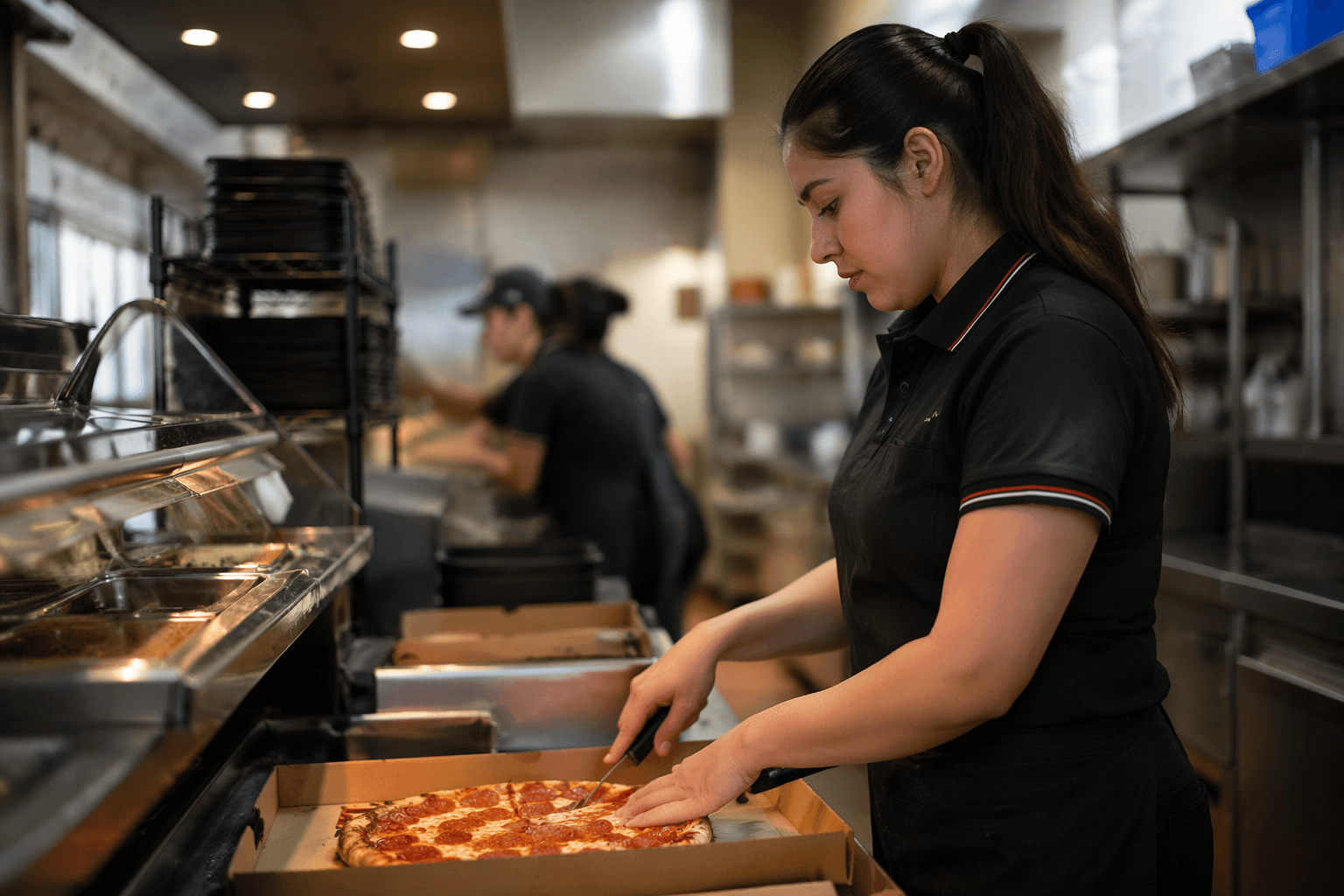
Byte by Yum reshapes Pizza Hut operations with one connected system
Byte is turning Pizza Hut into one operating system, and that could cut kitchen chaos while tightening oversight of every order, shift, and delivery handoff.
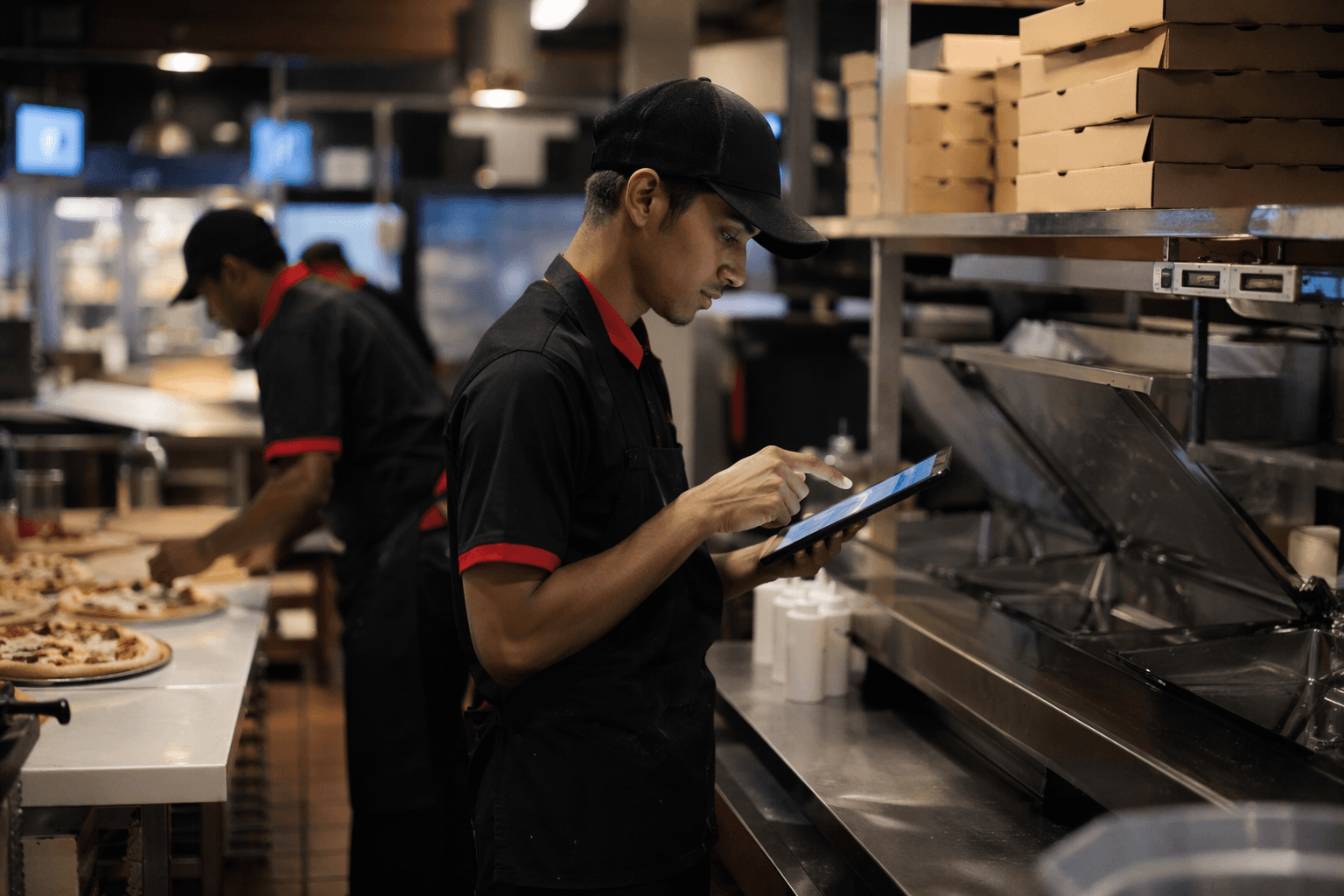
Pizza Hut’s next operational shift is not another app, it is a consolidation of the ones already sitting in the store. Byte by Yum! is pushing digital ordering, point of sale, kitchen flow, inventory, labor management, and team tools into one connected system, which could make a delivery-heavy restaurant run cleaner or make every mistake travel faster.
A single system changes the job
Yum! Brands formally introduced Byte by Yum! on Feb. 6, 2025 as a proprietary SaaS platform for KFC, Taco Bell, Pizza Hut, and Habit Burger & Grill. The company said the goal was to streamline operations and unify essential systems into one manageable platform, replacing older product names such as the Yum! Commerce Platform, Poseidon, Tracks, and SuperApp.
That matters on a Pizza Hut shift because the job is already a coordination problem. Orders come in from web, app, phone, and in-store channels, then move through the make line, the oven, dispatch, and the driver handoff. A system that brings those pieces together should reduce the swivel-chair problem managers know well: toggling between separate screens, patching together inventory counts, and guessing at labor needs while tickets keep stacking up.
At launch, Yum said brands were already using Byte products to process more than 300 million digital transactions a year. QSR Magazine reported that the platform spans online and mobile ordering, point of sale, kitchen and delivery optimization, menu management, inventory and labor management, and team member tools. By the company’s own account, Byte had scaled to roughly 38,000 restaurants globally, with at least one product live in each location.
What it means for the store floor
For Pizza Hut crews, the upside is obvious if the software works the way the company says it should. Fewer disconnected tools can mean fewer missed handoffs between the front counter, the make line, and the driver rack. It can also mean less time spent chasing down whether a pie is late because staffing was short, inventory was off, or the order simply got lost in the system.
But consolidation cuts both ways. When scheduling, forecasting, and inventory all sit in the same environment, bad data becomes everyone’s problem faster. A sloppy count on cheese or wings, a labor setting that underestimates Friday night demand, or an inaccurate promise time can ripple across the store in minutes instead of staying trapped in one separate tool. For managers, that means the discipline of the operation matters as much as the software itself.
That is the real workplace story here: Byte is not just simplifying the tech stack, it is concentrating accountability. The system can only be as reliable as the inputs from the store, and that puts pressure on shift leaders and franchise managers to keep ordering, staffing, and inventory data clean.
Why Pizza Hut is the test case
Pizza Hut is the clearest proof point because delivery is baked into the brand’s identity. Yum has said Pizza Hut U.S. uses Byte’s kitchen system to improve delivery times, reduce the amount of time pizzas wait in the restaurant, and give guests real-time visibility into order location. Later, the company said the Byte-enabled kitchen system can coordinate order timing with driver availability so food is ready when drivers arrive.
That coordination matters for delivery drivers, whether they are Pizza Hut employees or part of a broader delivery ecosystem competing with DoorDash and Uber Eats. Less idle time inside the store can mean more runs completed per shift and less friction at the handoff point. For drivers, that can translate into a smoother night. For managers, it can mean fewer late orders and fewer guest complaints about food that sat too long before leaving the store.
Yum said that Pizza Hut’s Byte-enabled kitchen system produced up to a 10 percent customer satisfaction increase. Even if that number is driven by better timing rather than a full operational overhaul, it points to the kind of gain Pizza Hut needs: faster execution, fewer cold pies, and less waste in a category where small delays can crush the guest experience.
A broader digital play, not a Pizza Hut-only experiment
Pizza Hut is part of a much larger Yum technology push. In the second quarter of 2025, Yum said digital sales made up 57 percent of total sales companywide. Taco Bell reached a record 41 percent digital mix, and KFC reached 60 percent. The company is clearly betting that digital ordering is no longer a side channel, but the main way guests interact with the brands.
That helps explain why Pizza Hut’s systems are being folded into a shared platform rather than built as one-off tools. Yum has described Byte as the evolution of earlier technology efforts that grew through acquisitions and in-house development, with the modernization taking shape internally around 2019. Jim Dausch, Yum’s chief digital and technology officer, has said technology leadership is now a prerequisite for industry leadership, which is a way of saying the software is no longer back office support. It is part of the competitive moat.
For store managers, that can be a relief and a burden at once. A shared system can make it easier to train transfers, standardize procedures, and scale best practices from one market to another. But it can also mean less room for local improvisation. If the platform sets the pace for the shift, managers have to work within its logic, not around it.
What Pizza Hut workers should watch next
The next questions are about rollout, control, and execution. Yum said Byte Commerce web and app ordering had expanded to Pizza Hut Canada and Mexico, with two more markets expected by the end of 2025. That suggests the company sees Pizza Hut as a major proving ground for how far the platform can travel beyond the U.S.
Workers should watch how that expansion affects training, staffing, and day-to-day decision making. A single system can reduce confusion if it is intuitive and accurate. It can also centralize oversight in a way that makes every labor input, inventory adjustment, and delivery delay more visible to corporate managers and franchise leadership.
That tension matters because Pizza Hut is not just modernizing from a position of strength. In 2025, Yum said it was reviewing strategic options for Pizza Hut after weak U.S. sales and negative same-store sales. In that context, Byte is not only an efficiency project. It is part of a turnaround effort, and the chain’s future may depend on whether software consolidation actually helps stores run better or simply gives headquarters a clearer view of the problems.
For Pizza Hut, the promise is simple enough: fewer fragmented tools, fewer blind spots, and a tighter link between what customers order and what the store can deliver. The harder test is whether that promise reaches the people on the floor, or just gives management a more polished dashboard to watch the same old pressure points.
This article was produced by Prism’s automated news system from verified source data, official records, and press releases, then run through automated quality and moderation checks before publishing. The system is built and supervised by the people who set the standards it runs under. Read our full AI policy.
Did this article answer your question?