Domino's delivery driver becomes largest U.S. franchise owner
A broke Domino's driver turned himself into a 160-store owner by mastering the basics and building sponsors. The path is real in pizza, but it takes training, trust, and scale.

Brian Bailey started driving for Domino's in 1985 while broke and looking for temporary work. Four decades later, he runs a 160-store operation and became Domino's largest U.S. franchise owner after buying 45 more stores in Texas, Arkansas, and Oklahoma. His rise is a useful map for Pizza Hut workers because it shows how a store job can become management, and management can become ownership, when the operator learns the business from the inside.
How Bailey turned a shift job into leverage
Bailey did not wait for someone else to define his performance. Early in his career, he wrote his own weekly performance reviews to force his manager to pay attention, a move that says as much about ambition as it does about discipline. In restaurant work, that kind of self-accountability matters because the people who get noticed are usually the ones who can point to measurable reliability, not just hard effort.
His operating philosophy is described in three words: people, people, people. That sounds simple until you scale it across 160 stores, where one weak manager, one disengaged crew, or one bad training culture can drag down the whole system. Bailey’s story suggests that ownership is not just about capital or title, but about being able to recruit, develop, and keep good people who can run the work without constant supervision.
What the Domino's example says about the broader pizza ladder
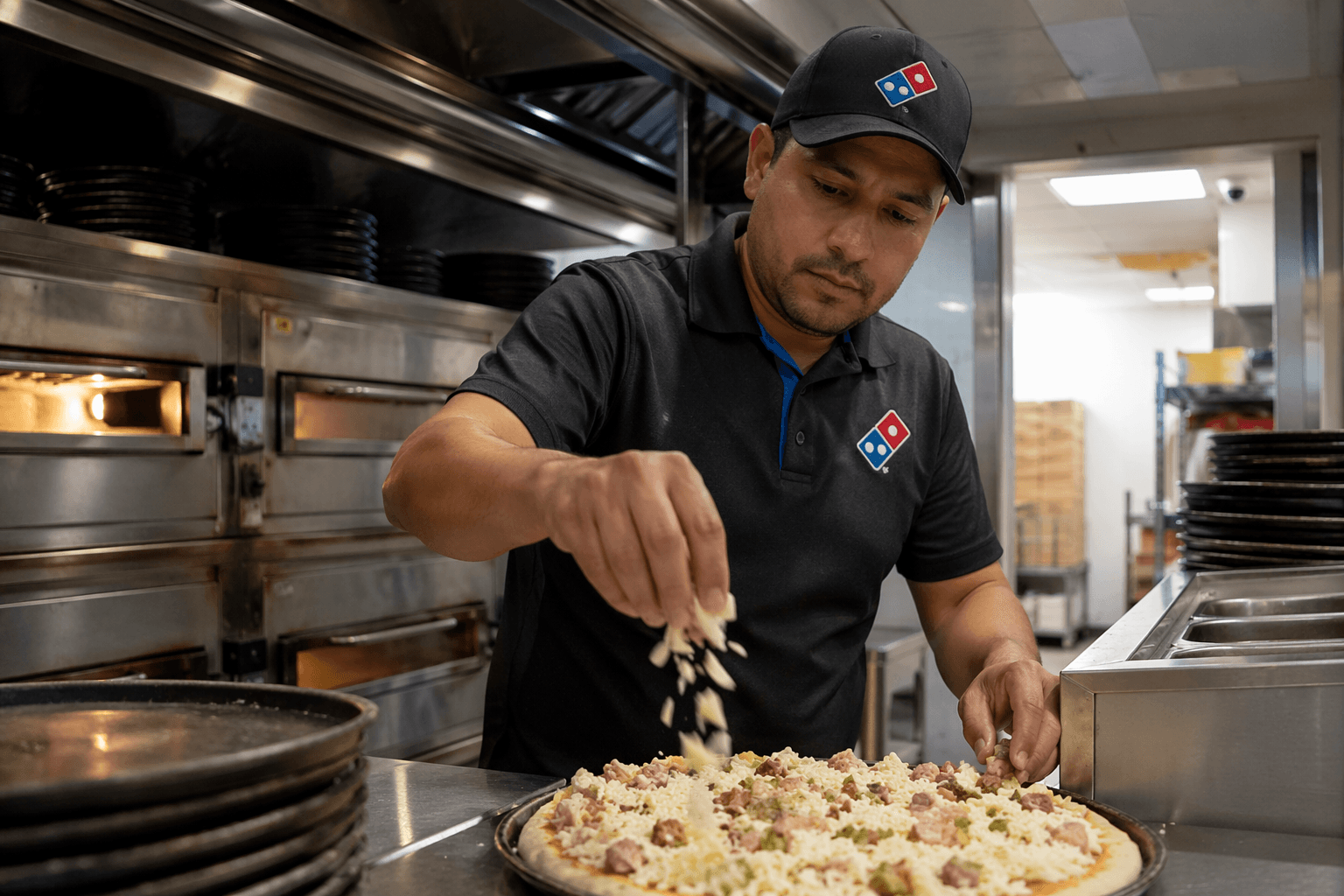
Domino's says more than 95% of its U.S. franchise owners started as part-time delivery drivers or pizza makers. That makes Bailey less of an exception than a proof point for the way pizza brands still build leaders from hourly work. He and Michelle Bailey also marked Team Bailey’s 100th store opening in Carlsbad, New Mexico, in 2021, which shows how quickly a disciplined operator can move from one unit to a multi-state portfolio.
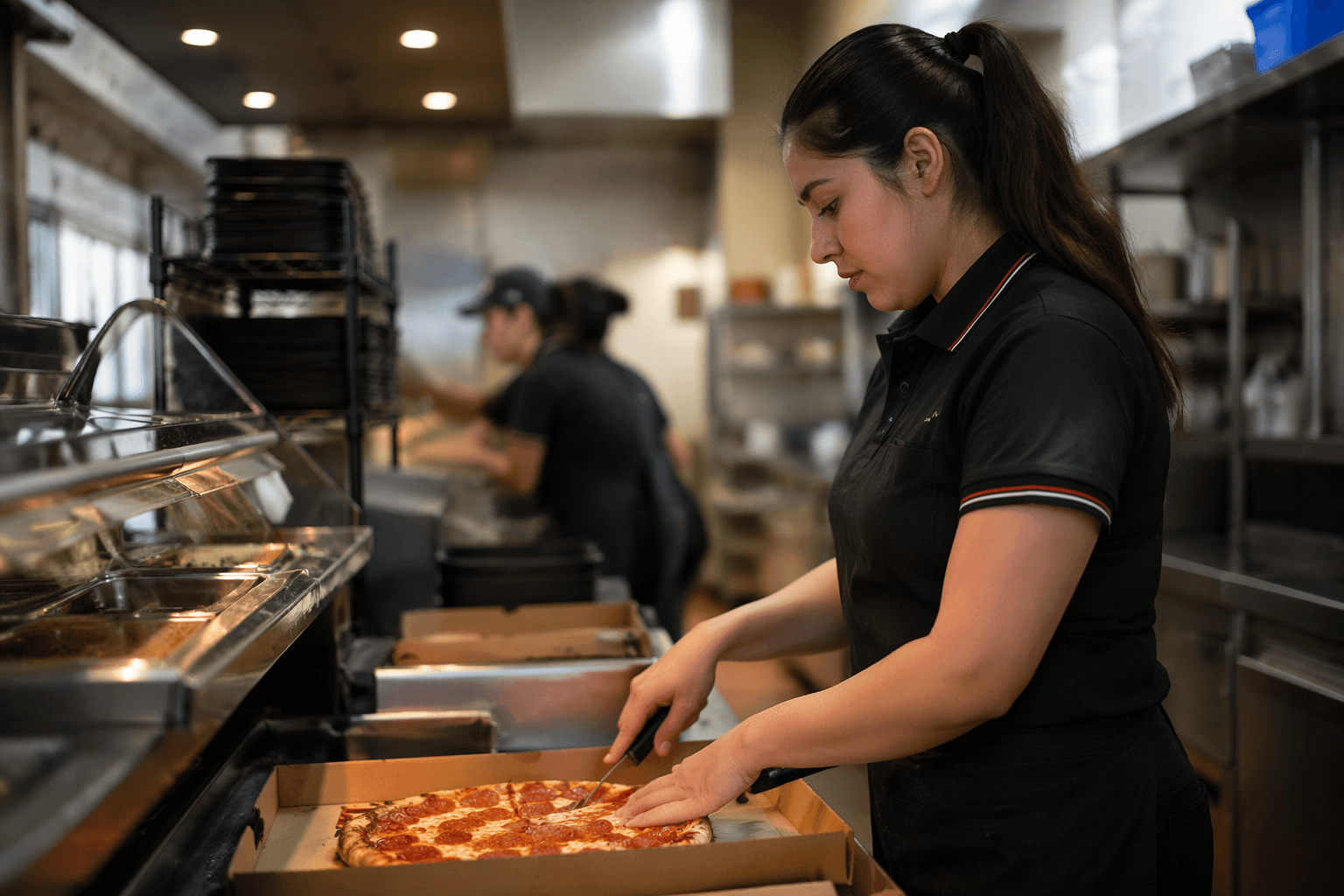
For Pizza Hut readers, the takeaway is not that one brand has a magical formula. It is that the pizza business still rewards people who understand the floor, the rush, the cut lines, the handoff, the driver board, and the pressure on labor and service times. If you have ever worked a Friday night when the phones do not stop and the delivery queue keeps growing, you already know the sort of operational judgment franchise owners need.
What matters inside Pizza Hut
Pizza Hut’s own franchise system is built around training before the doors open. Before you open a restaurant, you and your key operator are required to attend and complete Pizza Hut’s operations training program, which means the brand still treats system knowledge as a gate, not an afterthought. Yum! Brands says it opens a new KFC, Taco Bell, Pizza Hut, or Habit Burger & Grill about every two hours, so the franchise engine is still pushing growth even as store-level execution gets harder.
Scale matters too. Recent company materials describe Pizza Hut as having more than 15,500 restaurants in 108 countries and about $10 billion in annual systemwide sales. That footprint is why the skills developed on a single shift, delivery route, or closing crew still matter: every store is part of a global system that depends on managers who can keep standards tight while moving fast.
The milestones that turn hourly work into ownership
Bailey’s path points to a few milestones that matter more than luck. First, he learned to make his work visible, even before he had a formal title. Second, he stayed close to the operating realities of the business, which is what makes his people-first line more than a slogan. Third, he kept compounding small wins into larger responsibility until his portfolio reached 160 stores.
For Pizza Hut employees who want a similar path, the practical lesson is to treat every shift as a résumé line. That means mastering the basics, asking for feedback before it is forced on you, and showing that you can help other people succeed, not just yourself. In franchise restaurants, operators remember the people who reduce friction, stabilize the crew, and make the business easier to run.
Why the path is repeatable, and why it is still hard
Pizza franchising has long been tied to this kind of climb. Pizza Hut had 145 franchise units by 1966, opened its first Canadian franchise in 1968, reached its 5,000th franchise unit in 1986, and by the 1990s delivery and carryout made up about a quarter of sales. The brand’s history shows that frontline execution and store growth have always been connected, even as the mix of delivery, carryout, and digital ordering changed the job.
A long-running example from the same system makes that clearer. Entrepreneur profiled Bill Walsh, who started at Pizza Hut in 1966 for less than one dollar an hour and later led a company with 106 restaurants. Stories like that do not mean every driver or shift lead will become an owner, but they do show that the climb is part of pizza’s operating culture, not a fantasy sold to hourly staff.
The real test in today’s franchise environment is whether operators keep creating people who can step up from the floor. Bailey’s career says yes, but only if the business rewards visible performance, gives workers room to learn, and treats training as the start of a long runway rather than a box to check.
This article was produced by Prism’s automated news system from verified source data, official records, and press releases, then run through automated quality and moderation checks before publishing. The system is built and supervised by the people who set the standards it runs under. Read our full AI policy.
Did this article answer your question?