DoorDash wins Boston permit as new delivery rules reshape Pizza Hut orders
Boston’s new delivery permit rules can slow Pizza Hut handoffs, add identity checks, and put managers on the hook for tighter delivery records.

The fastest way a Boston-area Pizza Hut store can run into friction now is at the delivery shelf, where DoorDash’s new city permit regime is likely to mean more identity checks, more questions at pickup and a tighter paper trail for managers.
DoorDash said on May 20, 2026 that it received an operating permit to keep serving Boston as the city’s delivery safety ordinance took effect. For Pizza Hut franchises that lean on third-party delivery to move volume, that matters well beyond one platform. It signals that the handoff between the kitchen, the delivery driver and the street is now part of a regulated system, not just a fast-moving store routine.

Boston’s Road Safety and Accountability for Delivery Providers Ordinance was approved by the City Council on April 2, 2025 and took effect in April 2026 after a nine-month rollout. It requires major delivery companies such as DoorDash, Uber Eats and Grubhub to hold a Boston permit, carry proof of insurance and share delivery data with the Boston Transportation Department. City officials said the push came after concerns about reckless driving, illegal parking and congestion, and said the first warning letter went out in June 2024.
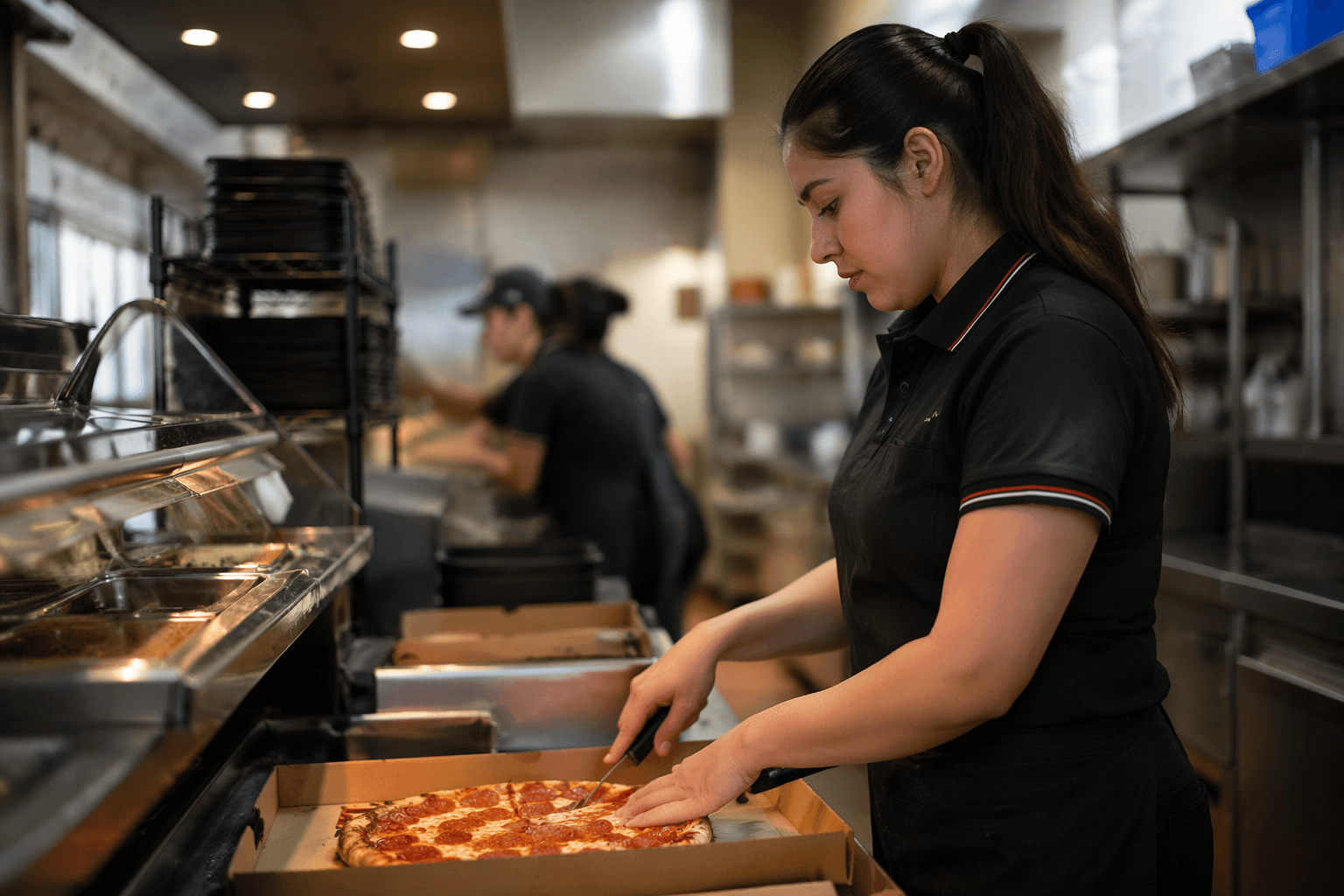
For Pizza Hut managers, the practical pressure point is the pickup flow. If DoorDash is changing how it verifies drivers and interfaces with police and city officials, store teams should expect more controlled handoffs at the front counter, more time spent checking orders and maybe more staging discipline at the delivery shelf. That can slow a rush, but it can also cut down on missing orders, account-sharing problems and the kind of chaotic pickup lane that creates complaints from drivers and customers alike.
DoorDash said it had already worked with Boston officials on an escalation channel with the Boston Police Department, accelerated identity verification to prevent account sharing and launched a multilingual safety campaign about local traffic laws and vehicle-registration requirements. The company also said Boston is a major market, pointing to more than 60,000 people who earned over $60 million on the platform in 2025 and about $250 million in additional revenue for local businesses.
The city has also made clear that the permit is not optional. Officials said unpermitted operators can face fines of $300 per day per restaurant or per order, and local reporting said the ordinance applies to platforms making at least 1 million deliveries nationally each year. Boston is also collecting data on vehicle types, delivery locations and trip timing, which gives the city a clearer view of where the system is strained and where enforcement may tighten next.
Boston City Council passed the ordinance 11-2, with Erin Murphy and John FitzGerald voting no. Sharon Durkan has said Boston is the first city to adopt this kind of delivery-platform permitting regime, which makes the Boston rules a likely template for other markets. For Pizza Hut stores in regulated delivery areas, the message is straightforward: third-party delivery is now part of local compliance, and the cost of a sloppy handoff is no longer just a bad review.
This article was produced by Prism’s automated news system from verified source data, official records, and press releases, then run through automated quality and moderation checks before publishing. The system is built and supervised by the people who set the standards it runs under. Read our full AI policy.
Did this article answer your question?