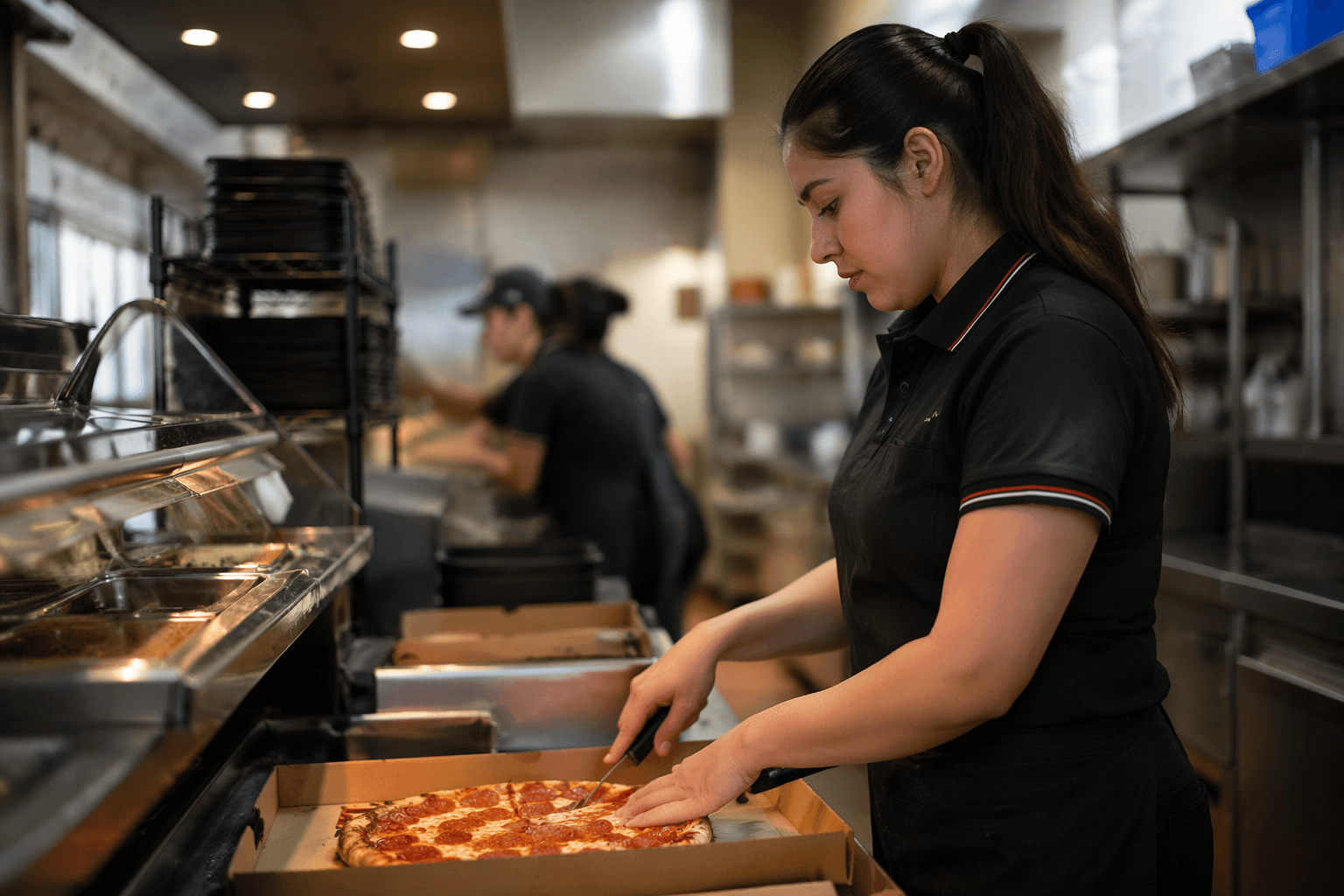
IRS says Pizza Hut tips are taxable income, workers should keep records
Pizza Hut tips are taxable, and the fastest way to protect your take-home pay is simple: track every cash, app, pooled, and charged tip against payroll.
What counts as taxable tip income at Pizza Hut
The IRS treats tips as income, and for Pizza Hut workers that means more than the cash folded into a weekend shift. Publication 531 says all tips you receive as an employee are taxable, including cash tips, charged tips paid through your employer, tips split or pooled with coworkers, and noncash tips with value. That matters whether you are on the dining room floor, taking carryout orders, or making deliveries, because the tax rule follows the tip, not the job title.
The practical lesson is simple: if a customer gives you value because of the service you provided, assume it belongs in your tip records. That includes digital gratuities, pooled amounts that arrive through payroll, and any tip that shows up as part of a card transaction rather than folded bills in your apron. At tax time, the IRS expects those amounts to be part of your income return, so the safest approach is to track them as they happen instead of trying to reconstruct a month of shifts later.
Spot the mismatch between what you tracked and what payroll shows
The biggest paycheck problem for tipped Pizza Hut workers is not usually the obvious cash tip. It is the mismatch between what you earned across several shifts and what ends up on the pay stub. Split shifts, busy weekends, tip pools, delivery runs, and app-based payments can all blur together, especially when one check covers multiple kinds of work and multiple kinds of pay.
That is why the simplest protection is also the most effective: keep your own daily tip record, save screenshots when tips are paid digitally, and compare that record with payroll every week. If your notes show a stronger night than your stub does, you have a way to flag the difference early instead of discovering it months later when a tax form or a missing tip pool payment does not add up. In a restaurant where earnings can swing fast from one shift to the next, your own log is the only record that follows you home.
Why delivery fees and service charges can fool drivers
Pizza Hut’s own disclosure makes an important distinction: the delivery charge is not a driver tip, and 100% of the delivery fee is retained by the restaurant. Pizza Hut also says discounts do not apply to the delivery charge or driver tip. For drivers, that means a receipt with a delivery fee on it is not proof that the money went into your pocket.
That distinction matters because many workers naturally assume anything marked on a customer bill that sounds like a fee might be part of their earnings. It is not. The IRS says service charges required by the employer are not tips at all; they are non-tip wages subject to withholding. So if a restaurant adds a mandatory charge, or if the pay structure includes a fixed amount that the customer must pay, that money should not be treated the same way as a voluntary gratuity. When you reconcile a shift, separate the delivery fee, any required service charge, and the actual customer tip.
The monthly reporting rule that keeps workers out of trouble
The IRS gives tipped employees a basic deadline that is easy to miss in the rush of restaurant life. You generally do not have to report tips of less than $20 per month per employer, but tips must be reported to the employer by the 10th day of the month after you receive them. Tips reported to the employer are then included on Form W-2, which is the number you use when you file your return.
For Pizza Hut workers juggling carryout, delivery, and pooled tips, that date matters because it creates the cleanest trail from shift to paycheck. Missing that deadline does not just risk a tax headache later. It can also create confusion if payroll, your own notes, and the W-2 do not line up when you need them to. A good habit is to close out your tips at the end of each day, then send in the monthly total on time rather than trying to piece it together at the end of the quarter.
What your employer should be tracking too
Worker records matter, but so do employer records. The U.S. Department of Labor says covered employers must keep accurate records for each nonexempt worker, including hours worked and wages earned. Its recordkeeping guidance also says employers should track additions to or deductions from wages, total wages paid each pay period, and the date of payment plus the pay period covered.
For Pizza Hut employees, that is the paper trail that should back up your own notes. If your hours, tip pool amounts, deductions, or add-ons do not match what you remember from the schedule, that is when you know to ask questions. The more mixed your shifts are, the more important it becomes to review every check line by line. A payroll problem that looks small on Friday can become a tax problem by January.
What changed in the IRS paperwork
Workers who are used to older tip forms should know that the IRS has moved on from some of the classic paperwork. Form 4070 and Form 4070A are now historical, and Publication 1244 became obsolete beginning in 2024. That means employees and employers may rely more on other reporting systems or forms provided by the business.
For a Pizza Hut worker, the takeaway is not that recordkeeping got harder. It is that the burden has shifted toward whatever system your store actually uses, plus your own backup notes. If your location uses payroll software, a tip report in the app, or a store-specific form, save your copy. The old paper forms are not the point anymore; having a record that survives the shift is.
A new tax wrinkle for 2025 tip income
There is one more reason Pizza Hut workers should pay attention now, not later. In November 2025, the U.S. Department of the Treasury and the IRS issued guidance for tax year 2025 tied to a new deduction for tips and overtime compensation. The guidance explains how workers can determine the amount of the deduction without getting a separate accounting from an employer for cash tips or overtime.
That does not change the core rule: tips are still taxable income and still need to be reported. But it does mean some workers may be looking at their tips through two lenses at once, as income that must be tracked and as part of a deduction calculation for 2025 returns. For tipped Pizza Hut employees, the safest move is still the oldest one: record every tip, keep the payroll trail, and make sure the numbers line up before tax season turns a missed shift into missed money.
This article was produced by Prism’s automated news system from verified source data, official records, and press releases, then run through automated quality and moderation checks before publishing. The system is built and supervised by the people who set the standards it runs under. Read our full AI policy.
Did this article answer your question?