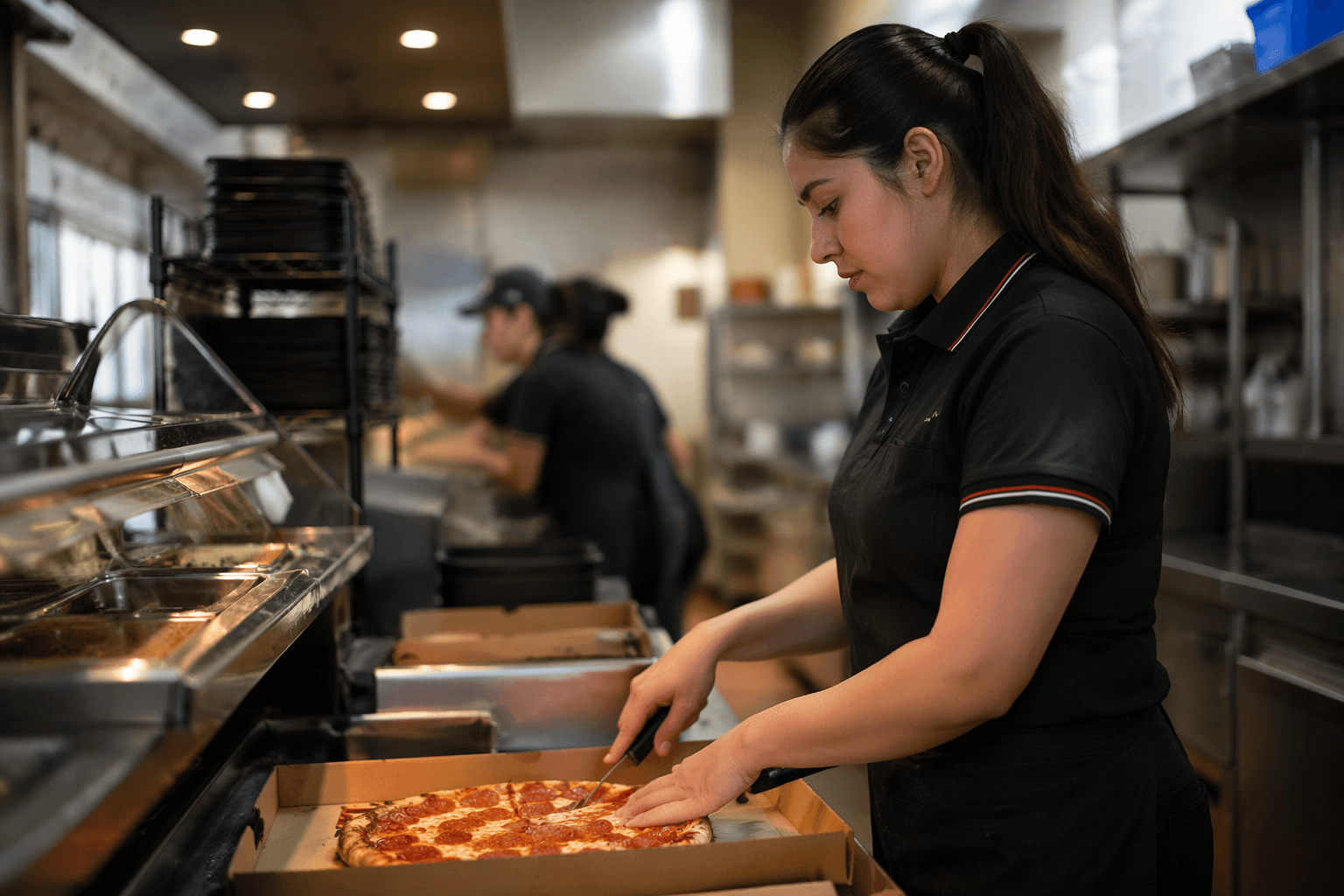
Pizza Hut workers may qualify for unpaid, job-protected leave under FMLA
A new baby, surgery, or a parent’s illness can trigger FMLA protections if you clear the hours and headcount tests. For Pizza Hut workers, the franchise map is the first trap.
What FMLA can do when life hits your schedule
A serious health event does not have to cost you your job. For eligible Pizza Hut workers, the Family and Medical Leave Act can provide up to 12 workweeks of unpaid, job-protected leave in a 12-month period, while group health benefits stay in place during the leave. That matters whether you are recovering from surgery, welcoming a new baby, caring for a spouse or parent, or dealing with your own serious health condition that makes you unable to work.
For restaurant crews, the law can be the difference between stepping away for a crisis and walking back into a lost shift line, lost seniority, or no job at all. It is not paid leave, but it is a legal shield, and for workers whose hours rise and fall with the schedule, that protection can be easy to miss until the moment they need it most.
The eligibility test is where many restaurant workers get tripped up
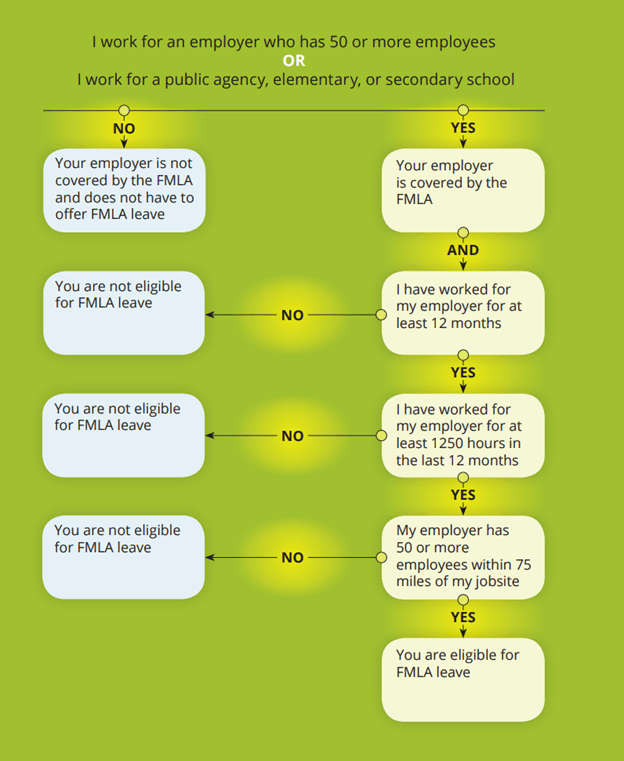
FMLA is not automatic. In general, you need 12 months of service, at least 1,250 hours worked in the prior 12 months, and a worksite with 50 or more employees within 75 miles. That 1,250-hour threshold is especially important in restaurant work, because your schedule can be uneven, and the hours you actually worked matter more than how long you have worn the uniform.
The 50-employees-within-75-miles rule is just as important. The Department of Labor says workers who do not meet that test are not eligible for FMLA leave, which means the size and location of your specific Pizza Hut jobsite can decide whether the law applies. If you split time between stores, work in a smaller franchise operation, or are based at a location with thin staffing nearby, you need to check the numbers before you assume you are covered.
Why Pizza Hut’s franchise structure makes coverage harder to read
Pizza Hut is part of Yum! Brands, a system that runs KFC, Pizza Hut, Taco Bell, and The Habit Burger Grill in more than 155 countries and territories. Yum! says its brands and franchisees operate more than 63,000 restaurants globally, primarily through about 1,500 franchisees. Pizza Hut itself says it was founded in 1958 and now has more than 19,000 restaurants in 108 countries.
That structure matters because FMLA coverage can turn on who employs you and how many workers are counted near your jobsite. Yum! Brands reported about 40,000 employees at the end of 2024, including roughly 23,000 in the United States and 17,000 outside the United States, and said about 85% of its employees work in restaurants. In a franchise-heavy chain like Pizza Hut, the person running your store may not think about federal leave rules until someone needs them, so you should not wait for management to sort out the coverage question on its own.
How to ask for leave without weakening your position
When a baby is on the way, a surgery date is set, or a parent’s health suddenly changes, the safest move is to give notice early and keep your own paper trail. Save your schedules, pay stubs, time records, and any messages showing your hours, because that is how you can prove you meet the 1,250-hour test if there is any dispute later. Keep copies of every leave request, every form the company gives you, and every response from a manager or HR contact.
Use the company’s leave process, but do not rely on memory or a quick verbal conversation at the make line. Put the request in writing if you can, note the reason for leave, and ask what documents are needed. If you are using leave for your own serious health condition or to care for a family member, make sure your paperwork clearly connects the request to the qualifying event so the employer cannot later claim it was vague or incomplete.
What to expect on pay, benefits, and timing
FMLA is unpaid leave, but the Department of Labor says it may run at the same time as employer-provided paid leave. That means a worker may be able to use vacation, sick time, or another paid benefit alongside FMLA, depending on the employer’s rules. The key point is that FMLA itself does not replace pay, so if you are a delivery driver counting on tips or a shift worker living close to the edge, you need a plan for the missing income before the leave starts.
Health coverage is supposed to continue during FMLA leave, which is one of the law’s most practical protections. If you rely on a company health plan for yourself or your family, do not let a manager talk about leave as if insurance stops when the schedule does. The law requires group health benefits to stay in place, and that protection can matter just as much as the job itself when a medical event is already expensive.
Your return rights are part of the deal
When the leave ends, eligible employees are generally entitled to return to the same job or an equivalent one. That is not a small detail in a restaurant business built on shifts, stations, and manager discretion. If you leave as a driver, cook, or shift leader, the law is designed to bring you back to a position with the same pay, benefits, and working conditions, or something equivalent.
That return right is one reason to document your leave from the start. If a manager tries to sideline you, reduce your hours, or move you into a worse slot because you took protected leave, those changes can become a problem fast. Keep notes on what job you held before the leave, what you were promised on the way out, and what happened when you came back.
Pushback is not supposed to be part of the process
The Department of Labor says employers cannot interfere with, restrain, or deny FMLA rights, and it says retaliation, harassment, intimidation, or other adverse action for asserting those rights is prohibited. The Equal Employment Opportunity Commission also treats retaliation for asserting protected workplace rights as unlawful. In a Pizza Hut setting, that can mean a manager cannot legally punish you for asking about leave, filing the paperwork, or insisting on your rights after a family or health emergency.
If something feels off, keep everything. Save texts, screenshots, schedules, and any write-ups that arrive after you mention leave, because those records can show whether the timing lines up with your request. The Department of Labor also says workers can use its FMLA resources to understand notice rules and to file complaints if they believe their rights were violated.
The practical checklist before you step away
A clean leave request is easier to defend later than a rushed one. Before you leave the store, make sure you have these pieces lined up:
- Your hours for the prior 12 months, especially if your schedule has been uneven.
- Proof of how long you have worked for the employer, since the 12-month service test matters.
- The exact worksite you report to, so the 50-employees-within-75-miles test can be checked.
- A written leave request and copies of any forms or responses.
- A plan for health coverage payments or premium notices while you are out.
FMLA is not a wage replacement, and it is not a guarantee that every Pizza Hut worker will qualify. But for people facing childbirth, surgery, caregiving, or a serious health condition, it can be the one rule that keeps a job attached to a life event. In a franchise system where local managers, corporate ownership, and store-level headcount can all matter, the workers who protect themselves early are usually the ones who keep the strongest footing when they come back.
This article was produced by Prism’s automated news system from verified source data, official records, and press releases, then run through automated quality and moderation checks before publishing. The system is built and supervised by the people who set the standards it runs under. Read our full AI policy.
Did this article answer your question?