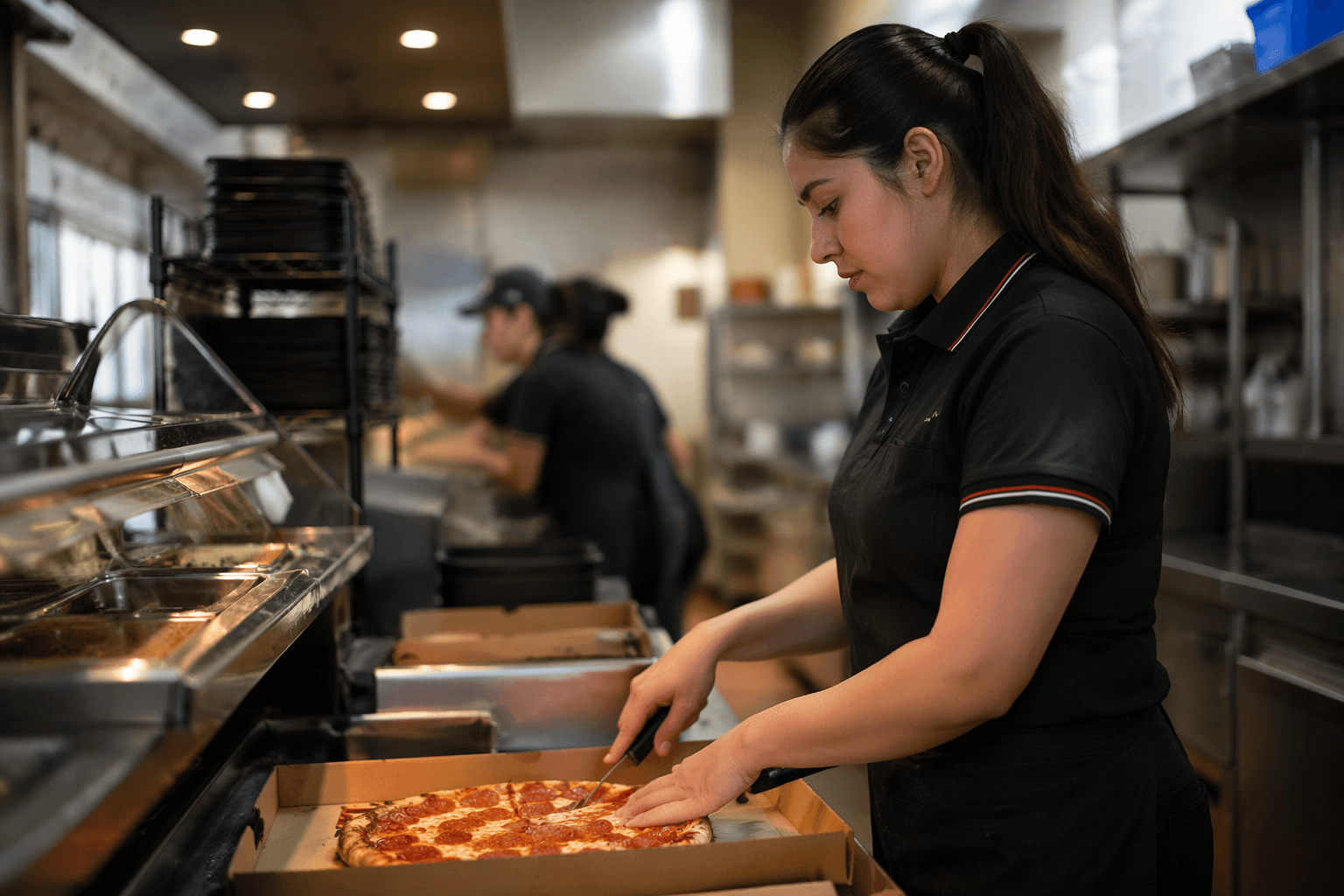
OSHA warns Pizza Hut kitchens on burns, cuts and shock risks
One bad burn or cut can knock a Pizza Hut shift off balance fast, and OSHA’s hazard map points straight at ovens, knives, cords and freezer doors.

One burn on the line during the dinner rush can do more than send a worker to urgent care. It can pull a shift manager off the floor, slow orders, force a scramble for coverage and turn a tight Friday night into an overtime headache.
That is the practical warning inside OSHA’s restaurant safety guidance: the biggest kitchen risks are burns from hot surfaces, cuts and lacerations from sharp tools, entrapment in walk-in freezers, electrical shock from frayed cords and amputations from unguarded equipment. OSHA says employers have to assess tasks to find hazards and provide, and make sure workers use, the right personal protective equipment.
For a Pizza Hut store, that means the highest-risk checks are the ones closest to the rush. Ovens, cutters, mixers, storage areas, cords and freezer doors are all part of the daily environment. If a prep station is crowded, hot pans and cutlery become harder to handle. If a walk-in door sticks or an area is overloaded, the freezer risk rises. If a cord or plug is damaged, the shock risk stops being theoretical. OSHA also tells employers to keep knives sharpened and in good condition, store dirty knives in a designated container for cleaning and use hand protection when workers face cuts, lacerations or thermal burns.
The young-worker pages make the stakes sharper. OSHA says young workers have a right to a workplace free from serious harm, to training on hazards and controls, and to report hazards without retaliation. OSHA says restaurant safety for young workers is covered under specific general-industry standards, and employers must display a U.S. Department of Labor or state labor poster that informs young workers of protections under the Occupational Safety and Health Act, enacted Dec. 29, 1970. OSHA says young workers suffer a disproportionate share of injuries and fatalities, especially in their first year. In 2017, 22 youths under 18 died from work-related injuries and 27,070 were sickened or injured, and the service industry ranked highest among U.S. industries for injury among workers ages 16 to 19.

The burn data show why that matters. A Centers for Disease Control and Prevention review of restaurant workers in Washington state found 49 food workers hospitalized for work-related scald burns between Jan. 1, 2000, and Dec. 1, 2008. Another CDC study found most recorded food-service burn injuries were scalds to the hands and upper extremities, often involving coffee and cooking oil.
Pizza Hut says its system operates more than 18,000 restaurants, most of them franchisee-owned and operated, and the brand reaches more than 120 countries through Yum! Restaurants International. In a system that large, one sloppy cord, one dull knife or one unguarded machine can turn into a lost shift fast. OSHA’s 2024 severe-injury report, released April 17, 2025, logged 9,034 severe injury reports, including 7,327 inpatient hospitalizations and 2,426 amputations, a reminder that even routine work can go wrong quickly when the basics slip.
This article was produced by Prism’s automated news system from verified source data, official records, and press releases, then run through automated quality and moderation checks before publishing. The system is built and supervised by the people who set the standards it runs under. Read our full AI policy.
Did this article answer your question?