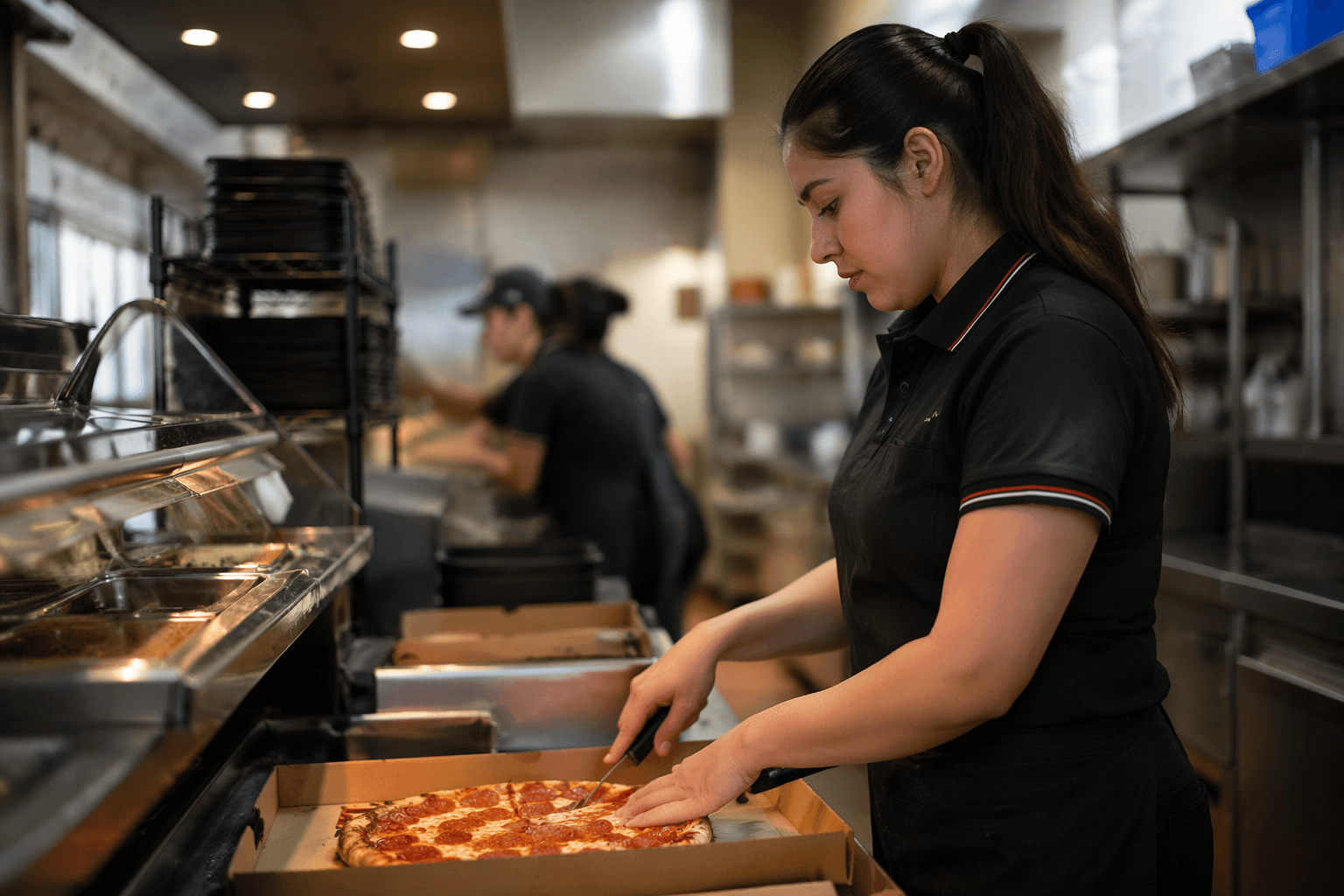
OSHA warns Pizza Hut on young-worker risks in kitchens and delivery
Hot ovens, wet floors and rush-hour pressure are where Pizza Hut teen injuries start. OSHA’s restaurant guidance turns that risk into a shift-by-shift checklist.
On a Friday night rush at Pizza Hut, a new hire is reaching for a pan, a driver is juggling a hot bag, the parking lot is crowded, and the floor near the make line is slick with spilled sauce.
That is why OSHA’s young-worker restaurant guidance matters. Young workers suffer a disproportionate share of injuries and fatalities, especially in their first year on the job. In restaurant work, where many people get their first paycheck, the first shift can be the riskiest shift if managers treat onboarding as a paperwork exercise instead of an operating system.
Why young workers are such a big part of restaurant labor
Restaurants and other eating and drinking businesses employ 11.6 million people in the United States, and nearly 30% of those workers are under 20, OSHA says.
Many young workers get their first work experience in restaurants, especially fast-food settings. OSHA’s young-worker materials identify youth ages 14-24 as being at risk because of inexperience and developmental factors, including hesitating to ask questions or failing to recognize workplace dangers. In a Pizza Hut kitchen, that can mean not speaking up about a broken floor mat, not recognizing a pinch point on a cart, or trying to power through a task that should be slowed down and shown once more.
OSHA reported that in 2017, 22 youths under 18 died from work-related injuries and another 27,070 were sickened or injured. CDC and National Institute for Occupational Safety and Health charts show that in 2022 there were about 19.4 million workers under age 25, 19 deaths of youth under 18, and an estimated 26,900 emergency-department-treated injuries among 15-17-year-olds.
What a Pizza Hut shift leader should cover before the rush
OSHA’s restaurant eTool breaks the job into the same categories a store manager actually juggles: cooking, delivery and storage, drive-thru, food preparation, serving, cleanup and general hazards. It turns safety into a pre-shift checklist instead of a vague reminder to “be careful.”
For a Pizza Hut team, the most important habits are the ones that prevent the injuries that create turnover and missed shifts:
- Show new hires how to move around ovens, hot surfaces and trays before tickets start stacking up.
- Point out the wet spots, the door swing, the cart path and the box-cutting area before anyone starts rushing.
- Make slip-resistant shoes part of the uniform expectation, not a personal preference.
- Train on lifting and carrying so dough, sauce, ingredient bins and stacked boxes do not become a back injury.
- Assign cleanup as a controlled task, not an afterthought, because wet floors and clutter build fast in a pizza kitchen.
- For drivers, review parking, hot-bag handling and the walk from car to door or handoff point before the first delivery run.
Delivery work needs the same discipline as the make line
Pizza Hut’s delivery operation has its own hazards, and OSHA’s guidance treats delivery and storage as a separate category for a reason. A driver who is new to the job may be comfortable with the route app but still be unprepared for balancing hot food, navigating curbs or carrying product through a dark lot, icy walkway or cramped apartment entry.
A manager who walks a driver through parking placement, safe carry technique and customer handoff expectations protects the worker and helps prevent late deliveries, dropped orders and injuries that take a car off the schedule for the rest of the week. Pizza Hut drivers also compete with DoorDash and Uber Eats for the same delivery dollars.
Age rules are part of the job, not a side note
Safety training only works when it fits the labor rules. The Fair Labor Standards Act sets a baseline 14-year minimum age for many nonagricultural jobs, a general 16-year minimum age for most employment covered by child labor rules, and an 18-year minimum for hazardous occupations. When federal and state standards differ, the more protective rule applies.
For Pizza Hut managers, that means teen scheduling cannot be built around convenience alone. A store with a younger crew has to know which tasks are allowed, which need closer supervision and which should stay with older workers. The U.S. Department of Labor’s Wage and Hour Division uses YouthRules to point families and employers to federal and state labor-law information. It is the kind of reference a shift leader should have nearby when hiring a 14-, 15- or 16-year-old.
What Pizza Hut’s own policies imply
Pizza Hut’s supplier code of conduct says suppliers must comply with laws on wages, work hours, workers’ compensation, equal opportunity, worker safety and product safety.
The company’s public hiring pages still advertise restaurant and delivery opportunities.
This article was produced by Prism’s automated news system from verified source data, official records, and press releases, then run through automated quality and moderation checks before publishing. The system is built and supervised by the people who set the standards it runs under. Read our full AI policy.
Did this article answer your question?