Pizza chains lag inflation as Technomic reports modest growth
Technomic said Top 500 sales rose 3%, but foodservice inflation ran 3.8%, leaving pizza chains and Pizza Hut fighting for real growth.
Technomic’s latest Top 500 data shows the restaurant business still expanding, but not fast enough to outrun inflation. Top 500 chain sales topped $450 billion in 2025 and rose 3%, while foodservice inflation ran 3.8%, the fourth straight year growth slowed from the prior year.
For Pizza Hut workers, that gap is the story. Pizza chains had a difficult year and overall category sales slipped into negative territory, even as Domino’s and Jet’s Pizza posted gains. The strongest growth clustered elsewhere, in coffee cafe, chicken and beverage-snack concepts, with drive-thru names such as 7 Brew Drive Thru Coffee, Dutch Bros and Scooter’s Coffee among the big winners.

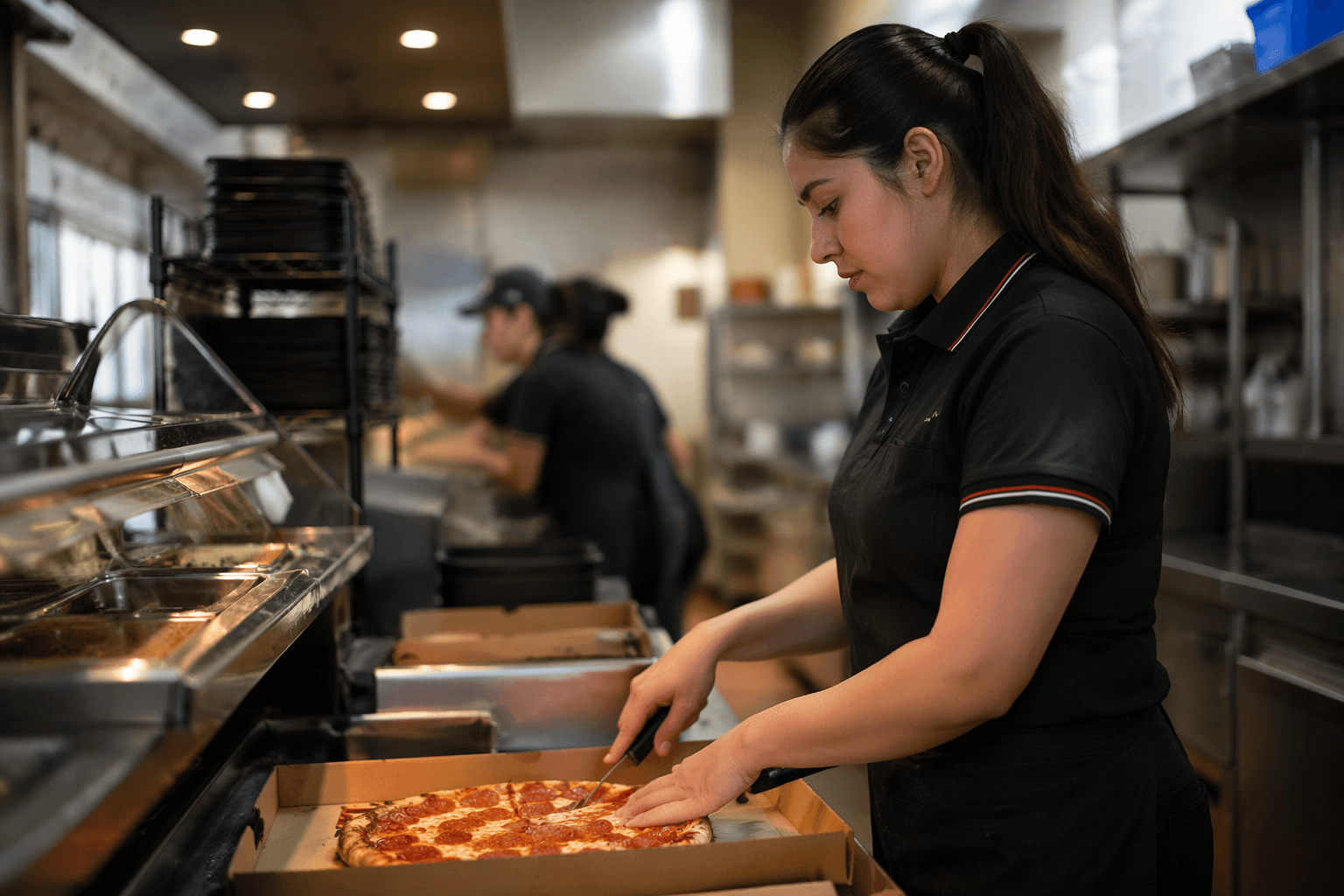
That matters on the line and on the road because Pizza Hut is not competing only with other pizza brands anymore. It is competing with chicken, coffee, snacks, burritos and every other quick meal that can win a household’s budget in a few taps. That is why managers keep leaning on value bundles, loyalty offers, menu simplification and digital ordering. The point is not just to sell more pizza, but to protect traffic without letting margins get stripped by discounting.
The pressure reaches delivery drivers, kitchen crews and shift leaders in different ways. If sales are growing only in nominal terms, stores have less room to absorb labor costs, manage peak-time staffing or fix service problems without squeezing productivity. Fewer margin dollars usually means tighter schedules, more pressure to hit ticket times and less slack when a run is late or an order has to be remade.
The broader corporate context makes the squeeze sharper. On June 16, Yum Brands said it would sell Pizza Hut for $2.7 billion, splitting the deal between LongRange Capital for about $1.5 billion and Yum China for about $1.2 billion. Yum said it expected about $2.3 billion in net proceeds after taxes, closing adjustments and fees, plus a possible $75 million earnout by 2030 and about $85 million in one-time expenses during the rest of 2026.
The chain’s recent performance helps explain why ownership is changing. Yum said Pizza Hut’s U.S. system sales fell 3% in the fourth quarter of 2025, full-year same-store sales declined 1%, and 250 underperforming U.S. locations would close under the Hut Forward strategy. Yum also expected first-quarter 2026 core operating profit to fall about 15% because of marketing support and UK integration costs, while Taco Bell U.S. same-store sales rose 7% and KFC opened nearly 3,000 new units in fiscal 2025. Pizza Hut’s next owner will inherit a brand that still has nearly 20,000 locations across 108 countries and territories, but now has to prove it can grow in a market where even modest sales gains are being eaten by inflation.
This article was produced by Prism’s automated news system from verified source data, official records, and press releases, then run through automated quality and moderation checks before publishing. The system is built and supervised by the people who set the standards it runs under. Read our full AI policy.
Did this article answer your question?