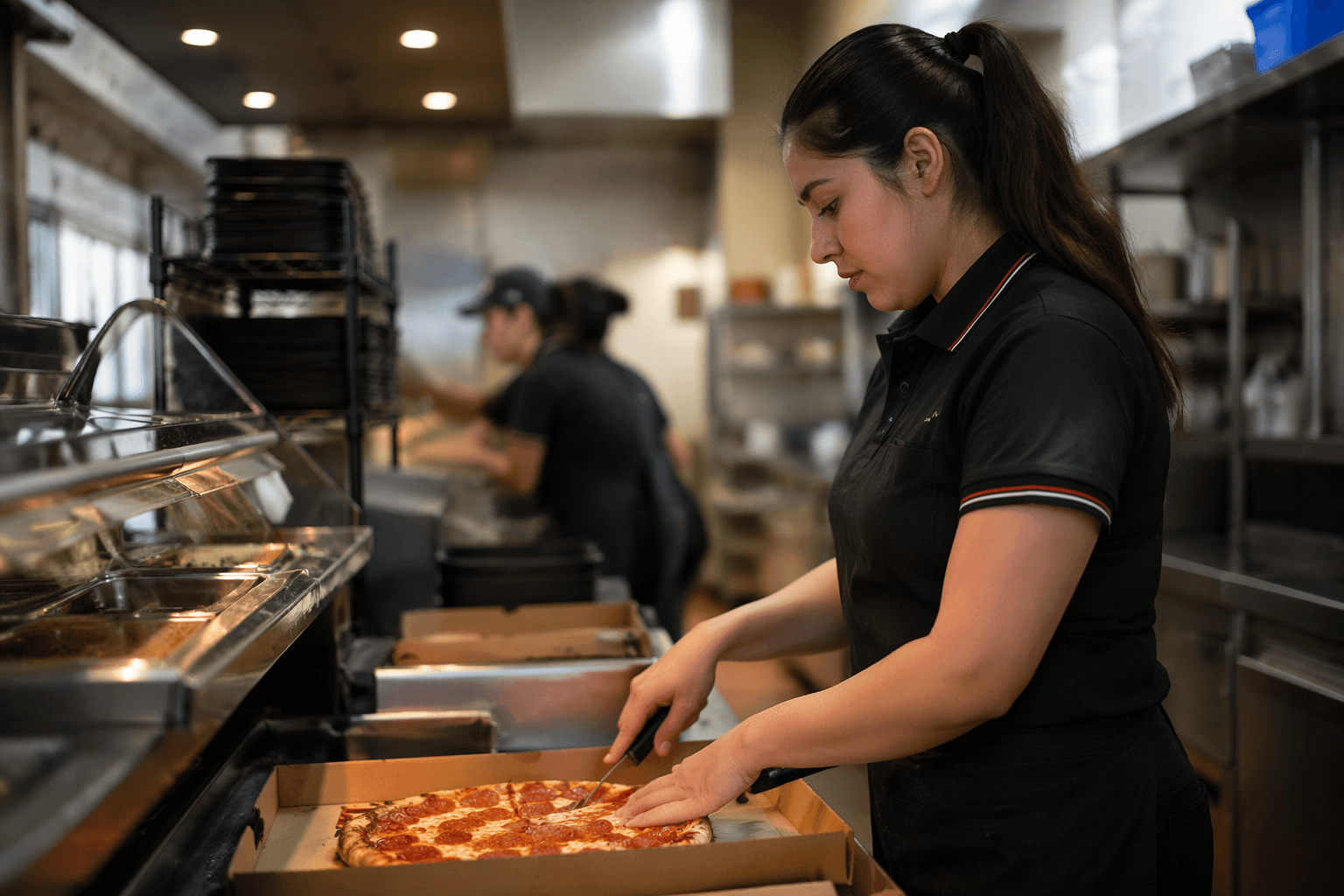
Pizza chains target military bases and other captive-dining venues
Pizza chains are chasing traffic behind gates and inside campuses. For Pizza Hut workers, the real test is whether captive sites change labor, delivery and volume enough to matter.
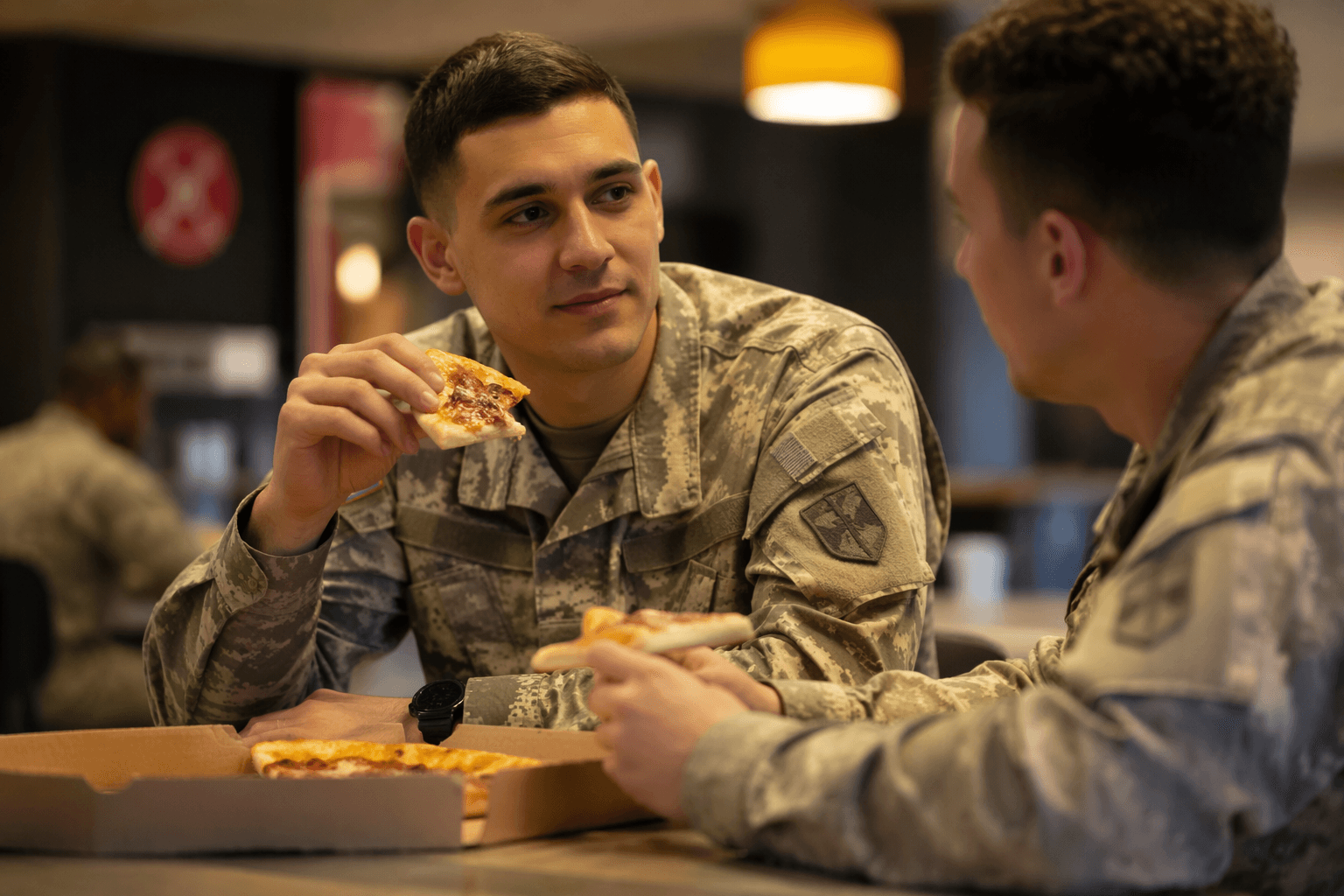
FAT Brands Inc. opened Round Table Pizza’s first military-base unit at Fort Bliss on June 23, putting the chain in a place where the customer base is already on site. The meals are predictable, repeat visits are built in, and operators can trade some marketing spend for steadier volume.
Why captive-dining sites keep showing up
The unit is open Sunday through Thursday from 10 a.m. to 11 p.m. and Friday through Saturday from 10 a.m. to midnight, which gives a good sense of how these stores are built around installation rhythms rather than a standard shopping-center rush.
Round Table Pizza president David Pear called the Fort Bliss opening “an exciting new development” as the brand expands into non-traditional locations.
What Pizza Hut has already bet on
Pizza Hut has been moving in this direction for years. Its non-traditional licensing program explicitly targets “airports to campuses and everywhere in between,” with airports, concert venues, convenience stores, grocery stores, hospitals, hotels, military posts, movie theatres, sporting events, stadiums, travel plazas and campuses or universities all named as target venues.
Pizza Hut has more than 6,000 U.S. locations, and Yum! Brands says the chain has more than 19,000 restaurants in 108 countries. The scale suggests that the company is not only chasing traditional strip-mall units, but also looking for smaller, highly efficient boxes that can survive on repeat traffic and off-premises orders.
Pizza Hut offers delivery and takeout ordering options and has Hut Lane drive-thru locations, which reinforces how much the business has shifted away from a full dine-in model. Roughly 90 percent of Pizza Hut’s business is off-premises and close to 90 percent of new Pizza Hut builds are in the “delco” category, meaning delivery and carryout first.
How a base location works differently from a normal Pizza Hut
A military-base store is not just another franchise unit with a different ZIP code. Security access, installation hours and delivery restrictions can reshape the whole daypart mix, from when drivers can get in and out to when kitchen crews see the biggest rushes. On a normal street corner, demand is driven by visibility, residential traffic and the surrounding delivery zone. On base, demand is tied to gate procedures, work shifts, training schedules and the daily movement of soldiers, families and civilian employees.
Fort Bliss is a strong example of that captive market. Texas Comptroller of Public Accounts data show the installation had 41,220 direct employees in 2023, including 28,784 active-duty military personnel. The same data show more than 80,000 military retirees access Fort Bliss facilities and resources, which adds another layer of repeat traffic beyond the active-duty workforce.
MilitaryINSTALLATIONS calls Fort Bliss a Strategic Deployment Platform that enables rapid deployment and redeployment. It was established in 1848 and is one of the Army’s largest installations.
What it means for drivers, crew and managers
For drivers, the attraction of a base store is volume that can be easier to predict, but the tradeoff is access. Delivery inside or around an installation can mean extra checks, tighter timing and more friction than a normal suburban run. That can reduce the chaos of the open road, but it can also slow turns and make punctuality more important than ever.
For kitchen crews and shift leads, the labor picture changes too. A base store may lean harder on lunch, shift change and late-afternoon traffic than on a conventional dinner rush. That can influence how many people are on the line, when prep gets done, and which workers are scheduled for the hours that matter most. If the customer mix includes active-duty personnel, civilian employees, families and retirees, then managers need staffing plans that can flex with base rhythms instead of a standard Friday-night wave.
There is also a hiring angle. Base-adjacent units can draw from military families, veterans, spouses and retirees in a way that a standard neighborhood store often cannot. That does not eliminate turnover or labor pressure, but it can broaden the pool for operators who need people familiar with the installation and its rules.
This article was produced by Prism’s automated news system from verified source data, official records, and press releases, then run through automated quality and moderation checks before publishing. The system is built and supervised by the people who set the standards it runs under. Read our full AI policy.
Did this article answer your question?