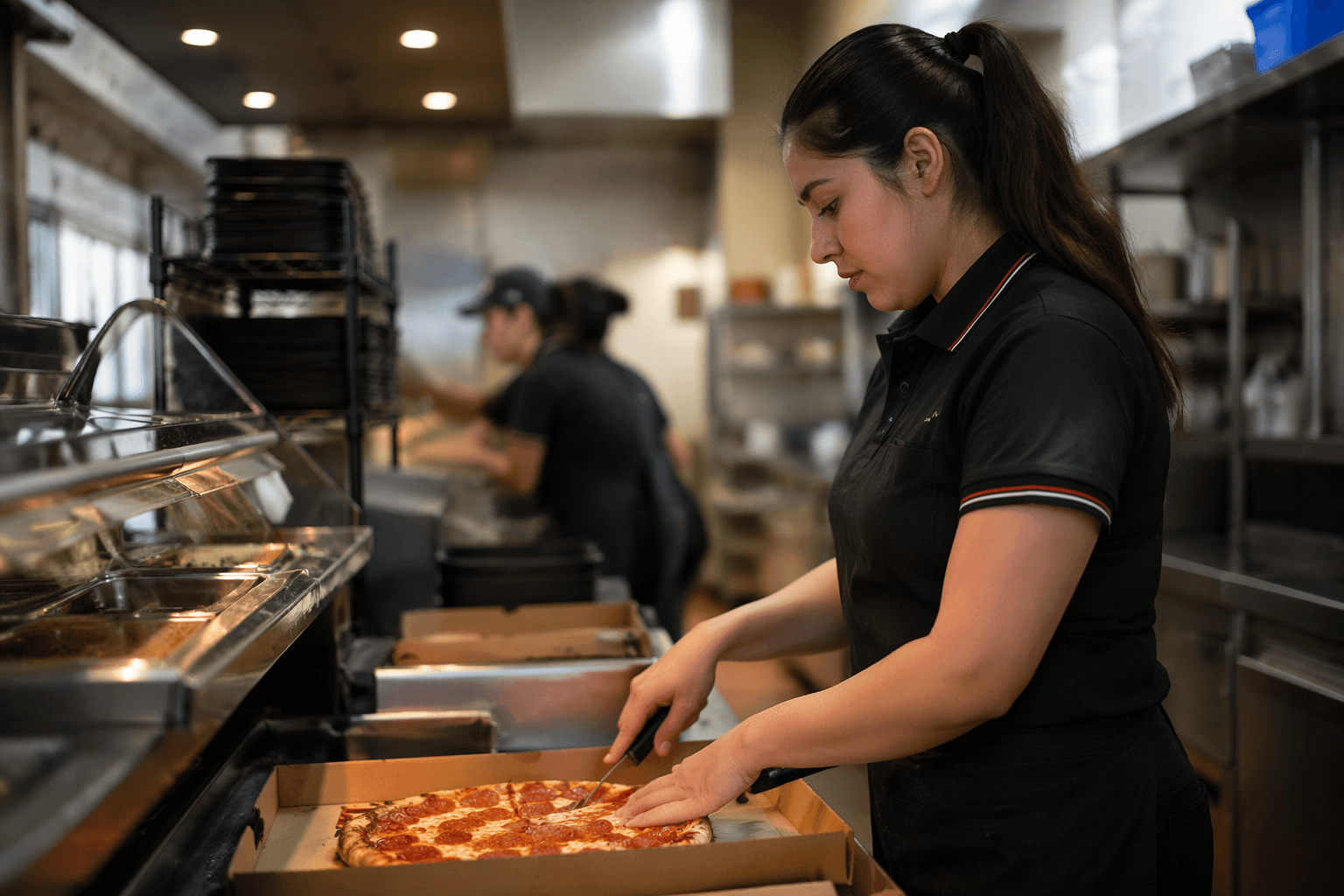
Pizza Hut can strengthen shifts with structured manager training
Strong manager training changes a Pizza Hut shift where it matters most: faster deployment, better coaching, cleaner recovery, and fewer costly mistakes.
What changes when the manager is trained for the shift
A strong Pizza Hut shift does not begin with a pep talk. It begins with a manager who knows where to place people, how to clear bottlenecks, and how to keep the line steady when delivery orders pile up.
That is why structured manager training matters more than a vague sense of readiness. Toast’s training framework treats restaurant management as a repeatable skill set, not a personality trait, and that mindset fits Pizza Hut’s reality: the people in charge have to keep the whole operation moving, not just watch over it.
The work is operational before it is managerial
Pizza Hut already trains that way in practice. The company says new franchisees and key operators must complete an 8- to 12-week operations program in a certified training restaurant in Plano, Texas. That tells you something important about the brand’s expectations: management is not supposed to be improvised on the fly.
The company’s own language is blunt about the job. Pizza Hut says members of the management team direct the daily operations of an entire restaurant and use their know-how to build a great team and create a one-of-a-kind customer experience. In other words, the manager is not a back-office supervisor. The manager is the person who decides whether the shift feels organized or frayed.
The first 30 days should be about four skills
If the goal is to make tonight’s shift better, the training plan has to be specific. The first month should focus on four skills that have the biggest effect on a Pizza Hut store’s daily culture and performance: deployment, coaching, speed of service, and recovery when orders go wrong.
That means teaching a new manager how to read the room in real time. Who needs to be on make line, who can handle drivers, where prep is likely to break down, and when labor needs to tighten before the rush all matter more than generic leadership language.
Week 1: learn deployment before you learn control
A new manager should first learn how the shift actually runs, not just how the schedule looks on paper. That includes prep timing, station coverage, delivery flow, and the handoffs between kitchen crew and drivers. At Pizza Hut, deployment is the difference between a line that absorbs a rush and a line that collapses the moment tickets stack up.
Good deployment also protects morale. When people are placed where they can succeed, the team spends less time fixing obvious mistakes and more time serving guests, which is exactly what a restaurant with delivery pressure needs.
Week 2: coach in the moment, not after the shift
Pizza Hut’s job postings make it clear that managers are expected to actively participate in training team members, provide feedback, and keep standards on track. That means the best coaching happens during live service, when someone is about to miss a step or has already started drifting from standard.
A manager who coaches well does not just correct errors. They turn them into habits. That might mean showing a new crew member how to build accuracy into the order flow, reminding a driver how to handle a handoff cleanly, or resetting the team after a complaint so the next guest gets a better experience.
Week 3: protect speed without sacrificing quality
Speed of service is where weak training shows up quickly. Pizza Hut’s current shift-manager postings stress food safety, quality, order accuracy, inventory, and labor management all at once, because fast service that creates remakes or waste is not a win.
This is where structured training pays off. A manager who knows how to balance labor with demand can keep the store moving without burning out the crew or cutting corners on quality. That is especially important on nights when a delivery wave lands at the same time as a weekend dine-in rush.
Week 4: recover cleanly when the order goes wrong
No restaurant gets through every night without a miss. What separates a calm store from a chaotic one is how quickly the manager can recover, fix the problem, and get the team back on track.
Recovery at Pizza Hut should be taught as a routine, not a panic response. A manager needs to resolve complaints, protect accuracy, keep food safety and quality intact, and make sure the team understands what changed so the same mistake does not repeat on the next ticket.
Labor, inventory, and cash control are part of the shift, not side tasks
The smartest training programs do not treat labor and inventory as separate from guest service. Pizza Hut’s shift-manager role includes managing labor, maintaining inventory, and supporting profit and loss management through cash control and security procedures. Those tasks shape the pace of the shift just as much as the oven or the make table does.
When labor is managed poorly, the store either runs thin and slows down or runs heavy and bleeds money. When inventory is off, the team loses time scrambling for product. When cash control is sloppy, the night ends with avoidable risk. Training should make those connections obvious from day one.
Why the scale makes this worth getting right
Pizza Hut’s footprint makes consistency a business issue, not just a local one. Yum! Brands says the brand was founded in 1958 in Wichita, Kansas, and now operates more than 19,000 restaurants in 108 countries. In the United States, Pizza Hut says it has over 6,700 open locations, and its store locator describes 6,000-plus U.S. restaurants.
That scale means a weak training model multiplies mistakes, while a strong one multiplies good habits. Yum! also said in its 2024 annual report that it surpassed 61,000 units globally and generated more than $30 billion in digital sales, which only raises the stakes for stores that need to execute cleanly under pressure.
The culture payoff is real, not cosmetic
Pizza Hut’s careers page says every restaurant employee plays an important part in delivering a great guest experience. That may sound simple, but it matters: a trained manager is the person who turns that idea into a working shift, where people feel seen, standards stay steady, and the store does not fall apart when the rush hits.
The real value of structured manager training is not that it creates a nicer slogan. It gives Pizza Hut stores a practical way to protect service, reduce chaos, and build a team that can handle the night without losing control.
This article was produced by Prism’s automated news system from verified source data, official records, and press releases, then run through automated quality and moderation checks before publishing. The system is built and supervised by the people who set the standards it runs under. Read our full AI policy.
Did this article answer your question?