Pizza Hut can win with fewer, simpler limited-time offers
Pizza Hut needs fewer, cleaner LTOs that raise checks without jamming the line. In a 5% sales slump, every promo has to earn its keep.
Pizza Hut does not need more limited-time offers. It needs better ones.
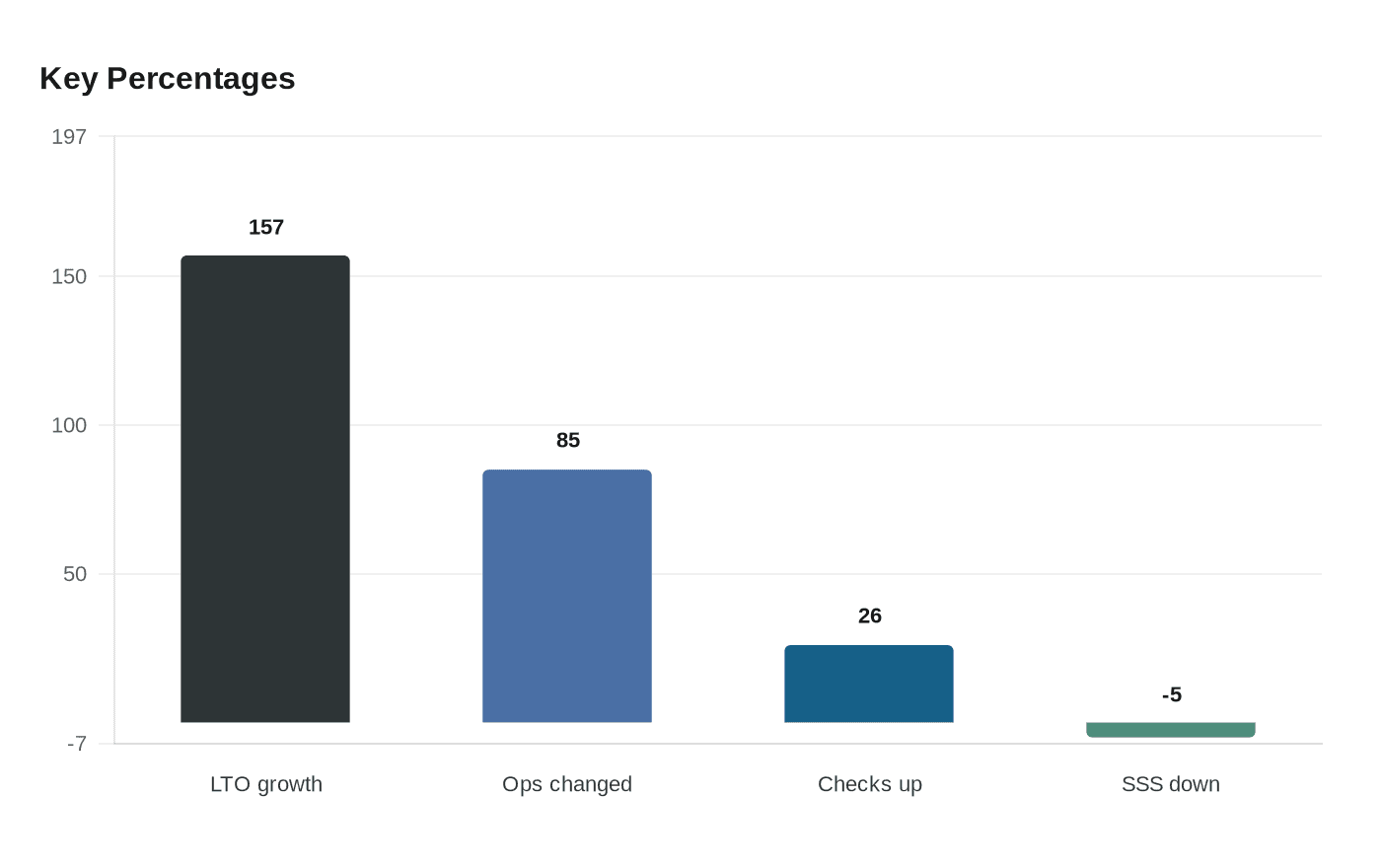
The LTO boom has made novelty cheap and execution expensive. Technomic data from the National Restaurant Association Show shows limited-time launches jumped 157% since 2019, from 16,187 new items to 41,707 in 2025, with 2026 projected to land just under 43,000. At the same time, 85% of operators changed or added menu items in the last year, which means Pizza Hut is competing in a market where everyone is trying to create noise.
That is why Joe Pawlak’s point matters: an LTO should create attention, drive visits, and sometimes prove a product deserves a permanent place on the menu. For Pizza Hut, the winning formula is not a flood of one-off ideas. It is a smaller set of offers that are easy to train, easy to make, and easy to explain to the customer without slowing the make-line or turning a dinner rush into a mess.
The financial pressure makes the menu question more urgent
Pizza Hut is not tweaking promotions from a position of strength. Yum! Brands said Pizza Hut’s U.S. same-store sales fell 5% in the first quarter of 2025, and in October 2025 it announced a formal strategic review of Pizza Hut to maximize shareholder value and help the brand reach its full potential. That turns every launch into part of a turnaround effort, not just a menu refresh.
LTOs can still do real work in that environment. Technomic’s data says checks tied to LTOs are 26% higher than checks without them, which is a significant signal in a price-sensitive market. The promise is straightforward: if the offer lifts traffic and check size, it can help close the gap. The risk is just as clear: if the promotion is too complicated, it can create waste, confusion, and service failures that erase the gain.
Pizza Hut has already shown what works best for its business
The strongest Pizza Hut innovations have tended to be the ones that fit the brand’s core strengths. Original Stuffed Crust debuted in 1995, and Pizza Hut has said that product increased company sales by $300 million in its first year. That history explains why crust-led innovation keeps coming back: it is memorable, easy to market, and still rooted in what the chain already does best.
More recent launches follow the same logic. In June 2025, Pizza Hut introduced Hut Lover’s Pizzas, a limited-time lineup of four premium-topped pizzas priced at $12.99 for a large. In August 2025, it launched Crafted Flatzz, a limited-time menu category positioned as a grown-up, globally scalable platform that rolled out in five U.S. flavors. Both offers were built around a clear value or format story, which matters because customers need to understand the deal fast enough to act on it.
Pizza Hut also used Chicago Tavern-Style Pizza, launched June 18, 2024, to make a bigger statement about its menu. The company described it as its biggest toppings menu overhaul in more than a decade, which shows how the brand can use limited-time or novelty-driven items to refresh interest without abandoning pizza itself. That is the right lane: sharpen the core, do not bury it under gimmicks.
What an operator-friendly LTO looks like on a Pizza Hut line
The best Pizza Hut LTOs should behave like a clean shift, not a stress test. They need to overlap with existing ingredients, move quickly through prep, and survive the trip from make-line to delivery bag without spilling, collapsing, or turning sloppy in the hands of drivers and customers. In a delivery-focused business, that last part matters just as much as the marketing hook.
A useful test is simple:
- Does it reuse sauce, cheese, crusts, or toppings already in the building?
- Can kitchen crew be trained on it in one shift, not three?
- Does it survive packaging and transport cleanly enough for delivery and carryout?
- Does it have a clear traffic goal, such as lunch, family dinner, or late-night check growth?
- Can customer-facing staff explain it in a sentence without improvising?
If the answer to those questions is no, the offer may still look good in advertising and still be wrong for the store. Too many moving parts create confusion for crew members, slow the line, and raise the chance of remake errors at the exact moment the store is trying to defend traffic.
The store-level risk is not abstract
This is where the broad LTO trend becomes a very specific Pizza Hut operations story. When a promotion adds unusual builds, extra steps, or a new set of ingredients, the pressure lands first on the people making, boxing, and driving the food. The line gets slower, the handoff gets messier, and the service failure shows up where customers feel it most: late delivery, missing toppings, crushed crust, or an order that looks nothing like the ad.
Pizza Hut’s own recent store design experiments show the company understands that physical flow matters. In December 2024, a prototype in Plano, Texas added pick-up cabinets, self-service kiosks, and a Hut ‘N Go drive-thru menu. That is a signal that the brand is thinking about speed, convenience, and simpler movement through the store. LTOs should match that logic, not fight it.
That also matters in a market shaped by DoorDash, Uber Eats, and local independents fighting for the same order. Pizza Hut does not win by making a driver wait longer for a complicated build, or by asking a crew already under time pressure to learn a promotion that only lasts a few weeks. The chain wins when the offer feels special but still fits the rhythm of a busy kitchen.
The practical lesson for Pizza Hut is discipline, not novelty
Pizza Hut can still use limited-time offers as a traffic lever and a margin lever. It can still use crust, toppings, bundles, and value-priced formats to create excitement against Domino’s, Little Caesars, and neighborhood competitors. But the smartest version of the strategy is fewer promotions, clearer builds, and tighter execution.
That is the real lesson from the current wave of menu churn. Pizza Hut does not need to chase every LTO trend in the market. It needs the ones that are easy to train, easy to make, and easy to deliver, because that is the difference between a promotion that lifts sales and one that just adds another hard shift to the calendar.
This article was produced by Prism’s automated news system from verified source data, official records, and press releases, then run through automated quality and moderation checks before publishing. The system is built and supervised by the people who set the standards it runs under. Read our full AI policy.
Did this article answer your question?