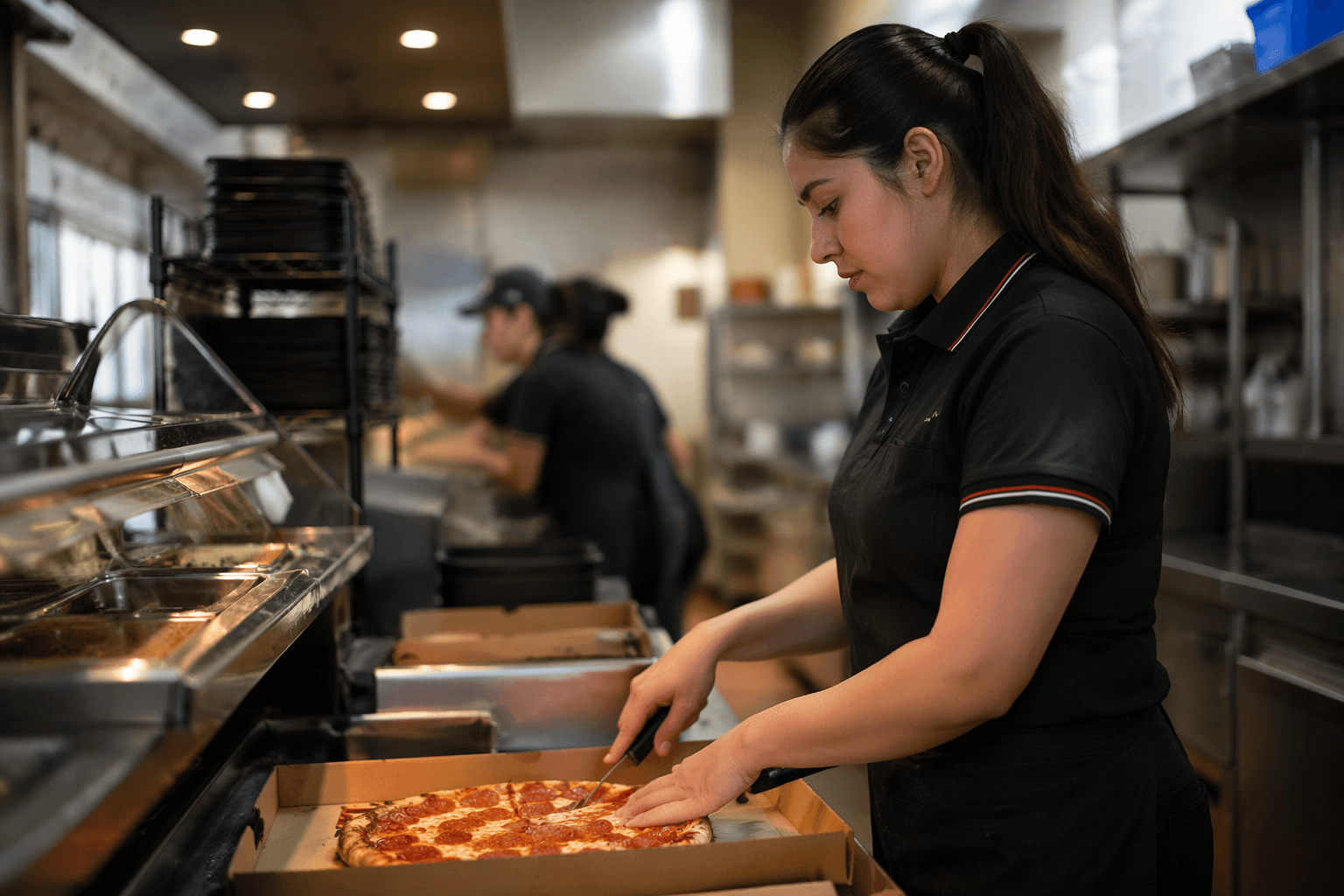
Pizza Hut checkout page clarifies delivery fees and allergen warnings
Pizza Hut’s checkout page gives crews a ready answer on tips and allergens, cutting down on awkward handoff disputes and last-minute food-safety confusion.
Why the checkout page matters on the line
The fastest way a Pizza Hut store gets pulled into a messy customer conversation is when delivery money and food allergies are both left vague. Pizza Hut’s checkout flow cuts through that noise before the order ever reaches the makeline, spelling out that the delivery charge is not a driver tip and that 100 percent of the delivery fee is retained by the restaurant.

That matters in the real world of counter handoffs and delivery drops. Drivers get a cleaner explanation when a customer assumes the fee in the app or on the web is the same as gratuity. Kitchen crews and managers get a better starting point too, because the order screen is already doing part of the explaining before anyone has to improvise at the front counter.
What drivers can say about the delivery fee
Pizza Hut’s checkout page states the point plainly: “THE DELIVERY CHARGE IS NOT A DRIVER TIP.” It also says discounts are not applicable to tax, the delivery charge, or driver tip. That language gives drivers a simple, factual script when a customer thinks the delivery charge should be treated like a tip or reduced by a coupon.
The operational value is easy to see. If a customer asks where the fee goes, the company says 100 percent of the delivery fee is retained by the Pizza Hut restaurant. That separates restaurant revenue from gratuity in a way that can help prevent awkward, repeated disputes at the door. In a market where drivers are already competing with DoorDash, Uber Eats, and other gig platforms for delivery work and customer goodwill, clarity on pay-adjacent charges matters because it shapes whether a handoff ends in confusion or a clean goodbye.
For store teams, the checkout language also reduces the pressure to explain a policy that has already been shown to the customer. A driver can point to the wording without debating it. A manager can use the same language if a complaint escalates. The point is not just transparency, but fewer moments where a worker has to defend a fee they did not create.
How the allergen warning helps the kitchen
The same checkout flow also surfaces a food-safety warning that kitchen crews cannot ignore. Pizza Hut says it prepares and serves products containing milk, eggs, peanuts, tree nuts, wheat, soy, sesame, or other allergens. It also says products are prepared on shared equipment and in the same kitchen, and that it cannot guarantee cross-contact will not occur.
That is the kind of language that helps line workers and managers answer a hard customer question before the order reaches the oven. It sets a clear expectation: Pizza Hut is not promising an allergen-free environment, because the kitchen is shared and cross-contact can happen. For crew members, that makes the online checkout page part of the safety conversation, not just a sales screen.
The company also points customers to its Nutrition Portal for ingredients, full menu nutrition facts, and food allergy and sensitivity information. That matters because the allergen details are not buried in a handbook or reserved for a manager binder. They are built into the ordering flow, where customers are most likely to notice them and where workers are most likely to need them.
What changes at the store level
Pizza Hut says online orders are placed directly with the participating restaurant that accepts the order. That detail is easy to overlook, but it explains why the checkout language has operational weight. Once the order is accepted by the store, the restaurant is the one carrying the practical burden of the promise made on the screen, whether that promise concerns a fee, a discount, or an allergen warning.
Pizza Hut also says product availability, discounts, prices, participation, delivery areas, and charges may vary by location. In a system with franchise and company restaurants spread across the country, that variation is not a side note. It means one store may handle a promotion differently from another, and one delivery area may come with different fee structures or minimums than the next.
For managers, that is a reminder that the online checkout page is more than a digital storefront. It is part of the store’s front-line policy communication. It shapes what customers think they are paying for, what they believe they can discount, and how they interpret the risk around allergens before a single box leaves the building.
Why the numbers matter
Pizza Hut says more than 6,700 U.S. locations are open and ready to serve customers. At that scale, checkout language is not a minor website detail. It is a chainwide script that affects a huge number of handoffs, tip conversations, and allergy disclosures every day.
That scale is what makes the wording so important for the people doing the work. A driver in one market, a cook on a busy Friday night, and a manager handling a call-back complaint are all dealing with the same set of customer expectations, and the checkout page is one of the first places those expectations are set. If the fee is not a tip, the screen says so. If the kitchen uses shared equipment, the screen says that too.
For Pizza Hut workers, the payoff is practical. Fewer awkward confrontations. Clearer explanations at the door. And a better chance that customers understand both what they are paying for and what the kitchen can, and cannot, guarantee.
This article was produced by Prism’s automated news system from verified source data, official records, and press releases, then run through automated quality and moderation checks before publishing. The system is built and supervised by the people who set the standards it runs under. Read our full AI policy.
Did this article answer your question?