Pizza Hut Closures Reflect Wider Restaurant Market Correction, Analysts Say
Pizza Hut’s coming closures are part of a broader shakeout that could mean fewer shifts, tighter delivery zones, and tougher standards at surviving stores.
A market correction is now hitting Pizza Hut store by store
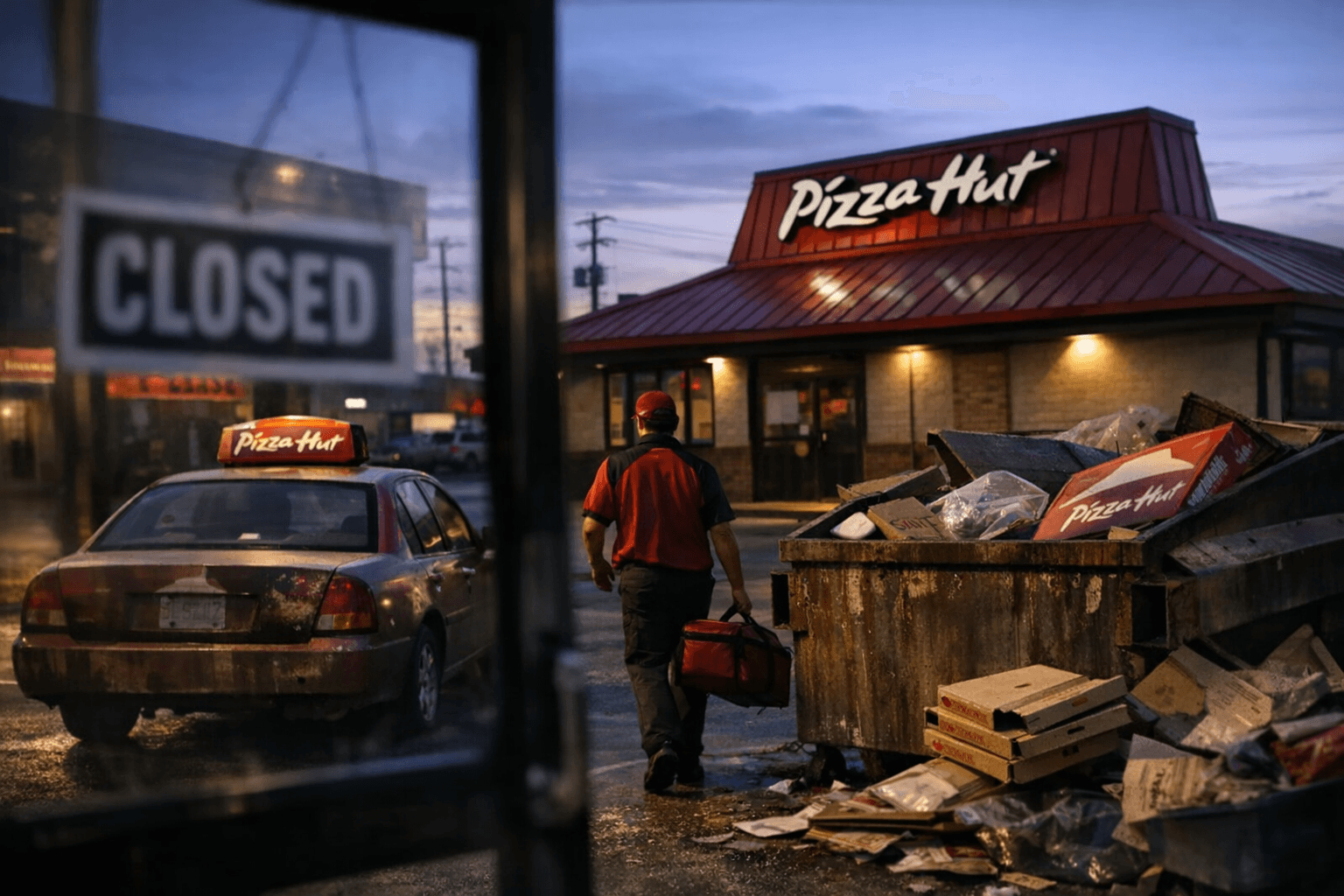
Pizza Hut’s plan to close about 250 U.S. stores in the first half of 2026 is not just a pruning of weak locations. It is a warning sign for the people who clock in, deliver, cook, and manage at the remaining stores, because the next phase of this slowdown is likely to be felt in schedules, staffing, and territory coverage before it shows up in any corporate statement.
The pattern is larger than Pizza Hut alone. Across restaurant chains, operators are dealing with weaker traffic, higher labor costs, food inflation, insurance premiums, rent, and energy bills all at once. In a crowded market, value promotions have become a crutch, not a cure, which means the pressure on margins is still there even when sales are steady enough to keep the lights on.
What the closures mean for workers on the ground
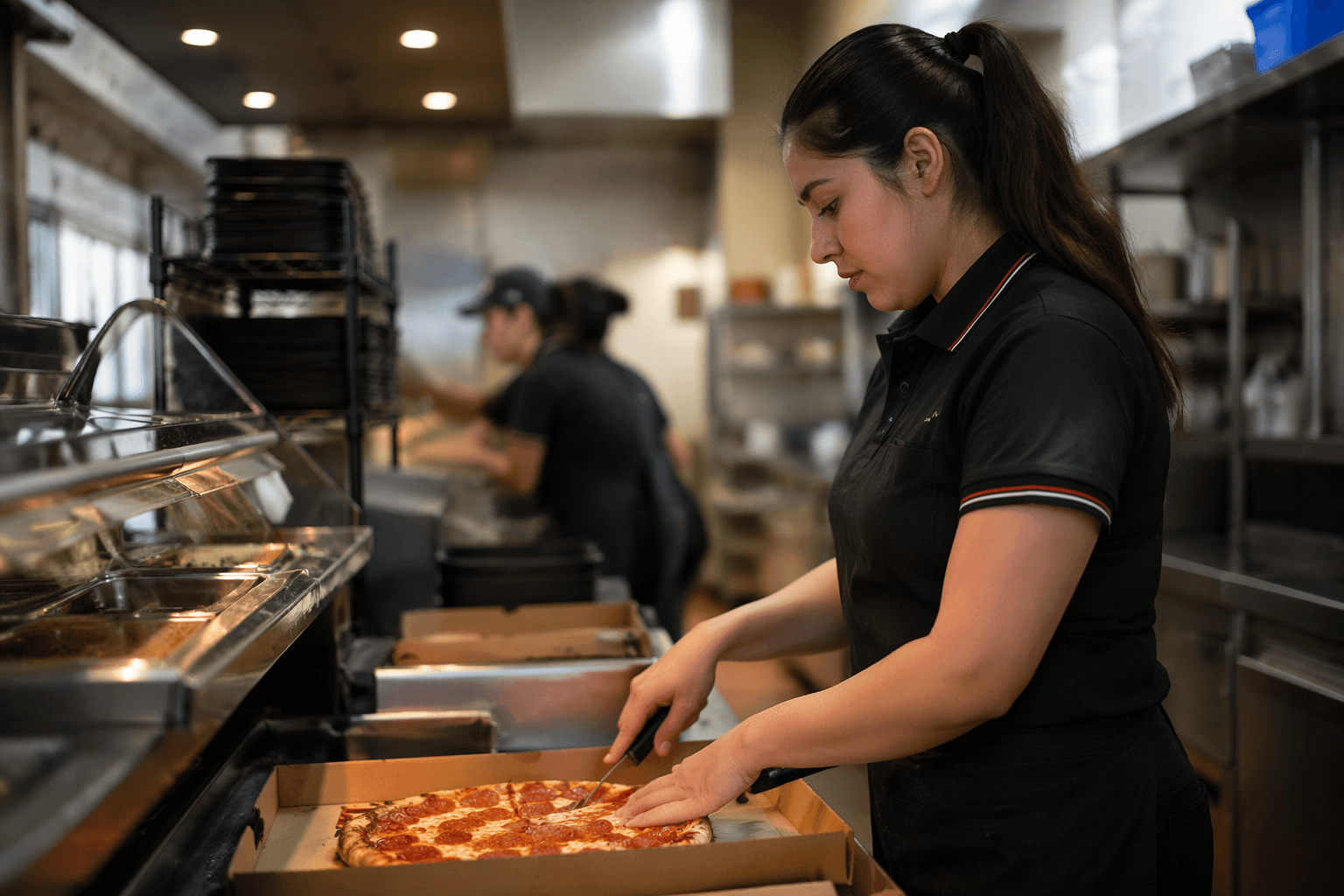
For Pizza Hut teams, closures rarely stay confined to the stores that shut down. Nearby locations often absorb the volume, which can mean more tickets per hour, more pressure on the cut table, and more strain on delivery drivers trying to cover larger zones with the same number of cars and bodies.
That shift also changes how management behaves. Franchisees facing softer sales usually become more cautious about hiring, overtime, and maintenance, and surviving stores can see the effects quickly: fewer extra hours, tighter labor targets, slower equipment repairs, and stronger demands to keep service times down even when the dining room, make line, or delivery board is busy.
There is another practical effect that workers know well. When one store closes, its drivers, cooks, and shift leads do not disappear from the market, they move into the same labor pool. That can increase turnover pressure and make staffing less predictable for the stores that remain open, especially in areas where Pizza Hut is already competing with DoorDash, Uber Eats, independent pizzerias, and cheaper meal alternatives from grocery stores and other chains.
Why Pizza Hut is exposed right now
The timing matters because Pizza Hut has been under strain for a long stretch. Yum! Brands said on November 4, 2025 that it had started a formal review of strategic options for the brand, including the possibility of a sale, a move that signaled how serious the turnaround problem had become. By late 2025, Pizza Hut had posted seven consecutive quarters of U.S. same-store sales declines, including a 6% drop in the third quarter of 2025.
The company’s own numbers show how much ground has been lost. Yum said Pizza Hut’s U.S. system sales fell 7% in 2025, while same-store sales declined 5% for the full year. Yum also said it would close about 250 stores in the first half of 2026, and it wrote off $5 million in franchise incentive assets tied to rationalizing the Pizza Hut estate. That is the language of restructuring, not a one-time cleanup.
The footprint has already been shrinking. Pizza Hut’s worldwide store count fell from 20,225 at the end of 2024 to 19,974 at the end of 2025. In the U.S., the chain had 6,739 locations as of August 1, 2024, with Texas alone accounting for 918 sites. That scale matters because even a modest percentage of closures can ripple through whole regions, changing delivery routes, staffing needs, and local manager expectations overnight.
The competition is not just other pizza shops
Pizza Hut is being squeezed from multiple directions at once. It is fighting Domino’s and Papa Johns, but also non-pizza meal options that steal the same dinner occasion. In the third quarter of 2024, Domino’s posted 3% U.S. same-store sales growth, while Papa Johns fell 6% and Pizza Hut fell 1%, a reminder that execution and value positioning have been separating winners from laggards in a category that looks crowded even on a good day.
By the second quarter of 2025, Pizza Hut’s U.S. same-store sales were down 5%, while Yum reported that visits per location rose only 0.3%, down from 1.9% a year earlier. That slowdown matters for workers because traffic growth is what usually gives a store room to cover rising wages, food costs, and delivery expenses without slashing hours or squeezing labor harder. When traffic softens, every missed sale hurts more.
The broader market makes the problem harder. The U.S. pizza restaurant market had more than 74,000 restaurants in 2024 and was worth just over $50 billion, which means the category is both large and fragmented. In a market that crowded, a weak store is not just losing to the chain next door, it is losing to convenience, price, and habit.
Franchisee bankruptcies show how the pressure reaches local jobs
Pizza Hut’s recent closure cycle also makes more sense when viewed through franchise ownership. EYM Pizza, one of the brand’s large franchisees, filed for Chapter 11 bankruptcy in 2024, and 77 Pizza Hut restaurants were transferred to new owners in April 2025. Earlier reporting had described EYM as one of Pizza Hut’s largest franchisees, with about 140 units.
That kind of transfer is not a neat accounting exercise for hourly workers. A bankruptcy can reset who signs the paychecks, which delivery zones are assigned, how much capital gets spent on maintenance, and how aggressive the new owner is about labor control. Even when a restaurant stays open, a change in ownership can alter the whole feel of the store, from scheduling to equipment upkeep to how much patience managers have for overtime.
For drivers and crew, the lesson is plain: a closure often means the surviving stores get the extra load, while a transfer means the rules of the workplace can change without the location changing at all. In both cases, the people on the floor end up carrying the cost of a decision made far above them.
Which stores are most exposed next
The stores most at risk are the ones that already struggle to cover their costs without heavy discounting or inconsistent staffing. Units with weak traffic, high rent, overlapping delivery zones, and frequent turnover are the easiest to cut when a franchisee or corporate operator tries to stabilize the footprint.
By contrast, stronger operators are using the same correction to do the opposite. They are buying better sites, tightening operations, and improving labor discipline, because the stores that keep service reliable while handling value traffic are the ones most likely to survive. That is the real dividing line in Pizza Hut’s current reset: not whether a store can sell pizzas, but whether it can do so without letting labor, food, and delivery costs outrun the check average.
For workers, that means the next wave of change may arrive as a quieter schedule, a longer delivery run, a delayed repair, or a tougher manager before it ever appears as a closure sign on the door. The chain is not just shrinking, it is being forced to prove which stores still belong in the map.
This article was produced by Prism’s automated news system from verified source data, official records, and press releases, then run through automated quality and moderation checks before publishing. The system is built and supervised by the people who set the standards it runs under. Read our full AI policy.
Did this article answer your question?