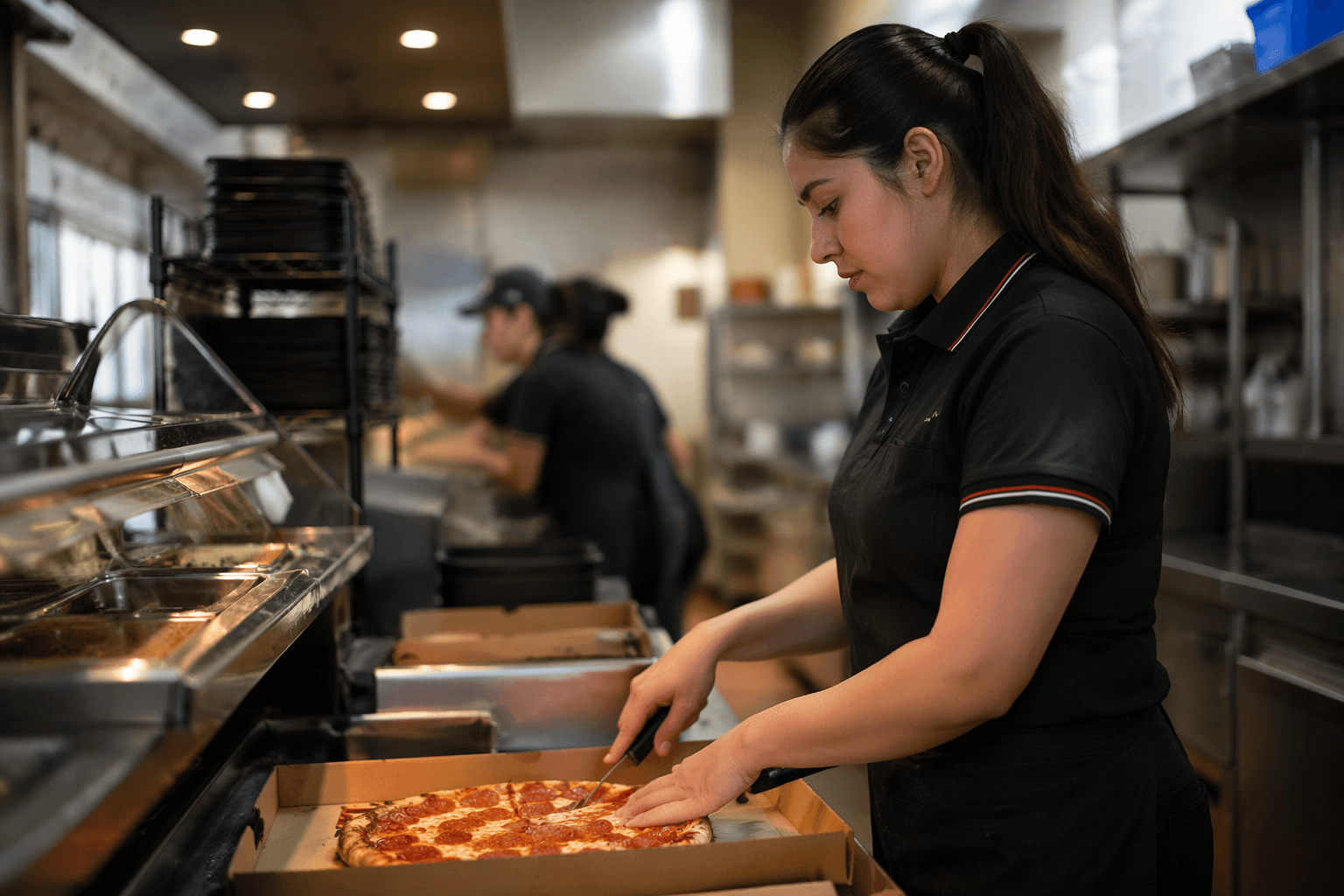
Pizza Hut eyes World Cup watch parties, delivery surge across host cities
Pizza Hut’s biggest World Cup opportunity is not a one-night spike, but weeks of watch parties, delivery surges and group orders that reward early local planning.

World Cup 26 is an operations test, not just a marketing moment
Pizza Hut managers should be thinking about the World Cup like a six-week event calendar, not a sports promo. FIFA World Cup 26 runs from June 11 to July 19, 2026, across the United States, Canada and Mexico, with 16 host cities carrying the heaviest pressure and the biggest upside. On Location is selling FIFA’s official hospitality program as a premium experience with food and beverage included, which is another sign that the tournament will function less like a single game and more like a packaged occasion.
The scale matters for stores because FIFA projects as many as 10 million visitors into host markets, and the average visitor may stay about 12 days. That means the opportunity is not just a few hours around kickoff; it stretches across arrivals, pregame meals, late-night delivery, group hangouts and the repeat orders that follow every match window. For a Pizza Hut, that is a signal to operate like an event venue with a kitchen, not a normal walk-in shop.
Host cities will feel the sharpest lift, but non-host stores cannot tune out
The strongest demand should cluster in host markets, where hotel and restaurant traffic will move around match days instead of spreading evenly across the summer. Oxford Economics says incremental hotel room revenue in U.S. markets could approach $900 million, with June hotel room revenue in host cities rising 7% to 25% and the sharpest spikes around match days. That is the kind of pattern that creates packed lobbies, full dining rooms, heavy delivery demand and far more competition for driver time.
Revenue Management Solutions looked at four prior World Cups and more than 7,000 U.S. restaurant locations, and it found a split that Pizza Hut managers should not ignore. Host-city operators can capture meaningful traffic and sales gains, while non-host markets with high soccer engagement saw restaurant sales decline by 1.4% during prior tournaments. The lesson is simple: stores near host cities, travel corridors, sports bars and high-soccer neighborhoods should plan early, but even faraway stores need a localized plan if they want to benefit instead of watching orders drift elsewhere.
The fan profile also points to a younger, group-heavy audience. RMS says the U.S. soccer fan base has grown 31% in two years to nearly 47 million fans, and 76% of those fans are Millennials or Gen Z. Airbnb says families and groups account for more than half of World Cup trips booked so far, and a significant share of available host-city listings are priced under $500 a night. That is a pretty clear shopping list for Pizza Hut: affordable bundles, shareable meals and delivery that can feed groups before and after matches.
What Pizza Hut can sell when the match becomes the occasion
Pizza Hut already has the right language for this kind of demand. Its Big New Yorker page says “football and pizza go hand-in-hand” and describes the pizza as “made for watch parties,” which is exactly how a store should be framing the tournament. The chain also rolled out Pizza Charcuterie in March 2025 as a customizable board for the “ultimate social gathering,” including a watch party use case, and tied it to former football tight end Robert Gronkowski.
That matters because the World Cup is not only a delivery event. It is also a dine-in event when screens, groups and shared food matter, and it is a catering event when offices, apartments and fan clubs want a low-friction way to feed 6, 10 or 20 people at once. Big Dinner Box deals, BOGO pizza offers and other large-format bundles fit the same pattern: they convert an occasion into a bigger ticket without asking the customer to build the meal from scratch.
For managers, the real question is whether the menu is being sold as items or as an experience. A watch party bundle, a family pack, a carryout deal for a dorm or apartment complex, and a screen-friendly dine-in offer all speak to the same need: make Pizza Hut the easy answer when people decide they want food that travels well and feels social.
The floor plan has to match the match windows
For drivers, the World Cup means more pregame and halftime spikes, which makes dispatch timing, route communication and tip flow more important than usual. When delivery apps like DoorDash and Uber Eats are already fighting for the same short-burst demand, a late handoff or a poorly timed run can push the best orders away from the store and into a competitor’s queue. In a week packed with matches, that can change driver earnings as much as it changes store sales.

For kitchen crews, the pressure lands on the make line. Surges only become revenue if the line can keep pace without letting accuracy slip, because one wrong order during a 40-minute match window is harder to recover from than a mistake on a random Tuesday night. That means prep levels, oven cadence and expo communication all need to be tuned for bursts, not for a smooth dinner rush that may never come.
- schedule more labor around kickoff, halftime and postgame windows
- protect accuracy on delivery and carryout orders when volume jumps
- build bundles that are easy to reorder and easy to split among groups
- coordinate driver timing so orders do not sit while the match starts
- stock for watch parties, not just single-party meals
Managers should be acting now on the basics that usually get missed until the first packed night exposes them:
The warning is bigger than host-city geography
AHLA says more than five million tickets have already been sold, but hotel bookings have not yet fully matched that demand. That gap matters for Pizza Hut because it suggests the loudest demand may not come only from ticket holders, but from local groups, families and watch parties that want something cheap, fast and shareable without paying premium hospitality prices. That is where Pizza Hut has room to win, especially in markets where a good game-day plan can outwork generic chainwide messaging.
The stores that do best will be the ones that treat the World Cup as a local operating problem. Host cities should prepare for delivery surges, group orders and dine-in traffic around every match day; non-host stores should not assume the tournament skips them, because soccer-heavy neighborhoods can still swing sharply one way or the other. For Pizza Hut, the tournament is less about fandom than execution, and the restaurants that plan like event venues will be the ones that turn 90-minute matches into weeks of real sales.
This article was produced by Prism’s automated news system from verified source data, official records, and press releases, then run through automated quality and moderation checks before publishing. The system is built and supervised by the people who set the standards it runs under. Read our full AI policy.
Did this article answer your question?