Pizza Hut faces uneven restaurant market as casual dining rebounds
Pizza Hut is being squeezed by a shifting restaurant market, with casual dining rebounding while the brand’s own sales and profits stay under pressure.
The market around Pizza Hut is moving, but not in a way that makes life easier inside the store. Restaurant Dive’s tracker of 23 major chains shows more evidence of a casual-dining rebound in the first quarter of 2026, while fast-casual sales slowed and quick-service results stayed mixed. For Pizza Hut teams, that means the competition is not only the pizza place down the street. It is every restaurant trying to win a cautious customer who still expects speed, value, and a meal that feels worth the money.
What the scoreboard says about the category
The clearest takeaway from the tracker is that the restaurant market is still uneven. Casual dining is improving because customers appear more willing to pay for an experience they perceive as better value, while fast-casual brands are losing some momentum and QSR operators are seeing mixed demand. That mix matters for Pizza Hut because the brand sits in a value-conscious, convenience-driven lane where every visit is compared against not just other pizza chains, but also delivery-heavy restaurants, cheaper takeout options, and the broader habit of spending carefully.
This is the kind of market where one store can feel busy while another feels soft, and both can be true at the same time. If casual dining is regaining ground, that suggests some guests are willing to spend a little more when they think the payoff is real. Pizza Hut stores have to create that feeling quickly, or customers will trade down, delay the order, or shift to a competitor that looks faster, simpler, or better priced.
Yum’s numbers show where Pizza Hut stands
Yum! Brands reported first-quarter 2026 results on April 29, 2026, and the picture was strong overall but far less encouraging for Pizza Hut. Yum said system sales grew 6% year over year excluding foreign exchange, digital sales mix reached a record 63%, and digital system sales approached $11 billion. Taco Bell posted 8% same-store sales growth and KFC showed 7% unit growth, which makes Pizza Hut’s weakness stand out even more sharply inside the portfolio.
Reporting on those results described Pizza Hut as the weakest part of Yum’s lineup. In the United States, same-store sales fell 4% in the quarter, while global same-store sales were flat. Operating profit also fell 14%, a sign that the strain is not just about customer counts but about how much profit the business is able to pull from each order and each store.
For workers, that kind of spread across the portfolio matters. Strong digital growth at Yum means more of the business is being shaped by app orders, online offers, and delivery or carryout convenience. That can bring volume, but it also raises the bar on accuracy, speed, and order flow. If Pizza Hut does not keep up with those expectations, the best marketing in the world will not stop guests from drifting to another chain.
What this means on the ground in stores
The market pressure shows up in the same things crews deal with every shift: promo intensity, ticket times, and whether a customer walks out feeling the meal matched the price. When competitors are outperforming, stores tend to lean harder on deals and value messages, which can bring more traffic but also more operational strain. Drivers feel it when the make line gets backed up and carryout timing slips. Kitchen crews feel it when a rush hits and every extra remake or missing item compounds the delay.
Managers are being pushed to think beyond raw traffic. The real question is whether the store is converting visits into repeat business, controlling ticket times, and giving customers enough reason to come back. In a market this uneven, a store that looks busy on the surface can still be leaking value if food is late, items are wrong, or the handoff is messy.
- hot food that actually arrives hot
- correct orders without remakes
- clean handoffs at the counter or door
- polite, efficient service when guests are frustrated
- a delivery flow that keeps drivers moving instead of waiting
That is why the basics matter more than ever:
Those routines can sound ordinary, but in a weak market they are the competitive edge. The store that executes them well can outperform bigger strategic problems, at least for a shift, a week, or a month.
Why the strategic review adds pressure
Pizza Hut is also operating under the weight of Yum’s formal review of strategic options for the brand, announced on Nov. 4, 2025. Yum said it retained Goldman Sachs and Barclays as financial advisers and did not set a deadline or definitive timetable for the review. The company said the goal was to maximize value and help Pizza Hut reach its full potential, but for employees the message is simpler: the brand is under a hard look because performance has not matched expectations.
That review is part of the larger backdrop that workers can feel even if they never see the paperwork. When leadership begins weighing strategic options, every store metric takes on more importance. Sales trends, labor discipline, service consistency, and franchise performance are no longer isolated operating issues. They become part of the case for what Pizza Hut should be, where it should invest, and how aggressively it needs to change.
Store closures are part of the same reset
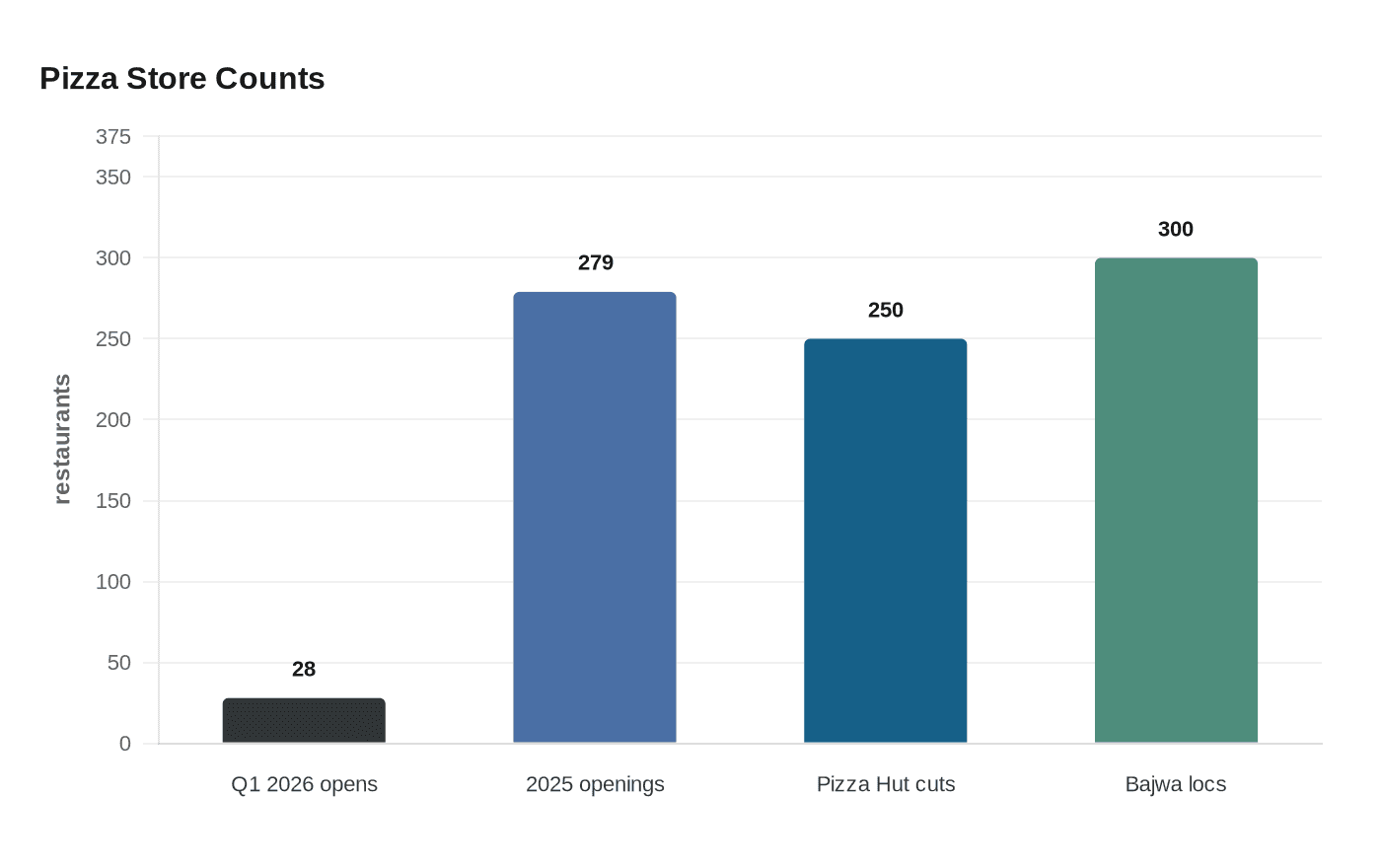
The pressure is not only financial; it is physical. Reporting in early 2026 said about 250 Pizza Hut stores would be closed as part of the Hut Forward strategy. One account noted that the 250 stores represented a very small portion of Pizza Hut’s roughly 20,000-unit global estate, but the closures still matter because they signal a push for footprint efficiency and tighter operations.
For restaurant employees, closures usually mean the company is sorting stores by productivity, market strength, and long-term viability. A location can be busy and still not clear the bar if labor costs, ticket times, or sales mix are weak. That is why the turnaround is being measured not just by top-line sales, but by whether the chain can run a leaner, cleaner system that produces profit as well as traffic.
What Pizza Hut workers should watch next
The next phase of pressure is likely to come from the same places the current pressure is already coming from: value offers, speed, and operational consistency. Casual dining’s rebound shows that customers will spend when the experience feels worth it. Mixed QSR results show that execution still separates winners from strugglers. For Pizza Hut, that makes every store a test of whether the brand can win on the basics while the broader market keeps shifting.
That is the competitive reality in front of drivers, kitchen crews, and managers right now. Pizza Hut is not just fighting other pizza chains. It is fighting a cautious consumer, a digital-first ordering environment, and a restaurant market that keeps rewarding the operators who make the simplest promises come true.
This article was produced by Prism’s automated news system from verified source data, official records, and press releases, then run through automated quality and moderation checks before publishing. The system is built and supervised by the people who set the standards it runs under. Read our full AI policy.
Know something we missed? Have a correction or additional information?
Submit a Tip