Yum signals Pizza Hut managers need leadership, not just capital
What does Yum actually want in a future Pizza Hut owner? Not just capital, but leadership that can run a crew, hold standards, and still make the numbers work.
What Yum actually wants in a future Pizza Hut owner?
The short answer is more demanding than a lot of ambitious managers want to hear: Yum is not just shopping for money. Its franchise playbook points to “3C” partners, meaning people who are well capitalized, capable, and committed, and it says those partners have to deliver an unmatched customer and team member experience along with consistent, compelling paybacks.
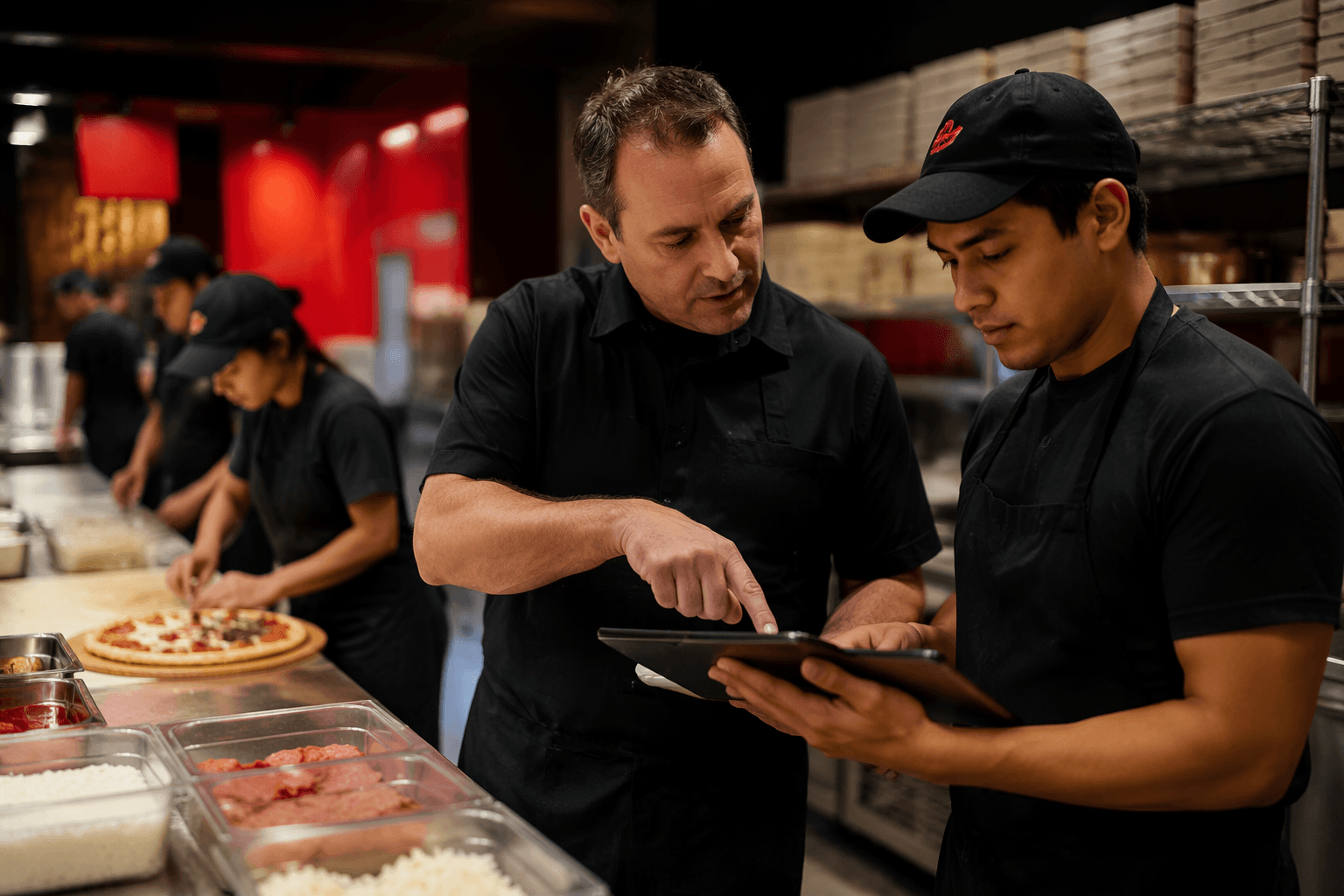
That is the reality check for anyone who has spent years keeping a Pizza Hut unit moving. Strong store operators already know how to manage labor, food quality, service speed, and the daily scramble of a shift. But Yum’s framing says the jump from running a store to owning or developing one requires a broader skill set: capital access, operating discipline, people leadership, and the ability to build something scalable, not just survive a Friday night rush.
The 3C test is about more than a balance sheet
Yum’s language makes clear that money alone does not qualify a future franchise partner. The company is looking for operators who can run world-class restaurants, which means they need to be able to lead people, not simply supervise a P&L. That matters in Pizza Hut because the brand’s performance rises or falls on how well local leadership handles hiring, training, scheduling, and accountability on the floor.
For hourly workers, that distinction is not abstract. A franchisee who understands team development is more likely to keep schedules steadier, coach managers better, and maintain cleaner stores with fewer last-minute cuts. A weak owner can do the opposite, even if the store has decent sales on paper.
Why scale raises the bar for local operators
Yum says it operates in more than 155 countries and territories, with about 1,500 franchisees and more than 63,000 restaurants across KFC, Taco Bell, Pizza Hut, and Habit Burger & Grill. The company says its brands and franchisees open a new restaurant nearly every two hours globally. That kind of scale tells you something important about how Yum thinks: if a model works, the company wants to replicate it quickly and widely.
Pizza Hut sits inside that machine as the world’s second-largest pizza company, with more than 19,000 restaurants in 108 countries. For a manager who wants to move into ownership, that global footprint raises the standard. Yum is not asking whether you can run one store in isolation. It is asking whether you can fit into a system built to spread operating models across a huge network without losing consistency.
What this means for the people inside the store
For drivers, cooks, shift leads, and GM trainees, Yum’s ownership philosophy shows why local leadership matters so much. The same brand can feel sharply different depending on whether the franchisee treats staffing, training, and team development as core operating work or as an afterthought. That can shape everything from how many drivers are on the road to how much chaos cooks face during peak delivery hours.
Pizza Hut has to compete in a delivery-heavy market where customers expect speed, reliability, and easy ordering. In practice, that puts more pressure on the franchisee to keep the house in order: staffing has to match demand, handoffs have to be tight, and the store has to avoid the kind of internal breakdowns that push customers toward other channels. A store that is well led can absorb that pressure; a poorly led one lets it spill onto the crew.
The real estate side shows where growth is headed
Yum’s development materials also make one thing clear: it is not looking at Pizza Hut growth through a single format. Its real-estate brochure points to freestanding locations with drive-thru, inline and endcap sites with drive-thru, conversions, and acquisition strategy. That means future expansion is about fit as much as footprint.
The company’s field real-estate structure reinforces that point. Yum says its field real-estate experts include company real-estate managers and franchise development directors, and that in many markets it is developing both company and franchise restaurants. For managers who imagine franchising as a pure ownership leap, this is a reminder that site selection, format choice, and local development expertise are part of the job too.
Pizza Hut’s origin story still shapes the brand’s expectations
The franchise model is not some new corporate invention layered onto Pizza Hut later. The brand began in 1958 in Wichita, Kansas, when brothers Dan and Frank Carney borrowed $600 from their mother to start the business. Within a year, the first franchise unit opened. That early move into franchising helps explain why the parent company still talks so much about partner quality, operating capability, and the ability to scale a concept beyond one store.
The history also puts today’s standards in perspective. A business that started with borrowed money and a single unit eventually became a global system with more than 19,000 Pizza Hut restaurants. The message to current managers is blunt: the company that grew this way still wants operators who can think beyond the four walls of one store.
Where a strong Pizza Hut manager can still fall short
A good store manager knows the rhythm of the business. A future franchise owner has to know the business at a different level. That means capital readiness, development judgment, team-building skill, and enough operational discipline to satisfy a brand that says it wants consistent paybacks and an unmatched experience for customers and team members.
That gap is where many promising managers stall. They may know how to run labor tight and keep product moving, but not how to raise capital, evaluate a site, or manage growth across multiple units. Yum’s franchising page is useful because it shows that the company values those broader traits from the start, long before anyone signs a lease or opens a new store.
For Pizza Hut workers, the takeaway is simple: ownership quality shapes the job. For managers with bigger ambitions, Yum is laying out the terms clearly. Leadership comes first, capital is only part of the price of admission, and the brand will keep rewarding operators who can turn a single store into something durable, scalable, and worth copying.
This article was produced by Prism’s automated news system from verified source data, official records, and press releases, then run through automated quality and moderation checks before publishing. The system is built and supervised by the people who set the standards it runs under. Read our full AI policy.
Know something we missed? Have a correction or additional information?
Submit a Tip