Pizza Hut Farmington job shows path to store leadership
Pizza Hut’s Farmington posting maps a clear climb from crew work to store leadership, with readiness checks, training, and promotion built into the path.
The Farmington, Maine Manager-in-Training posting is more than another opening on Pizza Hut's careers site. It shows how a store can turn hourly experience into a route toward leadership, with the same location at 564 Wilton Road also advertising Assistant Restaurant Manager, Shift Leader, Production, and Server roles.
For crew members, that matters because the ladder is visible. You can see the company looking for people who can move from the line and the counter into the kinds of decisions that keep a dining room, make-line, and delivery operation moving when the rush hits.
A ladder built into the store
At 564 Wilton Road, Pizza Hut is not hiring for a single role in isolation. The mix of Manager-in-Training, Assistant Restaurant Manager, Shift Leader, Production, and Server postings suggests a store staffing across multiple rungs, from hourly work into management.
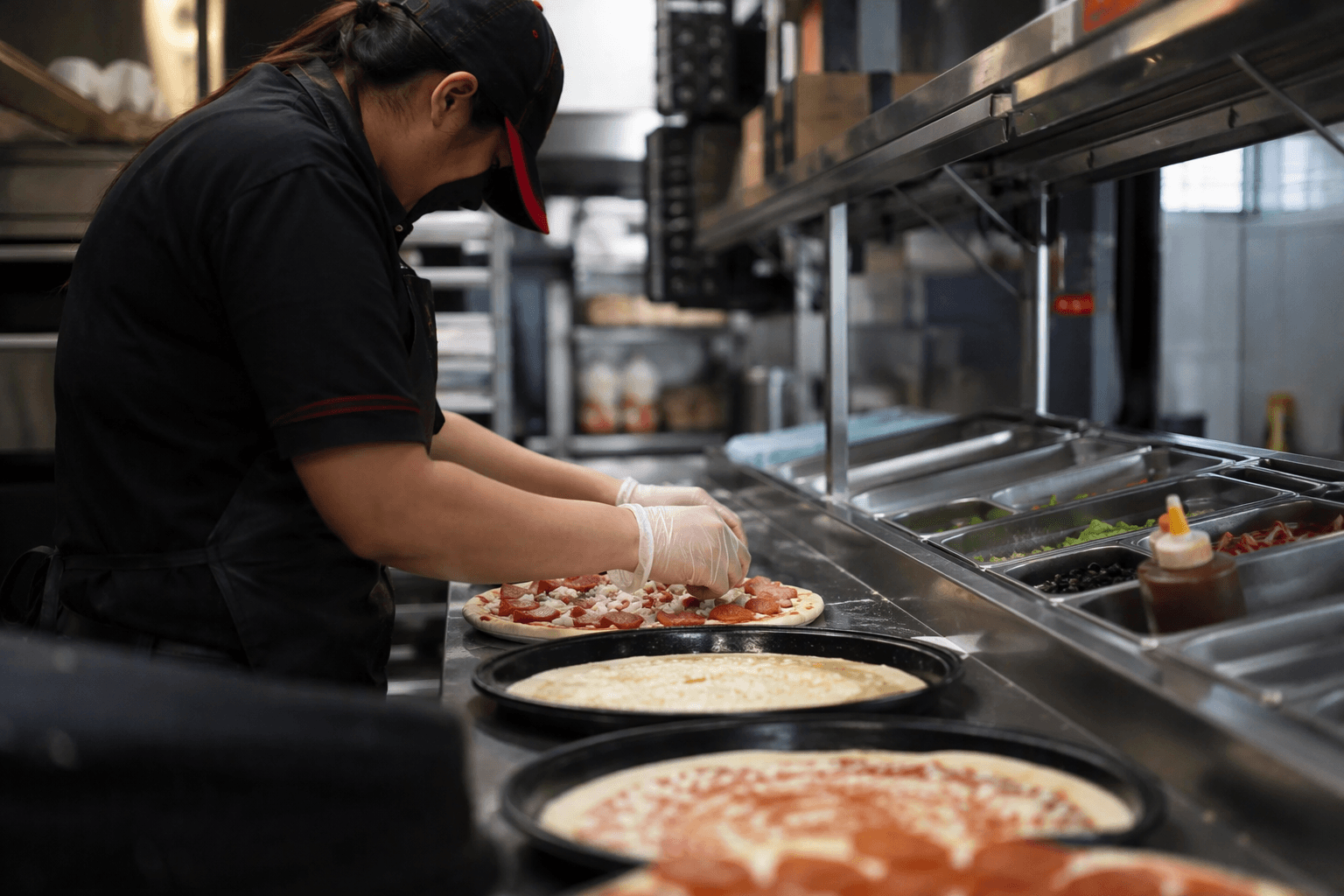
That structure gives workers a practical roadmap. Production and Server roles put someone on the floor learning speed, accuracy, and guest flow. Shift Leader is the next visible jump, and the Manager-in-Training title signals a bridge between running a shift and taking on broader store responsibility.
What Pizza Hut appears to reward
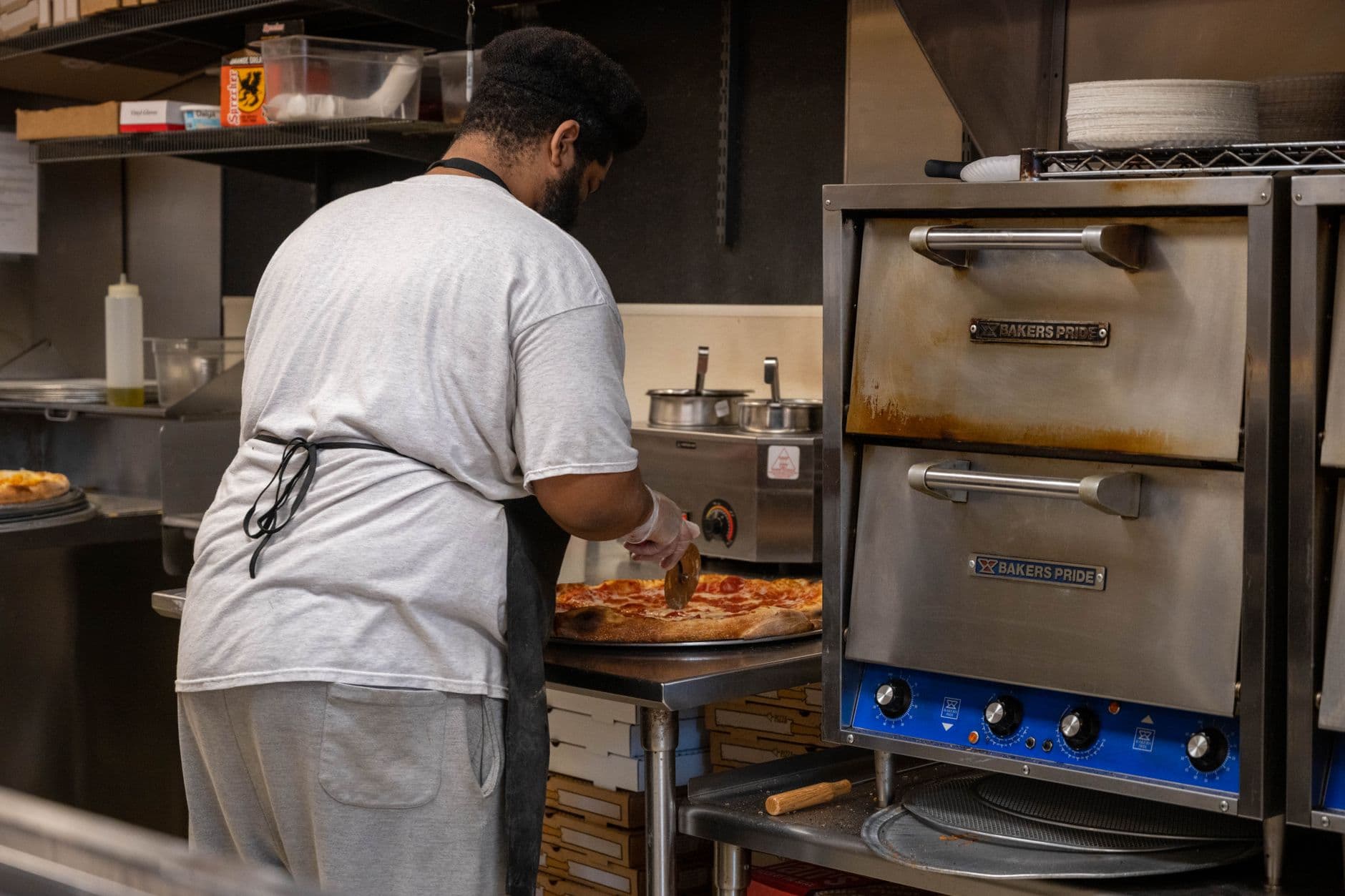
The manager track is not a desk job in disguise. A role like this points to the day-to-day skills Pizza Hut needs from future supervisors: closing the store cleanly, handling customer complaints, managing labor, keeping food safety standards in place, and keeping the team moving during rushes.
That makes the Farmington posting useful as a checklist. If you are trying to move up, the company is looking for proof that you can do more than work your own station.
- You can keep service steady when orders stack up.
- You can coach newer crew members instead of only covering your own tasks.
- You can enforce standards without slowing the line.
- You can make judgment calls when the shift goes sideways.
- You can take ownership of the end-of-night close and the next-day handoff.
The most important signal is consistency. Pizza Hut does not need every good worker to stay an hourly worker forever. It needs people who can prove they are ready to absorb more responsibility without losing pace or accuracy.

How the internal promotion path works
Pizza Hut’s training roadmap on a Yum-hosted site lays out a straightforward progression: identify a team member, review readiness, complete training, and then promote that person to Shift Leader. That is the clearest evidence in the Farmington material that advancement is expected to be structured, not improvised.
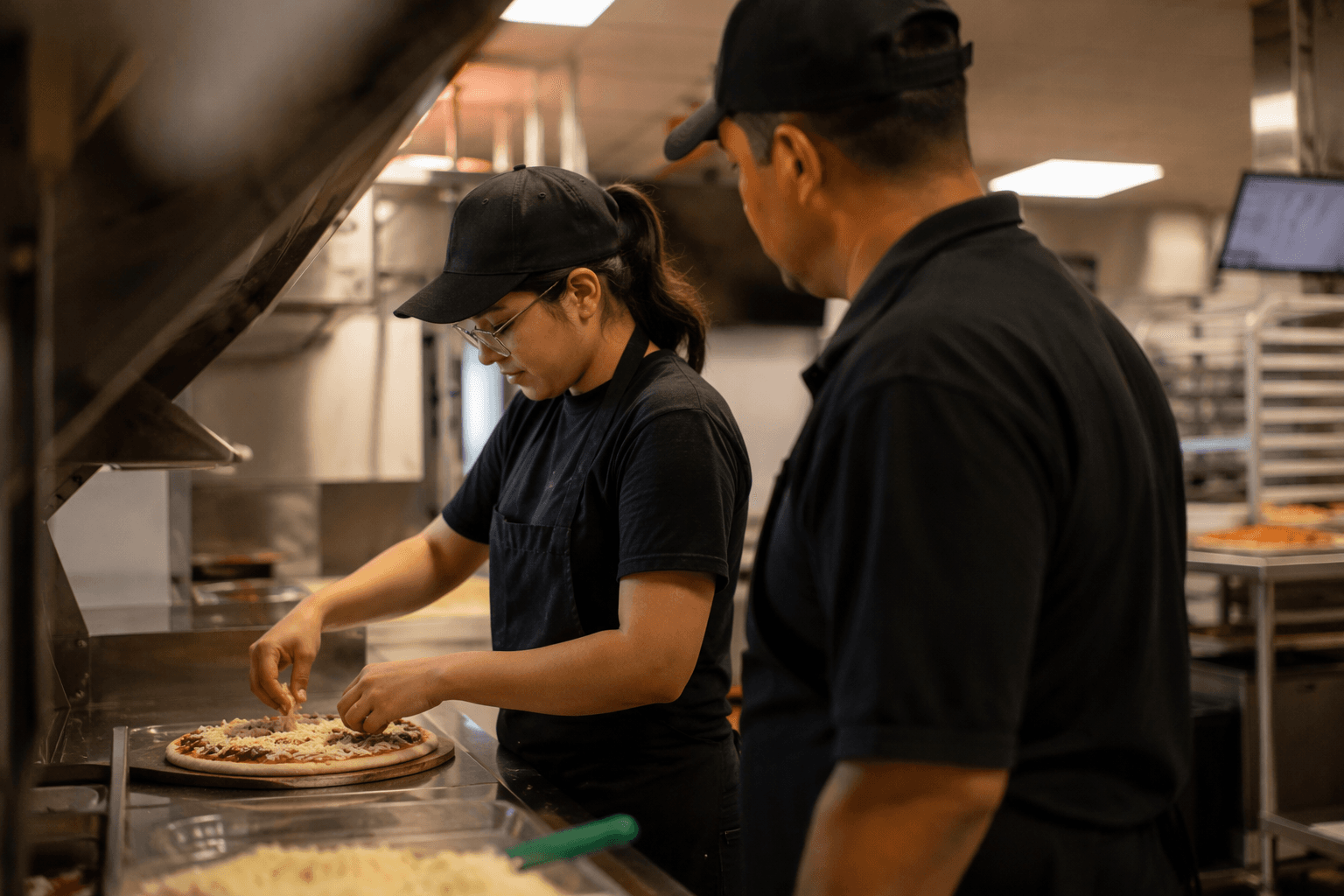
For anyone inside the store, that sequence is the real playbook. First comes performance on the floor. Then comes a readiness check, where managers look for judgment, reliability, and the ability to lead others. After that comes training, which turns a strong worker into someone who can run part of the business. The Shift Leader step is important because it is often the first point where a worker is trusted with the store when the manager is not standing beside them.
The Farmington mix of roles reinforces that ladder. A store posting for Assistant Restaurant Manager at the same address shows there is a formal management layer above Shift Leader, while Production and Server listings show that the hourly pipeline is active underneath it. In practice, that means the path from crew to store leadership is not a theory. It is a staffing model.
Why the Yum! system matters
The Farmington posting is tied to Yum! Brands and its affiliated entities, which matters because local management jobs still sit inside a much larger corporate and franchise system. Yum! says it works through about 1,500 franchisees in more than 63,000 restaurants across 155-plus countries and territories. That scale helps explain why a job in Maine is linked to the same processes, standards, pay structures, benefits, legal compliance, and hiring systems that shape other Pizza Hut locations.
Yum! has also spent years signaling that leadership development is part of its business model. In March 2020, it said it had acquired Heartstyles, which it described as a leadership development program for front-line restaurant managers. In February 2024, Yum! and the University of Louisville launched Accelerating Growth, executive education programs aimed at future senior franchise leaders. Yum! describes its people strategy as "unlocking opportunity," and those moves show that the company wants to grow leaders from inside the system.
Top leadership has also been in motion. Yum! announced on June 17, 2025 that Chris Turner would become chief executive officer effective October 1, 2025, and later said on August 27, 2025 that he would be appointed to the board of directors. When a company is making that kind of transition at the top, the bench below it matters even more.
For Pizza Hut workers, the Farmington posting is a reminder that advancement is being framed as operational proof, not just tenure. If you can run a rush, hold standards, train the next person, and keep the store steady, the company is showing you where that path can lead: from crew member to Shift Leader, from Shift Leader to management, and from management into store leadership.
This article was produced by Prism’s automated news system from verified source data, official records, and press releases, then run through automated quality and moderation checks before publishing. The system is built and supervised by the people who set the standards it runs under. Read our full AI policy.
Did this article answer your question?