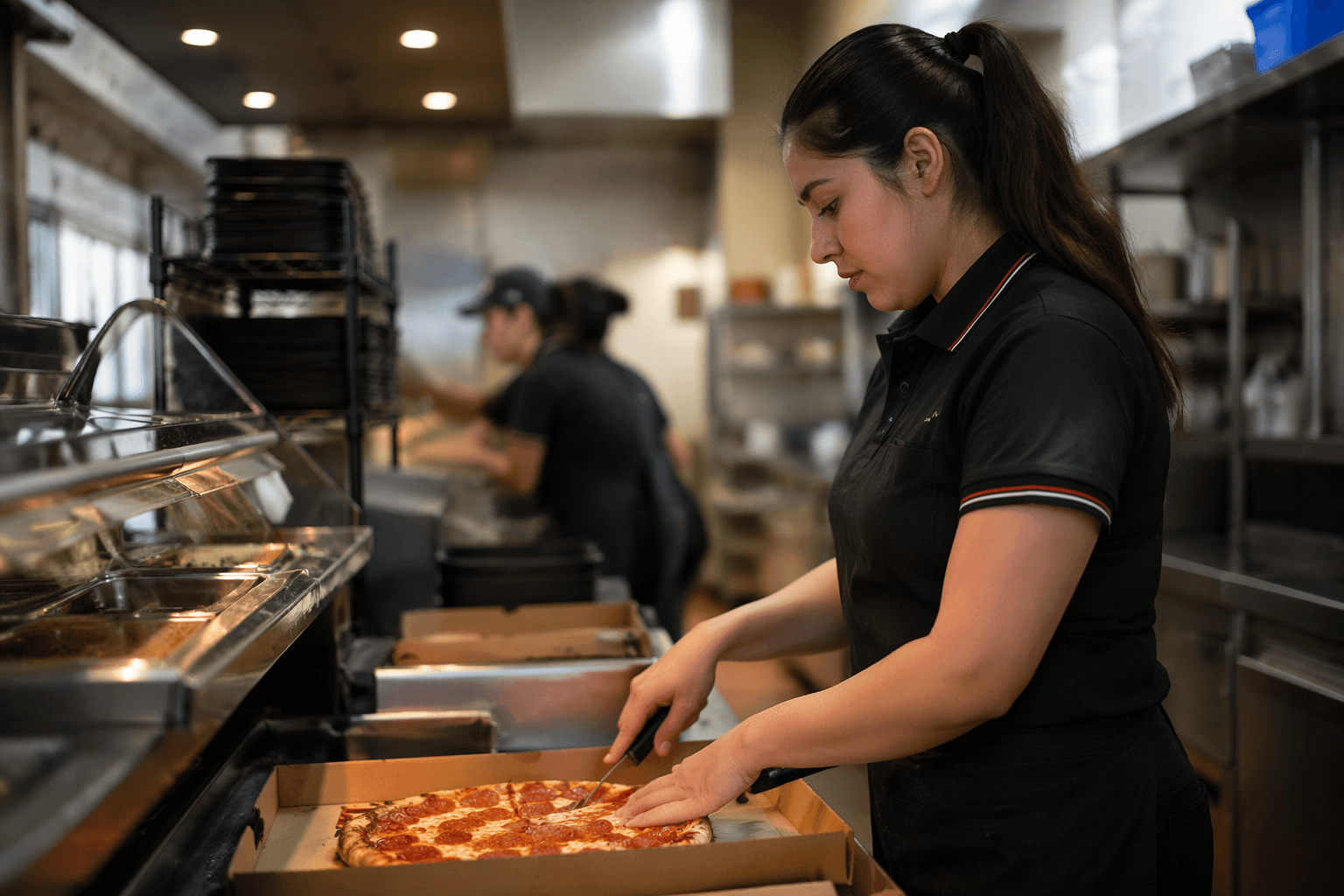
Pizza Hut franchisees balance labor costs, staffing as demand shifts
Pizza Hut crews feel labor math in real time: one slow shift can cut hours, while a rush can stretch a thin crew to the edge.
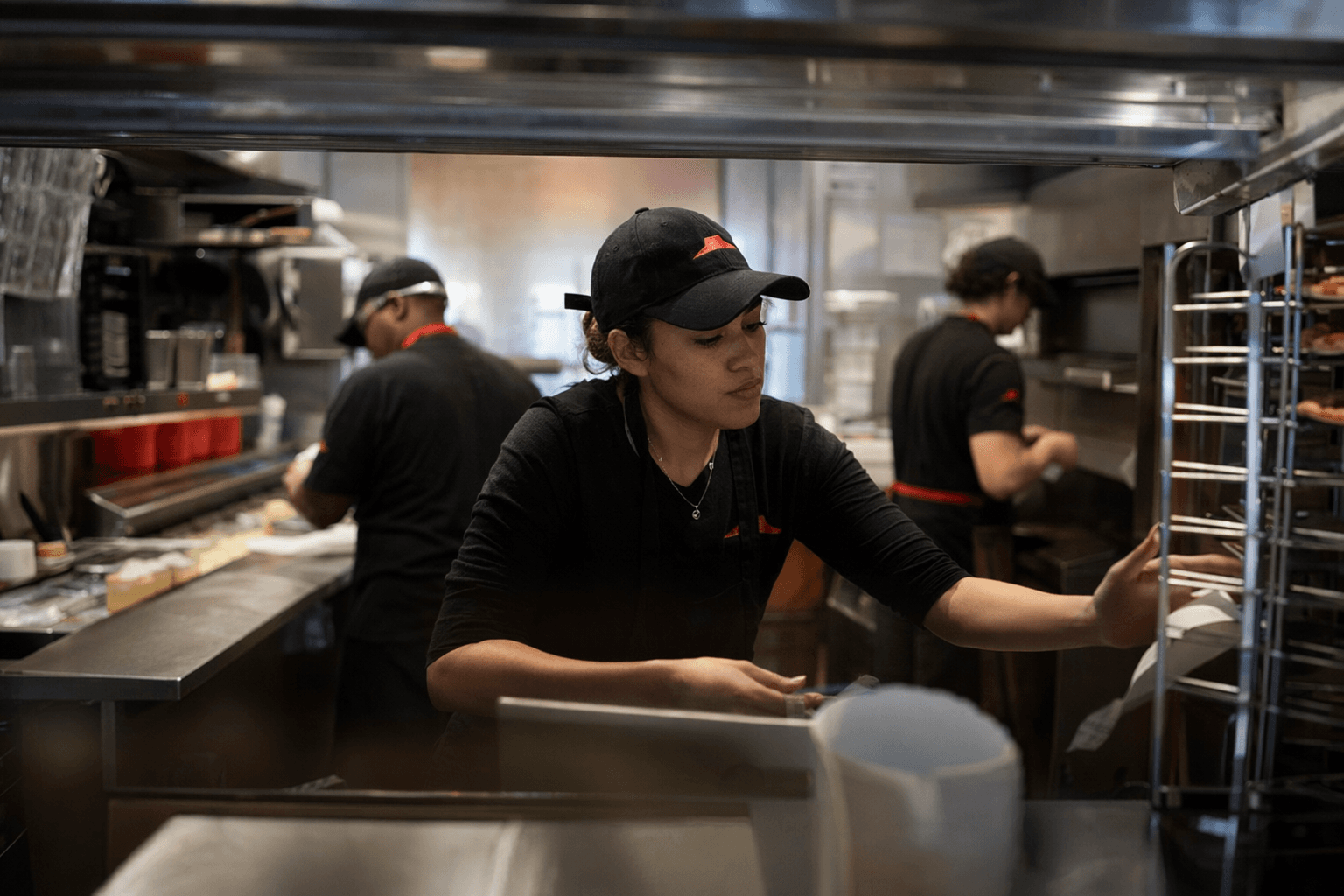
How labor cost decisions show up on a Pizza Hut shift
At Pizza Hut, labor control is not an abstract spreadsheet exercise. It decides how many hands are on the makeline, who gets sent home early, whether a delivery rush runs smoothly, and how much burnout lands on the people still clocked in when dinner peaks.
That is because restaurant labor cost includes much more than hourly pay. It can cover wages, overtime, payroll taxes, benefits, bonuses, paid time off, and even uniform costs. Toast’s restaurant labor guidance says a healthy labor cost percentage is often around 30 percent of gross revenue, which is the kind of target that pushes managers to watch every minute on the schedule. In plain terms, the schedule is where the math becomes real.
Why Pizza Hut feels this pressure so sharply
Pizza Hut sits inside one of the biggest restaurant systems in the world. Yum! Brands says it is the company’s second-largest pizza concept, with about 20,000 restaurants in 111 countries, and it reported $13.1 billion in Pizza Hut system sales in 2024. More than 99 percent of Pizza Hut Division units were operated by franchisees at the end of 2024, which means the daily labor call is usually made by local owners and managers, not a single corporate office dictating the same playbook everywhere.
That franchise structure matters to crew members. In one store, a manager may pad a Friday night with extra drivers and a stronger prep crew. In another, the operator may lean hard on cross-training, tighter shifts, and fewer floor people to protect margins. The result is that two Pizza Hut stores in the same city can feel like different jobs, even if the logo on the door is the same.
The schedule follows demand, not just the clock
The people making the schedule are usually trying to match labor to expected sales, not just to fill a blank calendar. Restaurants use historical sales, guest counts, seasonality, menu performance, and predictive tools to plan staffing and inventory. Toast’s forecasting guidance says good forecasting can reduce waste, control labor costs, and improve customer satisfaction by aligning staffing with demand.
That is the logic behind the week you feel on the floor. A strong value offer, a big sports night, a payday weekend, or a delivery-heavy dinner rush can all change how many people should be on the line. If the forecast misses, the first signs are easy for workers to read: fewer hours on the posted schedule, a cut from a full close to a shorter shift, a sudden call asking someone to come in, or one too few people on dish and make.
For crew members, the important thing is that the labor decision is not just about cost cutting. It is also about whether the store can keep service speed, protect the food, and avoid making one person absorb the work of two. When managers get the forecast right, the rush feels controlled. When they do not, every box of pizzas, every driver run, and every remake lands on a thinner team.
What the law says about pay and deductions
The labor picture at a Pizza Hut store also has a legal floor. The U.S. Department of Labor says restaurants and fast-food businesses with annual gross sales of at least $500,000 are covered by the Fair Labor Standards Act. For covered non-exempt workers, the federal minimum wage is $7.25 an hour, and overtime is owed after 40 hours in a workweek.
That matters because labor cost pressure can show up in pay in ways workers do not always expect. The Department of Labor says deductions for items such as required uniforms can be illegal if they reduce wages below minimum wage or cut into overtime pay. If a store is tightening labor too aggressively, workers may feel it not only in fewer hours but in a paycheck that gets chipped away by deductions or scheduling practices that leave them scrambling to stay above water.
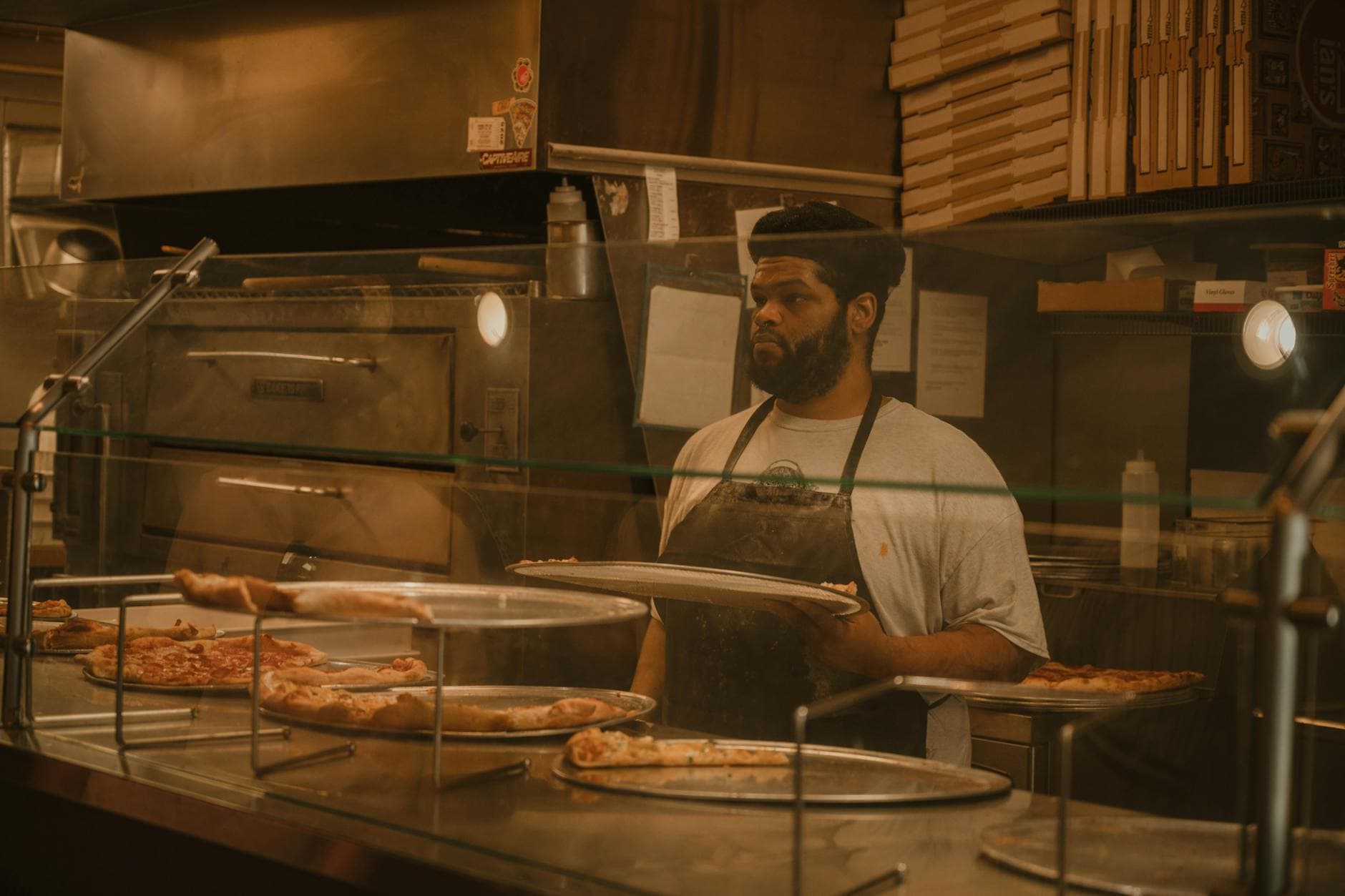
Why food service schedules feel so unstable
Food-service work is built around shifts, and that makes labor decisions unusually visible. The Bureau of Labor Statistics says food and beverage serving and related workers had a 2024 median hourly wage of $14.92, while waiters and waitresses had a 2024 median hourly wage of $16.23. The same labor market is also marked by early mornings, late evenings, weekends, and holidays, which means the pressure to staff correctly is highest when most people want to be home.
That is one reason Pizza Hut workers often experience labor policy as a question of hours, not just pay rate. A store can advertise strong hourly earnings on paper, but if the schedule keeps changing, or if labor is trimmed right before the dinner rush, the practical value of those wages falls fast. Stable hours matter as much as headline pay because they shape rent money, childcare, second-job planning, and how exhausted people are at the end of a week.
When labor pressure turns into conflict
The clearest sign that this is not just an internal management issue came from Los Angeles’s Historic Filipinotown, where Pizza Hut workers struck in 2024 over alleged wage theft. Reporting on the action said workers also complained of abusive and chaotic scheduling, with schedules changed multiple times a week and some workers sent home at the start of shifts without prior notification or pay.
That kind of disruption shows how labor-cost decisions can spill straight into daily life. If managers slash staffing too close to demand, the people left on the floor end up absorbing the rush. If they overcorrect, workers lose hours or get blindsided by last-minute changes. Either way, the burden lands on the crew member trying to keep pizzas moving while wondering whether the next shift will disappear.
Pizza Hut has also faced labor-law scrutiny in other places. The National Labor Relations Board case involving the chain in Commerce, Georgia was filed on June 3, 2022 and later reached settlement activity in December 2022. That history matters because it shows the tension between tight operational control and worker rights is not isolated to one store or one moment.
What workers can read in their own store
If you work in a Pizza Hut store, labor strategy leaves a trail you can see without ever looking at a balance sheet. A store that keeps cutting hours after a strong sales week may be trying to protect a labor target near that 30 percent range. A store that suddenly cross-trains everyone may be trying to run leaner with the same headcount. A store that posts and then revises schedules often may be chasing demand it did not forecast well.
- shifts shortened or moved at the last minute
- fewer people scheduled for prep, make, or delivery
- more pressure to cover multiple stations at once
- more send-home decisions when traffic is slow
- more burnout on the rush when traffic is strong
The signals usually arrive in familiar ways:
Yum! Brands says the company operates more than 60,000 restaurants, employs more than 1 million system workers, and opens a new restaurant about every two hours. At that scale, labor discipline is treated as a management skill. For the people on the floor, though, it becomes something simpler and more immediate: whether the store is staffed well enough that one busy hour does not turn into a bad week.
This article was produced by Prism’s automated news system from verified source data, official records, and press releases, then run through automated quality and moderation checks before publishing. The system is built and supervised by the people who set the standards it runs under. Read our full AI policy.
Did this article answer your question?