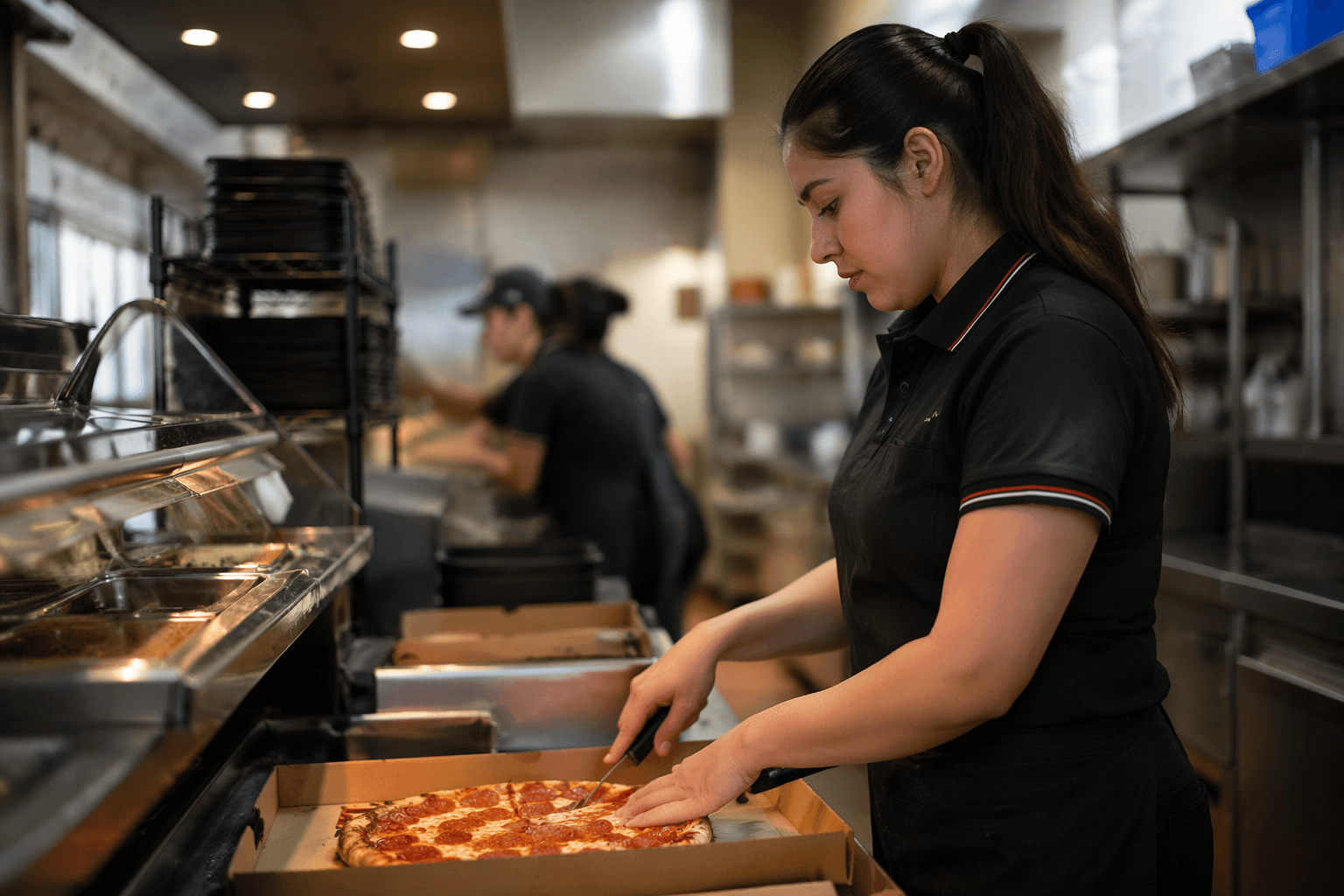
Pizza Hut future workers embrace AI, but keep human judgment first
Pizza Hut’s next hires may already use AI for inventory, schedules and prep, but stores still rise or fall on human judgment, training and speed.

AI arrives with the next kitchen hires
Pizza Hut’s future workforce is likely to show up already comfortable with artificial intelligence, but not eager to hand over the keys to the kitchen. Culinary students are using AI for practical tasks like counting inventory from a photo, scaling recipes, building cleaning plans and thinking through schedule design, yet they remain wary of trusting it blindly when accuracy, food quality and hospitality are on the line.
That mix matters for Pizza Hut managers because it describes the kind of entry-level worker the brand will keep hiring: digitally fluent, quick to experiment and interested in tools that cut busywork, but still expecting real coaching on standards. In a busy store, that means AI can lighten the load, but it cannot replace the judgment that keeps a pizza hot, an order accurate and a shift moving.
Where AI fits into a Pizza Hut shift
The most useful role for AI in a Pizza Hut restaurant is support, not substitution. It can help with staffing forecasts, phone answering, order triage and inventory checks, while also surfacing granular data such as sales patterns and performance by traffic window. For a manager, that kind of visibility can translate into smarter decisions about when to add drivers, when to bring in more prep help and where a bottleneck is starting to form.
Students in the Northern Arizona University example treated AI much the same way. They used it for repetitive or data-heavy work, but drew a line at letting it control the food itself. That is the right mental model for a pizza shop, where the highest-value work still depends on people who can taste, inspect, correct and move fast when the line or delivery board starts backing up.
AI can help a store reduce burden, but the burden it removes should be paperwork and guesswork, not competence.
- Inventory counts can be faster when a system helps read images and organize the results.
- Recipe scaling can be more precise when cooks need to adjust yields for rushes or slow periods.
- Cleaning plans can be easier to structure when a tool organizes routine tasks by station and time.
- Schedule design can become less reactive when managers can compare labor needs with traffic windows.
- Sales analysis can reveal when the store is likely to get slammed, and when it can safely run lean.
That kind of use keeps AI in the lane workers are most likely to accept. It helps the team get more done without suggesting that a model knows better than the people making the pizza.
Byte by Yum! puts the idea into the system
Yum! Brands has already moved this thinking into Pizza Hut’s operating model. On Feb. 6, 2025, Yum announced Byte by Yum!, an AI-driven restaurant technology platform for Pizza Hut, KFC, Taco Bell and Habit Burger & Grill. The platform includes online and mobile ordering, point of sale, kitchen and delivery optimization, menu management, inventory and labor management, plus team-member tools.
For Pizza Hut U.S., Yum said the Byte kitchen system is being used to improve delivery times, reduce the time pizzas wait in the restaurant and give guests real-time visibility into where their order is. That is not abstract innovation talk. In a delivery-heavy business, every minute an order spends sitting in the store can show up as colder product, a weaker customer experience and a harder night for the driver trying to keep the route on time.
The scale is already large enough to affect the whole brand, not just a pilot group. Yum said 25,000 of its restaurants globally were using at least one Byte by Yum! product, and that its U.S. brands were processing more than 300 million digital transactions a year with Byte elements. Joe Park serves as president of Byte by Yum! in addition to chief digital and technology officer at Yum!, which signals that the company sees this as a core operating system, not a side project.
The training gap is the real pressure point
The problem for operators is that technology adoption is moving faster than training depth in much of the industry. A March 10, 2025 CHART and Opus Training report found that 72% of restaurant learning and development professionals said AI improves their work quality. The same report said proficient AI users complete projects up to four times faster than basic users, yet only 8% of restaurant L&D professionals considered themselves advanced users.
That gap matters even more because the report also found ongoing training for hourly employees had fallen to just one hour per month, while 61% of operators were prioritizing basic job-skills training. In other words, restaurants are being asked to do more with less, even as the tools become more powerful and more complicated. Pizza Hut managers will feel that pressure immediately if a store gets a new system but does not get enough time to teach the team how to use it well.
Human coaching still does the jobs AI cannot do. Line-level assembly, food safety, guest interaction, conflict handling and standards enforcement all depend on a person noticing what the software misses. A model can suggest a schedule, but it cannot tell when a veteran shift lead is stretched too thin or when a new hire needs a second look on make line quality before the pie goes out.
Franchise operators have the most to lose if rollout goes wrong
Pizza Hut’s scale and franchise structure make every technology decision more consequential. As of December 2025, Pizza Hut said it had 19,974 restaurants worldwide, 6,307 in the U.S., and that 99% were franchised. That means most of the brand’s AI experience will be absorbed by local operators, not just corporate stores.
That is exactly where friction can appear. In May 2026, Restaurant Business Online reported that Chaac Pizza Northeast, which operates 111 Pizza Hut locations in New York, New Jersey, Maryland, Washington, D.C. and Pennsylvania, sued Pizza Hut over a mandatory Dragontail technology rollout. The franchisee alleged operational disruptions and losses of more than $100 million, and said the system led to slower delivery times, colder product and reduced customer satisfaction. It also claimed it did not receive sufficient training.
That lawsuit is a reminder that the fastest way a Pizza Hut store gets into trouble is not by lacking technology. It is by rolling out technology in a way that slows the kitchen, confuses the crew or undercuts service without enough support to make the system work on a Friday night.
For Pizza Hut’s next generation of workers, AI is likely to be normal. They will use it for prep, planning and analysis the way older workers once relied on clipboard math and memory. But the stores that win will be the ones that use AI to free up time for the human work that still defines the brand: speed, judgment, coaching and food that leaves the line right the first time.
This article was produced by Prism’s automated news system from verified source data, official records, and press releases, then run through automated quality and moderation checks before publishing. The system is built and supervised by the people who set the standards it runs under. Read our full AI policy.
Did this article answer your question?