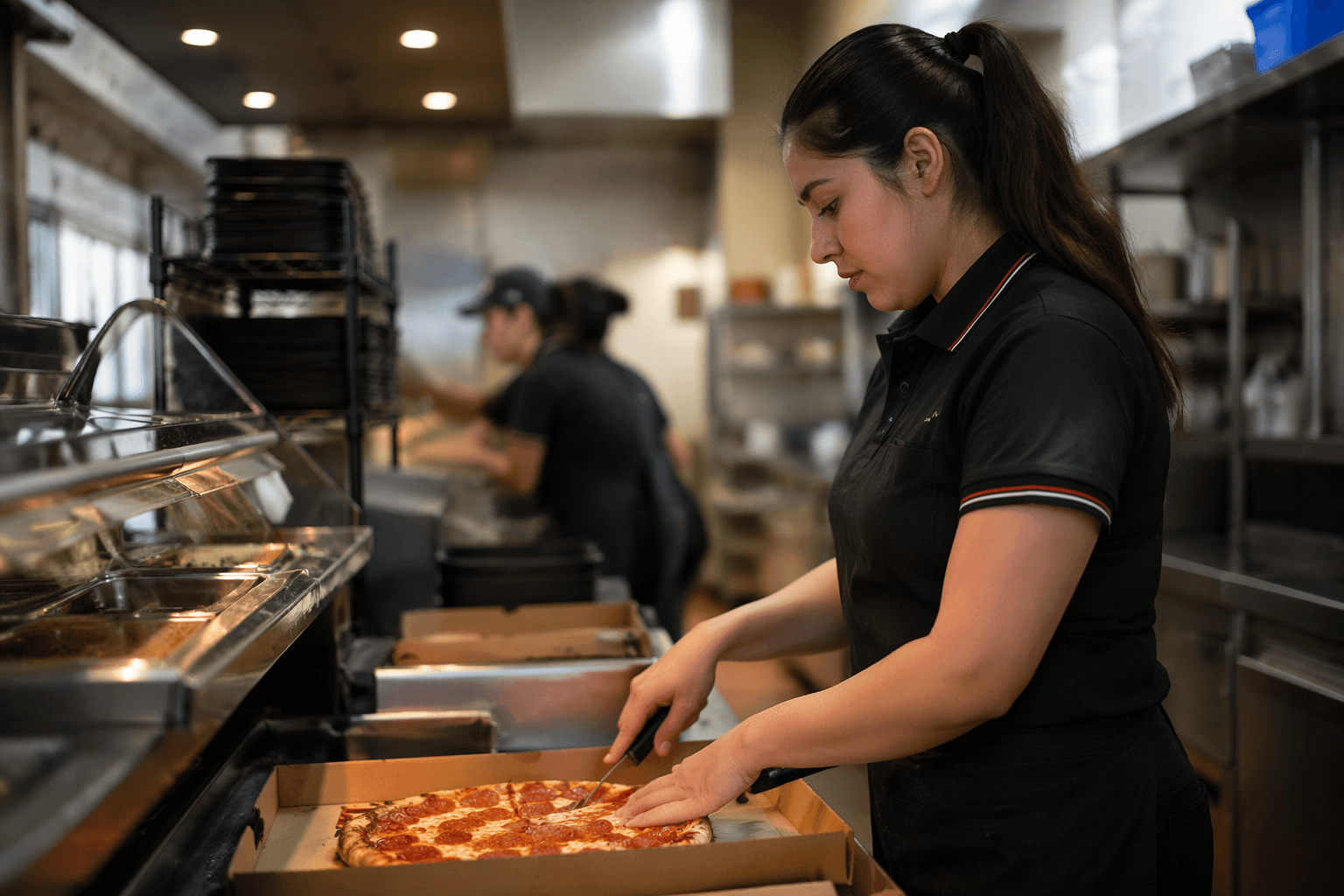
Pizza Hut guide breaks down team roles from cook to manager
Pizza Hut shifts run on cross-training, not silos. Delco stores, delivery routes, and dine-in rushes all demand different handoffs, but the same crew keeps the line moving.

Pizza Hut is not one job, and it is not one kind of store. The clearest way to understand the brand is to look at the floor when orders stack up: someone is answering the phone, someone is stretching dough, someone is checking the dining room, and someone is heading out the door with a delivery bag. That is the real pressure point in a Pizza Hut shift, and it is why the company’s role map matters to workers trying to find their lane.
How the store actually works
Jobcase’s breakdown of Pizza Hut positions makes one thing plain: the brand runs on cross-training. Team members are often the first point of contact for guests, and they may take phone orders, prepare food, wash dishes, make dough, and clean. That mix tells you a lot about the work culture inside a busy store. It is not a narrow, single-station kitchen where each person stays in one lane all night. It is a handoff business, where the person at the counter, the person in the kitchen, and the person on delivery all depend on one another to keep orders moving.
That is especially true when the rush hits. The kitchen can be hot, the ticket line can get long, and the physical work can wear people down fast. The guide notes that employees may have to lift up to 50 pounds and stand for hours, which is the kind of detail that separates the glossy hiring pitch from the reality on the floor. For anyone stepping into a Pizza Hut store, that means the job is as much about stamina and communication as it is about making pizza.
What each role really carries
The server role matters most in dine-in stores, where the guest experience is not just about speed but about keeping the room smooth. Servers need to know the menu well enough to suggest products and help the meal feel organized, especially when tables turn quickly or families need help deciding what to order. In a busy dining room, that role becomes part host, part salesperson, and part damage control when the kitchen is behind.
Delivery drivers carry a different kind of pressure. They are there to get food to customers and bring in sales from the off-premise side of the business, which means they sit at the edge of the store’s revenue engine. A good driver is not just a person with keys. They are part of the store’s timing, the handoff between kitchen quality and customer satisfaction, and the reason a delivery-heavy shift can feel very different from a dine-in one.
Cooks and kitchen crew sit at the center of the operation. They are dealing with the heat, the volume, and the pace of the line, often while balancing dough, ovens, prep, and cleanup. Shift leaders and managers add another layer: they keep communication tight, move people where they are needed, and decide how the store absorbs the pressure when orders spike. In practice, the best employees are usually the ones who can jump between tasks without losing the thread of the shift.
Why store format changes the job
Pizza Hut’s franchise materials show why the same title can look different from one location to another. Traditional locations can offer delivery, carryout, and dine-in service, but the brand also uses Delco, short for Delivery + Carryout, which it describes as its fastest-growing model. The franchise materials also distinguish between legacy dine-in and restaurant-based delivery stores, delivery-based restaurants, and fast casual Delco locations with counter-serve seating.
That distinction matters on the floor. A store built around dine-in service asks more of servers and hosts, while a delivery-based restaurant puts more weight on order accuracy, dispatch timing, and off-premise volume. A Delco location, with its counter-serve setup, can shift the day toward faster turnover and tighter front-counter execution. If you are looking at Pizza Hut jobs, the title alone does not tell you everything. The format tells you how the shift will actually feel.
What managers are really hiring for
For managers, the lesson in the role breakdown is simple: a smooth store depends on people who can do more than one thing well. The company’s careers site says everyone working in a Pizza Hut restaurant plays an important part in delivering a great guest experience, and that is not just a slogan. It is a description of how the store survives the rush, because no single role can absorb every problem when orders pile up.
Pizza Hut also says franchisees are the exclusive employers responsible for employment-related matters in their restaurants. That is a crucial detail for job seekers comparing stores, because local ownership can shape scheduling, training, staffing, and promotion in ways that do not always look the same from one franchise to another. The path up is there, though. The careers material points to entry-level opportunities and opportunities for career advancement, which means many people start in crew positions and move into leadership by proving they can handle pressure, communicate clearly, and keep the team moving.
A business built around delivery and change
Pizza Hut’s role mix makes more sense when you look at its history. Yum! Brands says the first Pizza Hut restaurant opened in 1958 in Wichita, Kansas, and the company-history record says Pizza Hut began home delivery in 1986. By the 1990s, delivery and carryout had grown to about 25 percent of total sales. That is the backstory behind today’s store layout: Pizza Hut did not stay a simple counter-service pizza shop. It became a hybrid operation built around dine-in, takeout, and delivery.
That evolution explains why the same restaurant can feel different depending on the hour and the format. A lunch rush in a fast casual Delco store will not look like a Friday night in a traditional dine-in location, and neither will resemble a delivery-heavy shift with phones ringing and bags going out the door. The brand’s workforce model reflects that reality. Pizza Hut still runs on people who can switch roles, absorb pressure, and keep the handoffs clean when the orders do not stop.
This article was produced by Prism’s automated news system from verified source data, official records, and press releases, then run through automated quality and moderation checks before publishing. The system is built and supervised by the people who set the standards it runs under. Read our full AI policy.
Did this article answer your question?