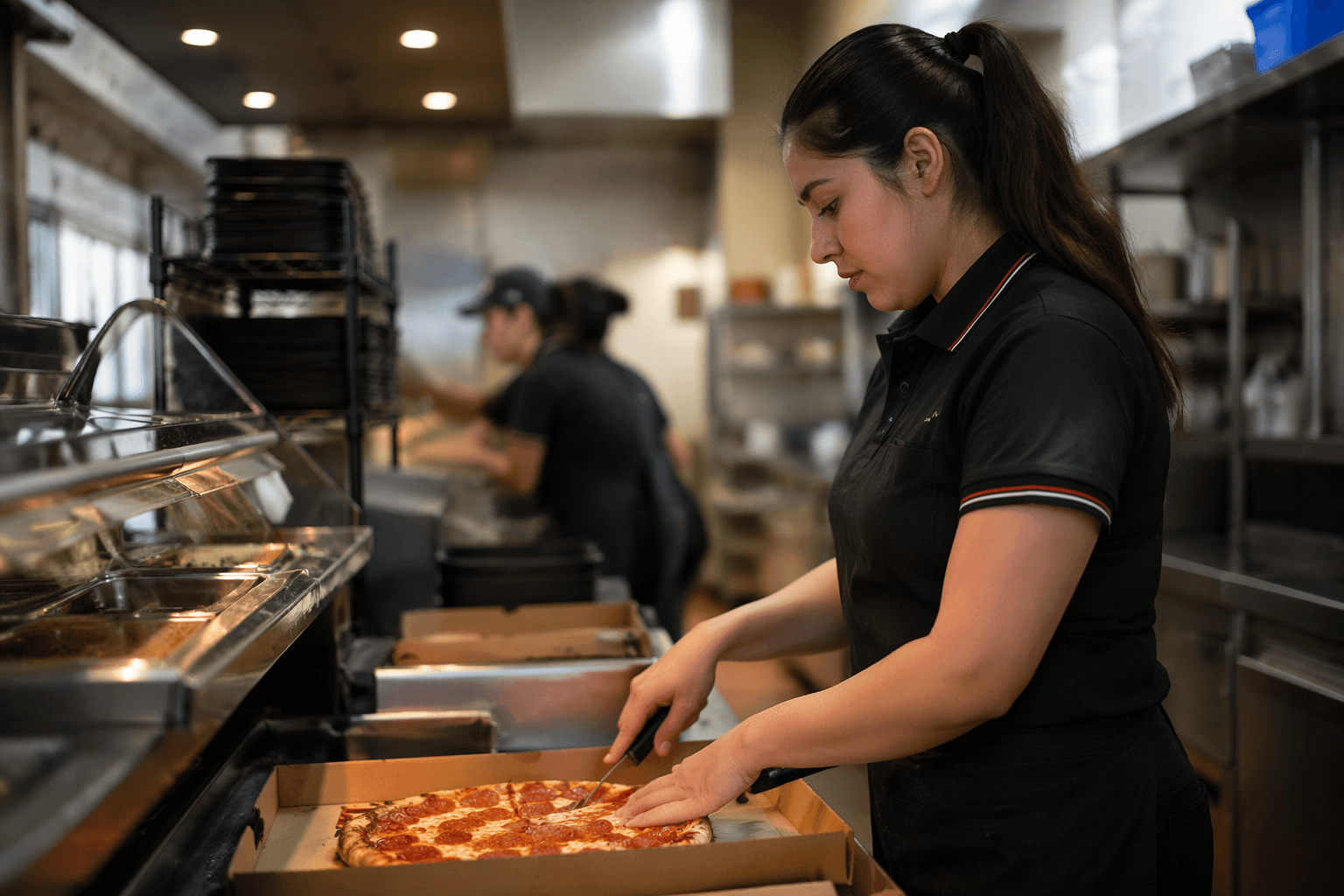
Pizza Hut kitchen safety tips target slips, spills and wet floors
A slick floor can cost Pizza Hut stores more than a cleanup. The real fix is tightening the rush-hour routines that keep crews, drivers and teens on their feet.
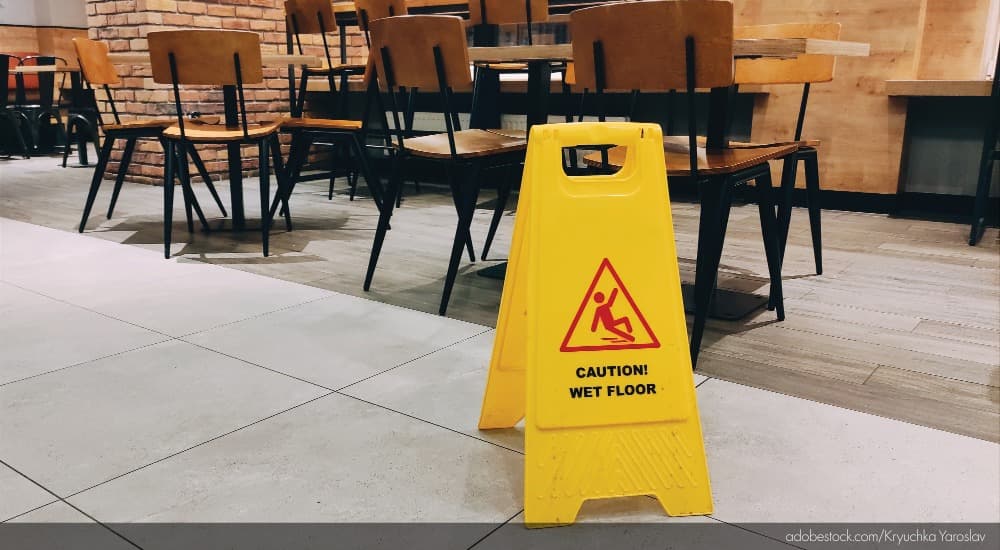
The fastest way a Pizza Hut store gets in trouble is not a big crash. It is the small, ordinary slip hazard nobody stops to own: a soda spill by the counter, flour dust near prep, an oily pan by the oven, or water tracked in at the entrance.
Those hazards matter because slip-and-fall incidents do more than bruise a knee. They sideline workers, leave shifts uncovered, and turn a busy store into a slower one. Falls, slips and trips are still a major workplace problem nationwide: the National Safety Council says 844 workers died in those incidents in 2024, and nearly 480,000 were hurt badly enough to miss work. The U.S. Bureau of Labor Statistics counted 479,480 private-industry cases involving falls, slips and trips in 2024, out of 2,488,400 total recordable private-industry cases.
Where Pizza Hut stores get exposed
Pizza Hut stores create the perfect conditions for foot-safety problems because the work moves fast and the floor stays busy. Crew members cut between the make line, ovens, coolers and front counter while carrying hot pans, greasy trays, boxes, drinks and sometimes wet mop gear. That means the same patch of floor can see food prep traffic, cleaning traffic and delivery handoffs all in the same hour.
OSHA’s restaurant safety guidance points to the pressure points that matter most: clean-up, delivery and storage, drive-thru and handoff areas, food prep, general walking areas and serving zones. In Pizza Hut terms, that is the back line, the lobby, the doorway, the carryout path and any space where a driver, customer or cook cuts across the same lane. The risks are not theoretical. OSHA says wet kitchen floors, spills and clutter can lead to slips, trips and falls, and that message lines up with what crews already know from rushes and closing shifts.
The small hazards that turn into big injuries
The worst slips usually start with something crew members barely notice. A sauce drip that lands near the oven can spread underfoot. A dusting of flour can turn a dry patch into a slick one. A puddle near the front door can catch a hurried driver or a customer carrying a pizza box.
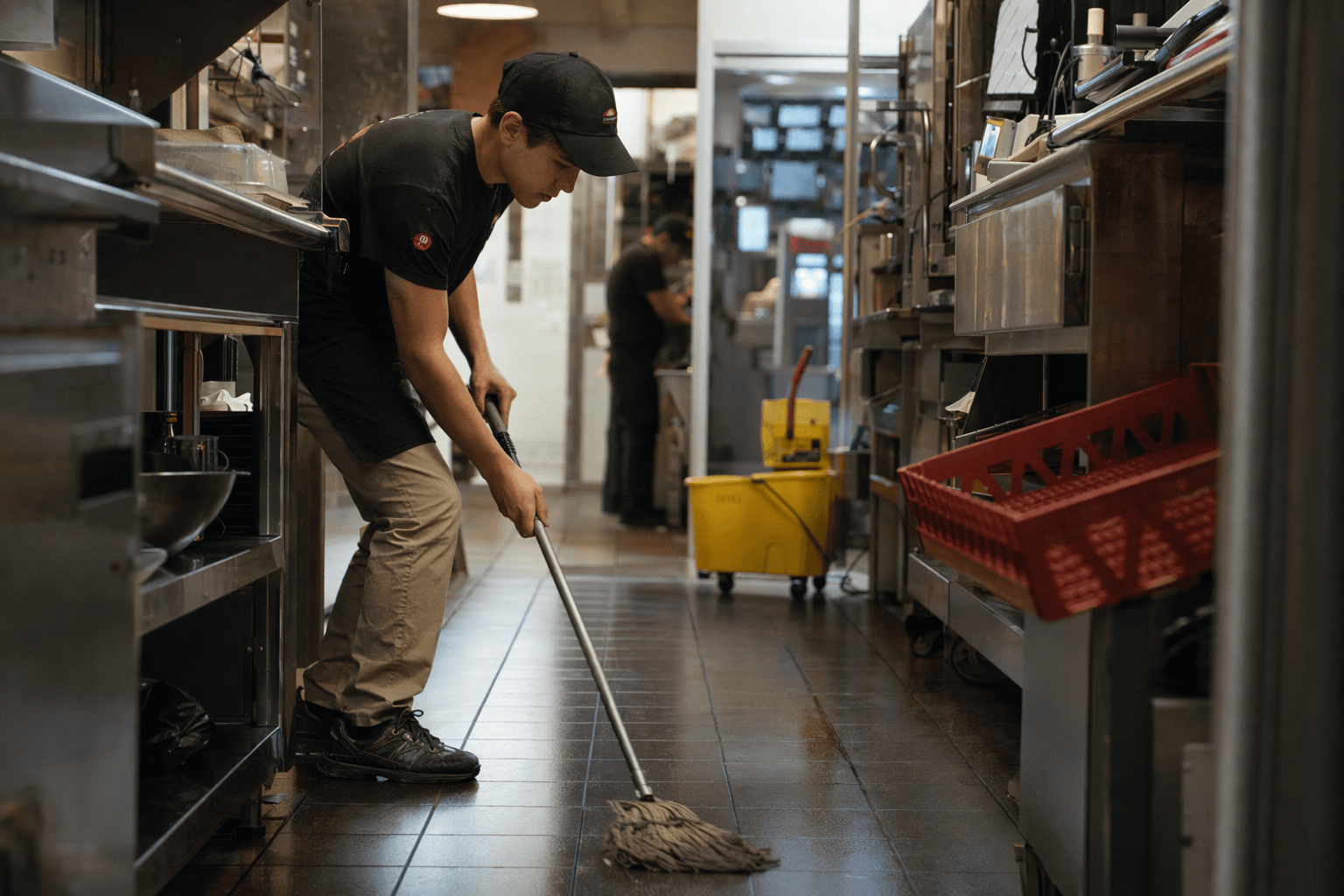
That is why restaurants cannot treat floor safety as a closing task only. Entry mats wear out. Rain gets tracked in. Boxes get stacked in aisles. Carts, mop buckets and trash runs can crowd the same space workers need to move through quickly. A store that ignores those details is not just risking an injury claim. It is creating the kind of daily friction that slows everyone down and makes a rush feel bigger than it is.
What OSHA expects from the floor
OSHA’s walking-working-surface rules are not subtle. Floors should be kept clean and dry, and a walking-working surface is any horizontal or vertical surface an employee walks on, works on or uses to reach a work area. In plain language, that covers most of the spaces inside a Pizza Hut store, from the kitchen floor to the path a driver uses to get in and out.
That standard matters because it shifts the mindset from reacting after someone slips to preventing the slip in the first place. The safest stores do not wait for a spill to become a problem. They build cleanup checks into the shift, keep mats in the right places, and make sure workers know that a wet spot or cluttered path is not something to step around and forget.
OSHA and CDC materials also emphasize that young and inexperienced workers are especially exposed in restaurant settings. That is a real point for Pizza Hut operators, where the workforce often includes teens and early-career employees. OSHA says restaurants and other eating-and-drinking businesses employ 11.6 million people in the United States, and nearly 30 percent are under 20. The CDC refreshed its young-worker slip, trip and fall resources on March 9, 2026, which is a reminder that this is still an active safety issue, not an old one.
Low-cost fixes that cut risk fast
The good news is that most slip prevention does not require a remodel. It requires discipline, especially during rushes and cleaning cycles when the floor is most likely to get slick.
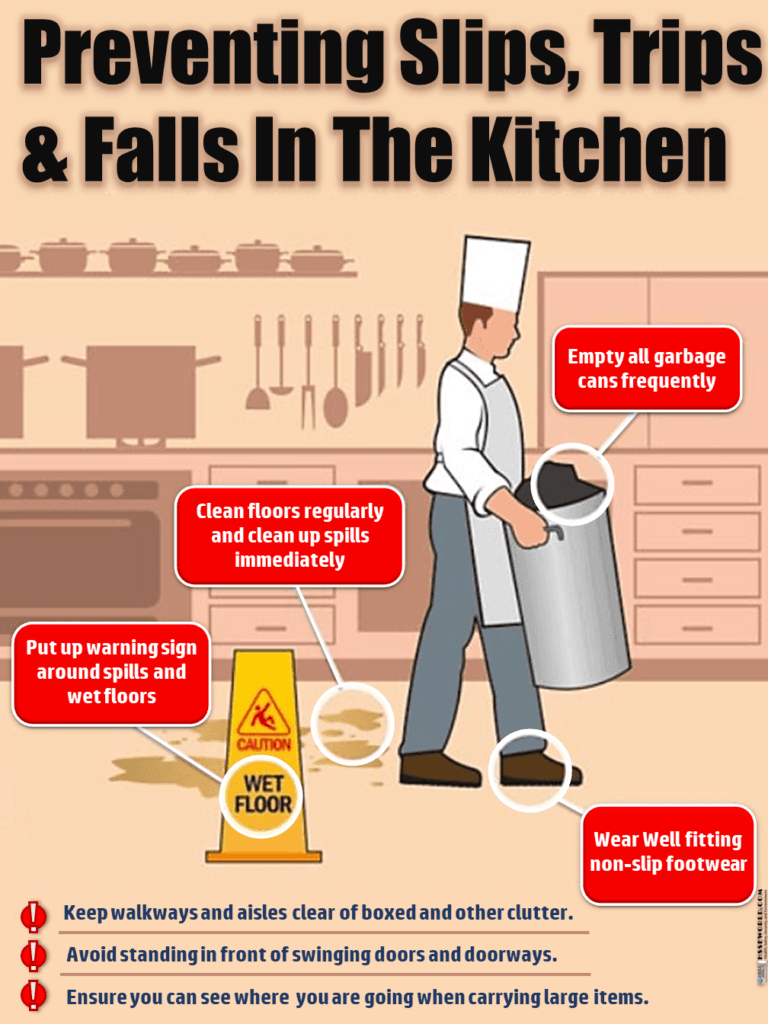
A strong store routine usually includes:
- Checking the floor at set points in the shift, not only at close.
- Assigning one person to own a spill until it is cleaned and dried.
- Replacing saturated mats before they become a hazard themselves.
- Keeping boxes, bags and carts out of travel lanes.
- Using proper footwear that grips on wet or greasy surfaces.
- Calling out hazards immediately so the next person does not inherit the problem.
The low-cost fixes work because they match the way Pizza Hut stores actually run. The hazard is rarely one dramatic event. It is usually a series of little ones that pile up when the line is moving, the lobby is busy and nobody wants to stop the flow.
Why managers should care about the next slip, not just the last one
For managers, the business case is blunt. One bad fall can mean a missed shift, a workers’ compensation claim and a staffing hole that is hard to fill on short notice. In a store already juggling crew availability, teen workers and thin labor margins, an avoidable injury can hit service speed as hard as a call-out.
That is the part too many stores miss. A clean, organized floor is not only safer. It is faster. Workers spend less time detouring around wet spots, less time shifting carts out of the way and less time worrying about whether the next step will hold. In a Pizza Hut store, speed and safety are not competing goals. The stores that understand that are the ones that keep people moving and keep the operation from tripping over its own shortcuts.
This article was produced by Prism’s automated news system from verified source data, official records, and press releases, then run through automated quality and moderation checks before publishing. The system is built and supervised by the people who set the standards it runs under. Read our full AI policy.
Did this article answer your question?