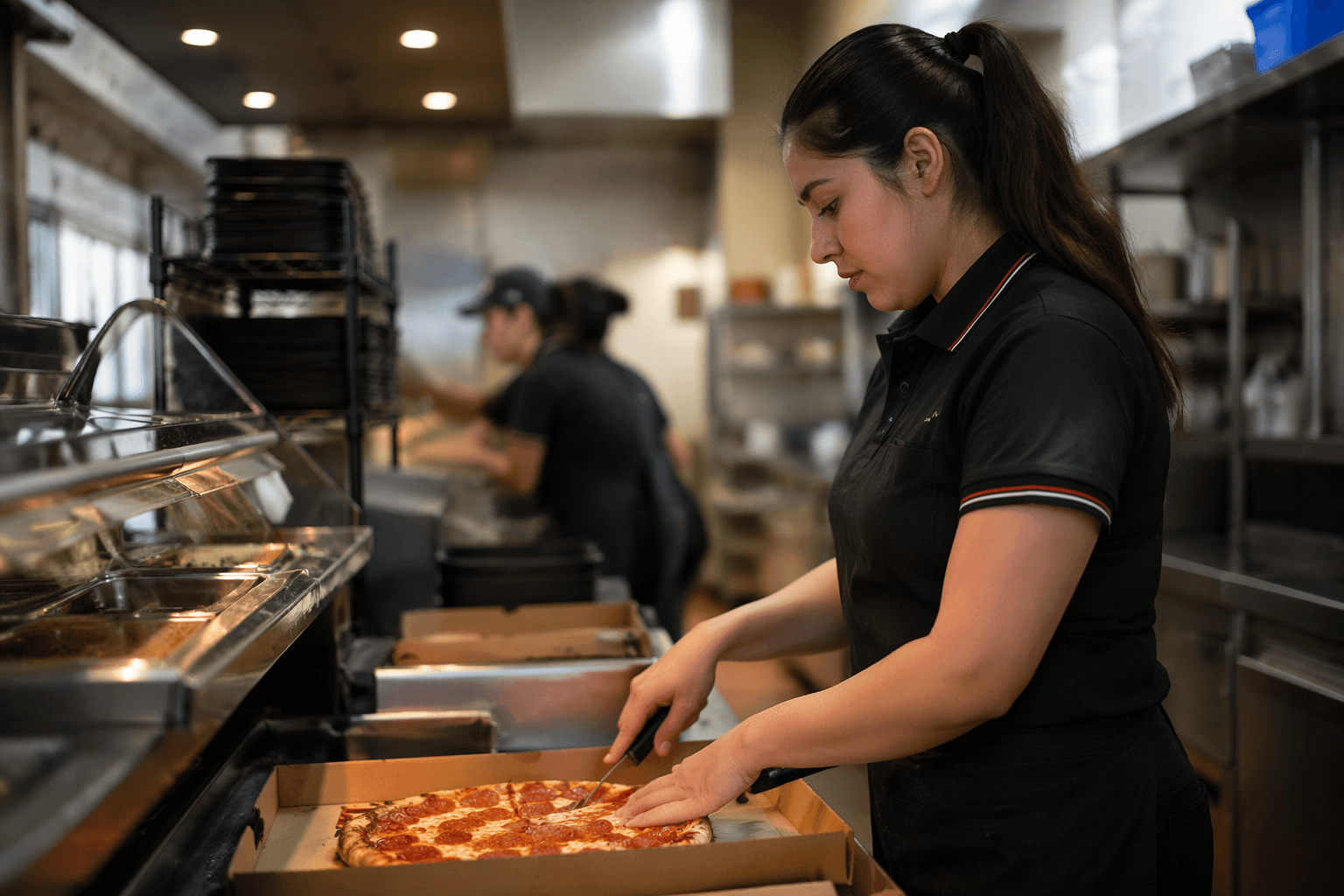
Pizza Hut kitchens can lean on ServSafe and FDA Food Code rules
A blown hot-hold or missed handwash can turn a Pizza Hut rush into remakes, complaints, and inspection trouble fast.
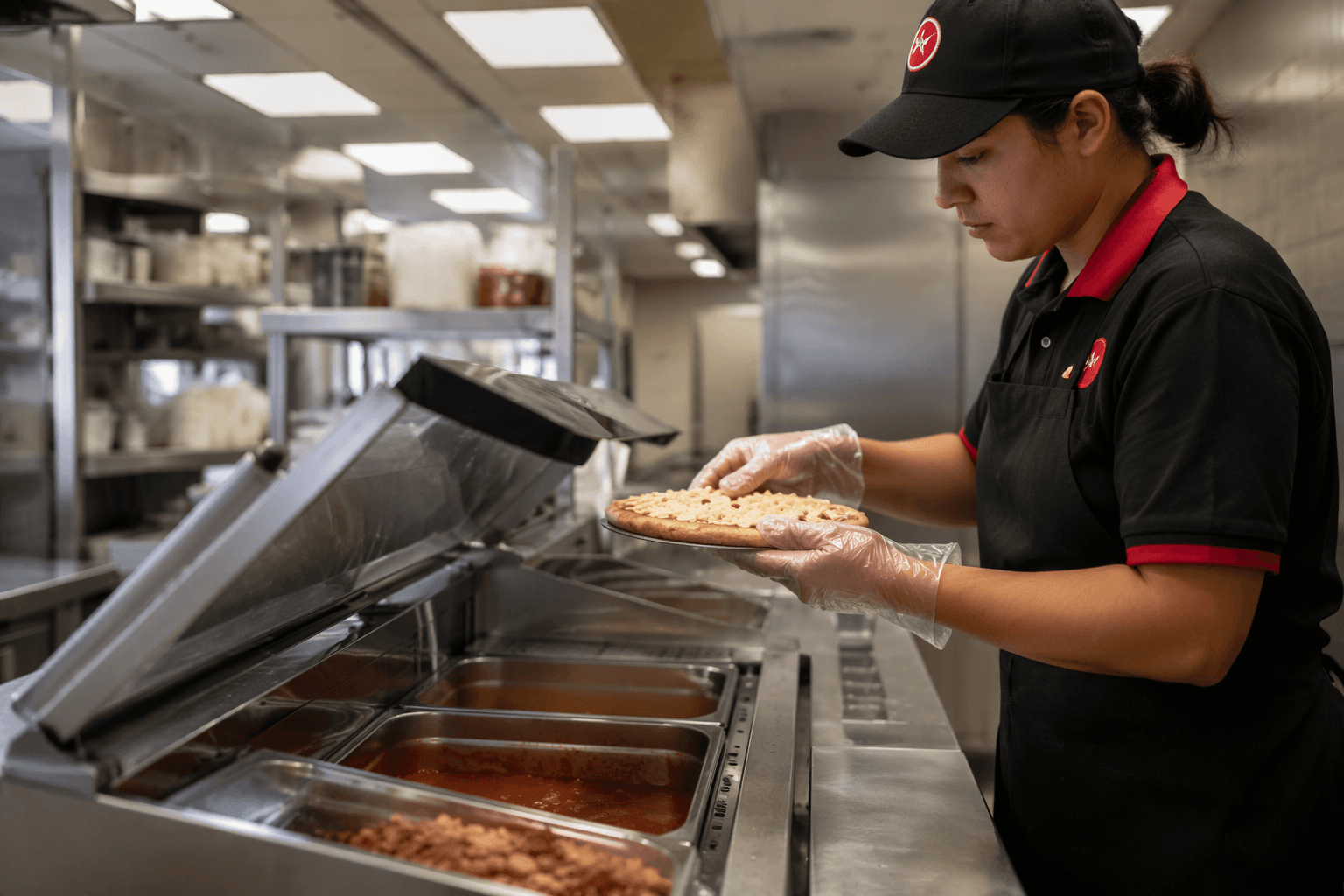
Pizza Hut kitchens can lean on ServSafe and FDA Food Code rules
A Pizza Hut shift does not usually fall apart because of one dramatic mistake. It slips when the basics get missed: sauce or cheese held at the wrong temperature, a glove change that never happens, a cutter or prep surface that carries allergens from one order to the next, or a wipe-down that leaves contamination behind for the next rush. ServSafe and the FDA Food Code give managers a practical framework for preventing those failures before they turn into wasted product, guest complaints, or a bad inspection.
Why these rules matter on a Pizza Hut line
Pizza Hut runs on speed, repetition, and shared equipment. That is exactly why food safety rules matter so much in this environment: the same hands, pans, cutters, toppings, and make-line surfaces move through order after order. The chain says it has 6,000+ locations, which means the difference between a clean, disciplined kitchen and a sloppy one can repeat across a huge system of stores.
ServSafe says its programs are built by the National Restaurant Association with help from foodservice industry experts. Its Food Handler training covers basic food safety, personal hygiene, cross-contamination and allergens, time and temperature, and cleaning and sanitation. For managers, ServSafe says its 9th Edition is ANAB-accredited and aligned to the Supplement to the 2022 FDA Food Code. In plain terms, that gives store leaders a training path that matches what health regulators expect to see in the field.
The temperature mistakes that cause the fastest trouble
If a Pizza Hut kitchen gets behind on temperature control, the pain shows up immediately. Hot food that slips out of safe holding can force remakes, slow ticket times, and create a stream of complaints from drivers waiting on carryout or delivery orders. Cold toppings or ingredients left out too long create the same kind of operational drag, because a manager has to decide whether to toss product or risk serving it.
The FDA Food Code is the model guidance that helps states and local jurisdictions regulate restaurants and other food-service businesses. FDA says it is its best advice for a uniform system of provisions that address the safety and protection of food offered at retail and in food service, and it issued the 2022 Food Code on December 28, 2022. The practical takeaway for a Pizza Hut shift is simple: holding temperatures are not paperwork. They are the line between a smooth dinner rush and a table full of remakes.
Cross-contamination is a speed problem, not just a sanitation problem
Cross-contamination is especially easy to create in a pizza kitchen because the workflow is built around quick handoffs. Dough, sauce, cheese, meats, vegetables, and allergen ingredients often move in close quarters. One sloppy transition can put a team behind, because the order must be remade and the make-line may need to be reset before the next ticket can go out cleanly.
That matters even more at Pizza Hut because the company says it prepares and serves products containing milk, eggs, peanuts, tree nuts, wheat, soy, sesame, or other allergens. It also says products are prepared on shared equipment and in the same kitchen, so cross contact with allergens cannot be guaranteed. That is the kind of disclosure managers need to treat as an operational warning, not just a menu note: if the line is not separated and labeled correctly, the store can create a guest complaint or a much bigger safety issue in one rush.
Handwashing lapses spread more than germs
Handwashing is one of the easiest rules to ignore when the lobby fills up, delivery orders stack on the screen, and the make line is short-staffed. It is also one of the fastest ways to ruin a shift. FDA’s Employee Health and Personal Hygiene Handbook says good practices help prevent food employees from spreading bacteria and viruses such as Salmonella and norovirus.
For Pizza Hut managers, that means handwashing discipline is not just a health department talking point. It is a protection against the kind of contamination that can trigger product waste, customer complaints, employee illness, and a kitchen that never catches up. A crew member who skips handwashing after handling money, touching a phone, or switching tasks can force a whole order remake if the mistake is caught in time, or a failed inspection if it is caught later.
Cleaning breakdowns leave a mess for the next rush
Cleaning and sanitation failures are often the hidden reason a kitchen starts missing tickets. A dirty prep surface, a poorly cleaned utensil, or a wipedown that misses the high-touch spots can contaminate the next order and slow the whole line. ServSafe’s Food Handler program includes cleaning and sanitation for a reason: the small misses add up fast in a high-volume pizza environment.
The FDA Food Code is also built around risk-factor reduction, and its retail food resources include topics such as employee health, personal hygiene, allergen labeling, food defense, and related controls. For a Pizza Hut store, the business consequence is straightforward. A poor cleaning routine can lead to more waste, more remakes, and more time spent recovering the line instead of serving customers.
How managers turn food-safety rules into a workable shift routine
The best Pizza Hut kitchens do not treat training as a one-time orientation. They use it to build a routine that survives the dinner rush, a broken fryer, a call-out, or a sudden spike in delivery demand. ServSafe says manager certification starts by checking state and local requirements, then selecting training and exam options that fit those requirements and the schedule. That makes the process something a franchisee or shift leader can fold into regular operations instead of treating it like an emergency project.
- Check holding temperatures at the same times every shift.
- Keep allergen items and shared tools under control before the line gets busy.
- Reinforce handwashing before shifts, after task changes, and after any contamination risk.
- Clean and reset surfaces and tools before the next round of orders starts.
For managers, the practical playbook is clear:
That kind of discipline is what keeps a store from losing time on preventable mistakes. It also gives new hires a simple message: the rules are not abstract. They are what keep the kitchen moving, the remake pile small, and the inspection risk lower.
The value of a shared rulebook
ServSafe and the FDA Food Code work together because they give Pizza Hut crews and managers a common language for the same problems. One side offers training and certification built by industry professionals; the other gives the regulatory benchmark states and local jurisdictions use to shape restaurant enforcement. FDA also encourages state, local, tribal, and territorial partners to adopt the latest version of the Food Code, which keeps the standard moving in one direction across the country.
For a Pizza Hut store, that makes food safety less about theory and more about speed, consistency, and control. The kitchens that stay out of trouble usually do the same few things well: they keep temperatures tight, stop cross-contact, wash hands when they should, and clean like the next rush depends on it. At Pizza Hut, it usually does.
This article was produced by Prism’s automated news system from verified source data, official records, and press releases, then run through automated quality and moderation checks before publishing. The system is built and supervised by the people who set the standards it runs under. Read our full AI policy.
Did this article answer your question?