Pizza Hut leans on third-party delivery to offset driver shortages
Pizza Hut’s push into DoorDash and Uber Eats eased driver shortages, but it also shifted more pressure onto make-lines, handoffs, and the managers chasing mistakes.

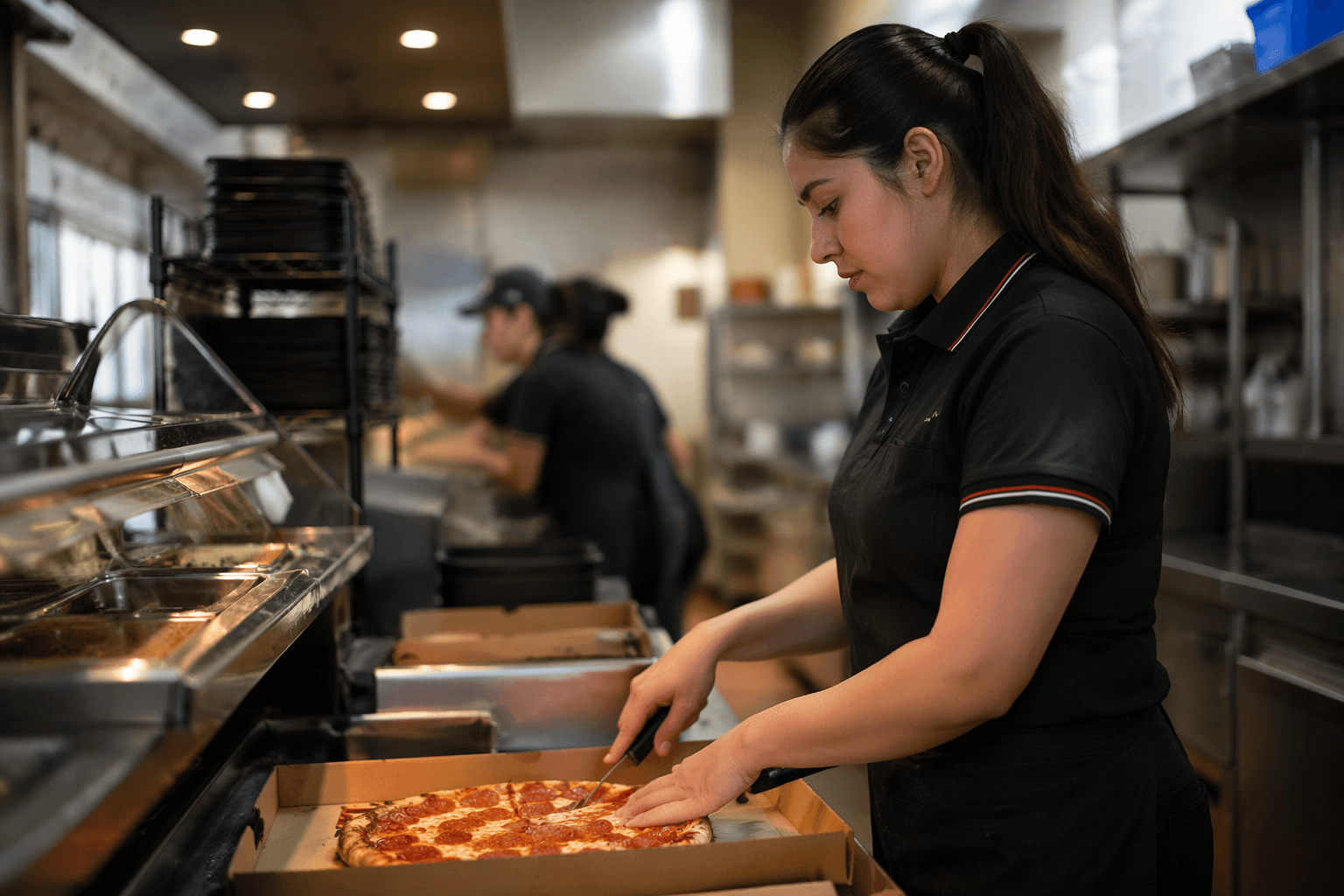
At Pizza Hut stores, third-party delivery changes who is standing at the make-line when an order goes wrong. It means more pressure on speed, packaging, and accuracy, and less control over how a customer experiences the order once it leaves the store.
That shift was not a theory. Yum Brands said in 2021 that Pizza Hut was using third-party delivery both to win new customers and to cover delivery gaps created by driver shortages. Around that time, the chain was also working on white-label delivery tied into its point-of-sale system, a sign that the fix was as much about keeping stores staffed and orders moving as it was about convenience.

Restaurant Business reported that Pizza Hut had rolled out third-party delivery-as-a-service at about half its locations, and that the brand could not find enough drivers earlier that year. For restaurant managers, that changed the daily job. More orders could come through apps and marketplace channels, but that also meant more handoff problems, more timing disputes, and more blame when a pizza arrived late, cold, or incomplete.
The bigger market shift is just as important for the people on the floor. Pizza chains once owned home delivery in a way most restaurant categories never did. DoorDash, Uber Eats, and other aggregators broke that moat. Delivery occasions now account for 9% of all occasions, according to Restaurant Business, and the apps themselves have become part of the competition alongside Domino’s, Pizza Hut, and Papa Johns. Restaurant Business also reported that Papa Johns gets 15% of its sales from third-party delivery, a reminder that this channel is no longer an edge case.
For Pizza Hut workers, the real tradeoff is control. When more orders come through a marketplace, the store may gain reach, but it loses margin, loyalty, and ownership of the customer relationship. Pizza Hut now steers customers toward its own app, which it says is the easiest way to order for delivery, takeout, or curbside pickup. The company also says local menus and pricing vary by store, and that the delivery charge is not a driver tip. That leaves crews navigating a mixed system where direct orders, marketplace orders, and store-managed delivery all hit the same shift.
Yum has treated digital ordering as central to that model. The company reported record digital sales in 2022 and 2023, with Pizza Hut part of that mix. It introduced Byte by Yum in 2024 as an AI-driven platform for Pizza Hut and its other brands, then in October 2025 said it had begun a formal review of strategic options for Pizza Hut to maximize shareholder value and help the brand reach its potential. For Pizza Hut, third-party delivery is no longer a temporary patch. It is part of the operating model, and every driver shortage, late handoff, and app order keeps reminding stores who pays the price when that model strains.
This article was produced by Prism’s automated news system from verified source data, official records, and press releases, then run through automated quality and moderation checks before publishing. The system is built and supervised by the people who set the standards it runs under. Read our full AI policy.
Did this article answer your question?