Pizza Hut locations page clarifies delivery fees, store options, service rules
Pizza Hut’s store finder doubles as a rulebook, spelling out fees, delivery zones, and which service model each location really runs.
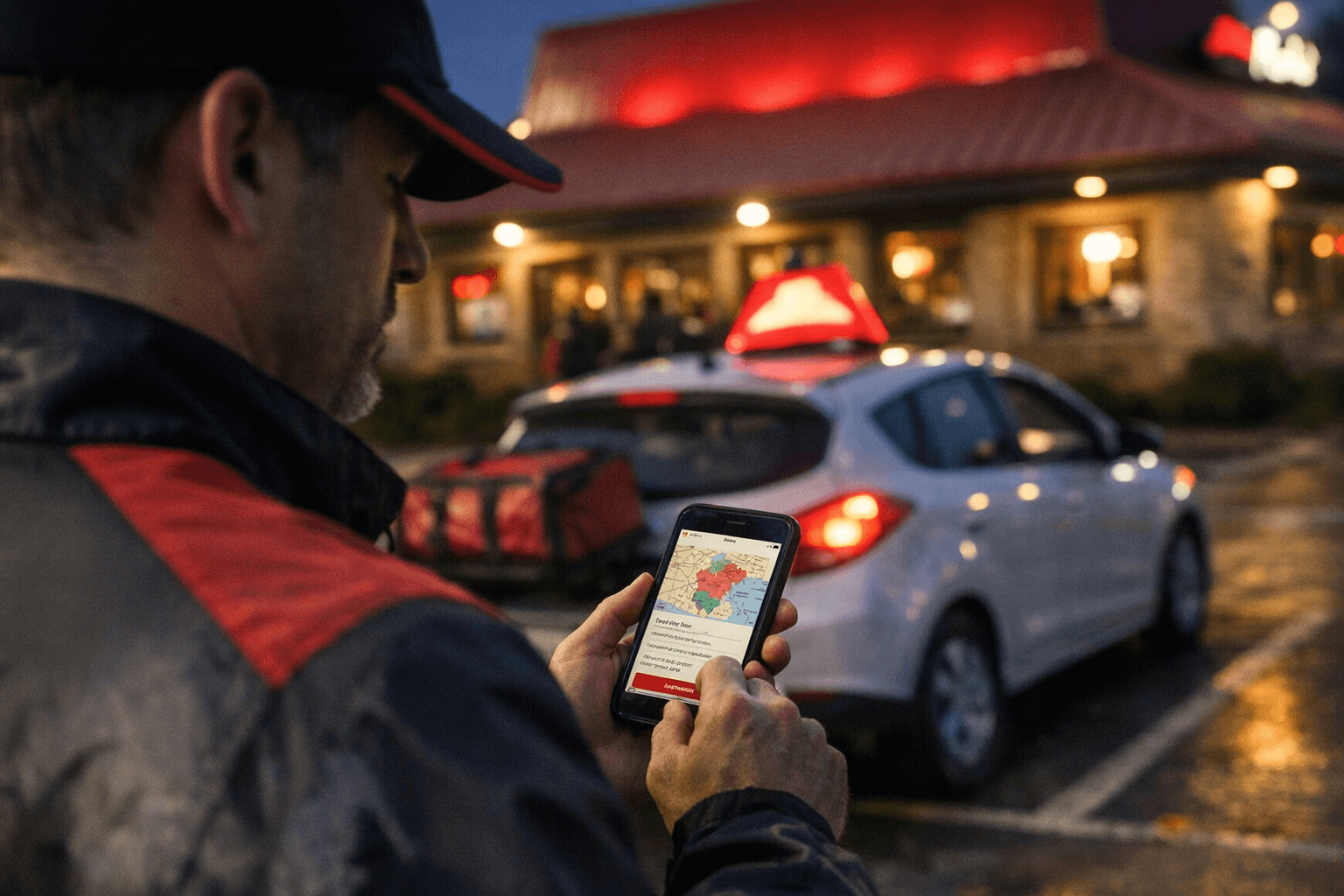
Pizza Hut’s store map says more than where to eat
Pizza Hut’s locations page is not just a way to find the nearest store. It is the brand’s customer-facing instruction manual, and it quietly tells workers how the company wants stores used in real life: search by ZIP code or address, expect more than 6,000 U.S. locations, and understand that delivery, carryout, and Hut Lane drive-thru are not interchangeable across the system. That matters on the line, in the driver seat, and at the front counter, where the day is shaped by what the customer thinks is available before anyone takes an order.
The page gives customers a simple path in, but it also signals how local Pizza Hut operations are supposed to work. A store may serve as a delivery shop, a carryout shop, or a place where Hut Lane drive-thru changes the flow of traffic and pickups. For kitchen crews and managers, that means the page is setting expectations before a caller or app user ever reaches the store, which can reduce confusion when the actual service mix at one location looks different from the one across town.
What the fee language tells drivers and managers
The most important line for delivery workers is blunt: “THE DELIVERY CHARGE IS NOT A DRIVER TIP.” That is not just legal fine print. It is a direct answer to one of the most common misunderstandings at the door and on the phone, where customers often assume any fee attached to delivery somehow lands in the driver’s pocket. Pizza Hut is drawing a hard line between a company fee and customer gratuity, and that distinction shapes how workers explain pay expectations every day.
The page also says discounts do not apply to tax, delivery charge, or driver tip. That matters because it narrows the customer’s idea of what a coupon really covers, which can save crews from having to rework a checkout conversation after the total comes up higher than expected. For managers, the practical lesson is clear: if the customer thinks the promo should knock money off the fee line, the store will be the one absorbing the friction.
Delivery is also not uniform from one store to the next. Pizza Hut says product availability, prices, participation, delivery areas, charges, and minimum purchase requirements may vary by location. That is the reality of a franchise-heavy chain, where one store’s radius, pricing, or order minimum can differ from another even within the same market. Drivers feel that variability first, because it affects the number of orders available and how far those orders stretch.
Hut Lane and carryout change the workday
The page’s mention of Hut Lane drive-thru is more than a convenience feature. It is a reminder that Pizza Hut wants some stores to function like faster-turn pickup points, not just dine-in or delivery kitchens. When a customer sees Hut Lane on the official page, they will assume it exists at the local store, and if it does, crews have to handle a different kind of traffic pattern, one that blends drive-thru expectations with pizza-shop timing.
That shift changes front-counter workflow too. Carryout and drive-thru customers tend to expect quick handoff, predictable order status, and less ambiguity about when their food will be ready. In a shop already balancing delivery runs, phone orders, and make-line pressure, the official locations page helps explain why service speed and order visibility matter so much: the brand is presenting the store as a menu of access points, not a single format.
The page also acts like a map of the rest of the Pizza Hut ecosystem. It points users toward the menu, Hut Rewards, careers, community support, the supplier code, and customer service resources. For workers, that matters because the store is being connected to the whole customer journey, from loyalty programs to complaints to hiring. The message is that the location page is not isolated web copy, it is part of how the brand wants the business understood at street level.
A franchise system that runs on local variation
Pizza Hut’s own franchise materials make the same point from the operator side. For a traditional franchise restaurant, initial qualification generally takes 10 to 12 weeks, followed by a 3 to 9 month search to identify and secure a restaurant. Once that happens, the company says initial training lasts 8 to 12 weeks and takes place in a certified training restaurant in Plano, Texas.
That timeline matters because it shows how much depends on local ownership and site selection before a store even opens. A brand with that kind of qualification, search, and training structure is not a single uniform chain from one market to the next. It is a system of operators working under shared rules, which is exactly why a delivery zone, staffing pattern, or product setup can feel different from store to store.
Pizza Hut says the company pays for training, but franchisees are responsible for travel and lodging. That split gives a small but revealing look at how costs move around the system: the brand covers instruction, while the operator still bears the practical expense of getting people to Texas and keeping them there for training. It is the sort of detail employees rarely see from the customer side, yet it helps explain how local management decisions are shaped by franchise economics.
Why the timing matters now
The store finder is landing at a moment when Pizza Hut is already under pressure to reshape its footprint. In February 2026, Yum said it would close 250 underperforming Pizza Hut locations in the U.S. as part of its Hut Forward strategy. At the same time, Pizza Hut’s U.S. store sales declined 3% in the fourth quarter of 2025. Those numbers tell workers that the company is not merely describing its system, it is actively adjusting it.
Yum! Brands adds further context. The parent company says it franchises or operates more than 63,000 restaurants in 155 countries and territories, which puts Pizza Hut inside a much larger global machine that depends on local execution. In that kind of structure, a store page is not a soft branding touch. It is operational guidance, customer education, and a warning label all at once.
For drivers, the key takeaway is straightforward: do not assume the fee line is the tip, do not assume every promotion applies to every order, and do not assume every location behaves the same way. For kitchen crews and managers, the page shows what customers will believe before they walk in or place an order, and that belief shapes everything from wait-time complaints to how often someone asks why a delivery charge is still on the bill. Pizza Hut’s site is telling the public how to use the brand, and workers live with the consequences when that message is misunderstood.
This article was produced by Prism’s automated news system from verified source data, official records, and press releases, then run through automated quality and moderation checks before publishing. The system is built and supervised by the people who set the standards it runs under. Read our full AI policy.
Know something we missed? Have a correction or additional information?
Submit a Tip